
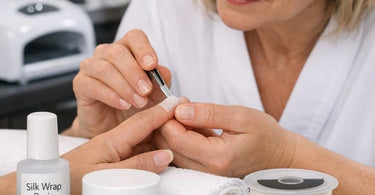
Put excellence into every detail... especially when a client walks in looking like they just went ten rounds with a cheese grater and lost. You know the one. They wave their hand sheepishly, hiding a cracked nail that is hanging on by a literal thread, or worse, a split that goes all the way down to the quick. Before you reach for the scissors to chop it down to a nub and ruin the whole aesthetic of your perfectly polished set, take a deep breath. There is a superhero in the world of nail repair, and its cape is made of woven fabric. It is lightweight, breathable, and surprisingly tough. We are talking about the silk wrap. For Professional Nail Care pros, mastering the silk wrap is like learning a magic trick. You get to save the length, strengthen the weak spot, and send that client out the door happier than a tech with a no-show client who still pays the cancellation fee.
Let us be real for a second. We have all had the client who loves their length but has the nail composition of tissue paper. Or the one who is recovering from a bad bout of acrylics and their natural nails are peeling like onions. Throwing more chemicals or bulk on them is a recipe for disaster. That is where the beauty of a Silk Wrap Nail Repair comes in. It is not an extension; it is a reinforcement. Think of it as rebar for concrete, but much prettier. It adds tensile strength without suffocating the natural nail plate, allowing that damaged area to grow out safe and sound while the client continues to live their best life (and type a million words a minute on their keyboard).
What Exactly Is This Magic Fabric?
If you are new to the game or just need a refresher, a silk wrap is exactly what it sounds like: a thin, woven sheet of pure silk fabric. But do not let the delicate texture fool you. When bonded to the nail with a specific resin (glue to you and me), it creates a force field stronger than the plastic packaging on a new Nail Tables and Manicure Stations . Unlike fiberglass, which is a bit stiffer and great for extensions, silk is incredibly flexible. This flexibility is the secret sauce. When a client smacks their hand on the desk (and they will), the silk moves with the natural nail. It absorbs the shock and distributes the pressure, preventing that horrifying snap .
Historically, this technique has been around since the 80s, but like high-waisted jeans and scrunchies, it is back and better than ever because people are finally realizing that looking natural actually feels good . It offers a brilliant alternative to the hard gels and dipping powders that can sometimes feel suffocating or require a drill to remove. It is gentle, it is porous so it breathes, and it looks so seamless that the client will forget it is even there—until they try to open a soda can and realize they actually can without breaking a nail. Success!
Why Choose Silk Over the Hard Stuff?
We love acrylics and hard gels for what they do, but for repairing a natural nail, they are often overkill. Imagine putting a cast on a sprained ankle. You would not do it, right? Same logic applies here. A Nail Treatments for Healthy Nails approach means using the lightest, most effective option available.
1. The Natural Look (No Bulk)
We have all seen the "repair" that looks like a blob of glue with a wisp of fabric sticking out. Yikes. Silk wraps lay down virtually invisible. Once you apply your resin and buff it smooth, it disappears into the nail plate . You can apply a sheer nude or a jelly polish, and it just looks like healthy, strong nail. It is the ultimate Longwear Nail Polish base for the minimalist client.
2. Breathability & Health
One of the biggest complaints we hear about heavy enhancements is that the nail feels like it is suffocating. Because silk is porous and woven, it allows oxygen and moisture (the good kind) to hit the nail plate, which can actually help the natural nail stay healthier during the grow-out phase . It inhibits bacterial growth because there is no moisture trapped under a non-porous plastic layer .
3. No UV Lamp Required
In a world where we are trying to minimize UV exposure on hands (don't forget the sunscreen, folks!), silk wraps are a breath of fresh air. This is a chemical-cure or air-dry system. You apply the resin, hit it with an activator spray, and you are done. No lamps, no waiting, just speed and efficiency. For a busy Professional Nail Care station, speed is money.
4. Easy Peasy Lemon Squeezy Removal
Let me paint you a picture: It is 7:45 PM. You have a no-chip fill at 8 PM. And you have a removal that requires 20 minutes of drilling and soaking. Nightmare, right? Silk wraps remove like a dream. Usually, a little acetone soak is all it takes. The resin breaks down, and the silk lifts right off without damaging the natural nail bed . No heavy filing, no heat spikes, no tears.
The Moment You Save the Day: The Step-by-Step Repair
Alright, Beth-Ann is taking off her writer hat and putting on her tech hat. You have the client in the chair. The nail is split vertically down the side, or there is a crack across the free edge. Here is how to use Spa Masters quality techniques to fix it.
Step 1: The Prep Work
You cannot build a house on a shaky foundation. Gently push back the cuticles and lightly buff the surface of the nail. You do not want to rough it up like sandpaper, just remove the shine so the resin has something to grip. Cleanse the nail thoroughly with 99% alcohol. And I mean thoroughly. If there is oil or dust on that nail, the silk will lift faster than a cheap press-on in a hot tub .
Step 2: Sizing the Suit
Cut a piece of the silk wrap slightly larger than the crack or the tip area you want to reinforce. If the crack is on the side, make sure the silk extends past the crack onto the healthy nail on both sides. We want to support the injury, not just cover it .
Step 3: Glue & Lay
Apply a thin layer of resin directly to the crack. Place the silk over the area. Gently press it down with a orange wood stick or tweezers. You want it flat. No bubbles, no wrinkles. Then, saturate that silk with another drop of resin. You want the fabric to look like glass; if it looks white or dry, it needs more glue .
Step 4: Seal the Deal
Spray your activator. Wait a few seconds for it to set up. Now, take a medium grit file and gently blend the edges of the silk into the surrounding nail. You should not be able to feel a ridge where the silk ends. Buff the surface until it is smooth as glass .
Step 5: Finishing Touches
Wipe off the dust. Apply your base coat, two coats of your favorite color (or a builder gel if you want extra strength), and a top coat. I love using a thick top coat to really encapsulate the repair. Hand them back their hand and watch their jaw drop. You just saved their length without adding an ounce of bulk.
Pro Tips for Longevity & Retail Magic
Now, the repair is done, but we want it to last. A silk wrap repair, if done right and treated nicely, can last anywhere from two to four weeks . However, if your client is a rock climber or loves to peel off their nail polish (we see you, don't do it!), it might be less.
Remind your clients that the wrap is strong, but it is not indestructible. Recommend they keep their hands moisturized. Dry, brittle nails crack the wrap. Also, push the Cuticle Oil. Hydrated nail plates are flexible nail plates, and flexible plates don't snap.
For you salon owners, having a variety of Nail Files & Buffers and quality resins on hand is essential. Do not use cheap glue. The cheap stuff gets brittle and turns white, and suddenly your invisible repair looks like a patch of scotch tape. Invest in good quality Acrylic Nail Supplies that complement your wrap system.
Silk vs. The World (Fiberglass & Linen)
Since you are a pro, you might be asking, "Beth-Ann, what about fiberglass?" Great question. Fiberglass is stronger and stiffer. It is fantastic for building extensions on clients who want a lot of length. But for repair? Fiberglass can be too rigid. It does not flex with the nail, so if the client bends their finger, the fiberglass holds tight, and the natural nail breaks right next to it. Linen is thicker and good for really severe breaks, but for 90% of the splits and cracks you see walking through the door, silk is the Goldilocks choice: Just right .
Also, consider pairing this service with a luxurious hand treatment. If the nail is weak enough to need a wrap, the skin probably needs some love too. Slap on a paraffin dip or a heated Massage Oils, Lotions, and Creams for Therapists treatment. It seals the deal and makes the service feel like a spa day, not just an emergency room visit.
Bottom Line
If you are not offering silk wrap repairs, you are leaving money on the table and sending clients home sad with short nails. It is the ultimate upsell. A client comes in for a fill or a polish change, you spot a stress fracture, and you say, "Girl, let me wrap that before it snaps. It will take five minutes and save your vacation nails." They will love you forever.
Stock up on your supplies, practice your layering technique until it is flawless, and watch your retention rates soar. And hey, while you are beautifying those hands, make sure your station looks the part. Nothing ruins the vibe of a high-end repair like a sticky desk. Check out our Stylish and Functional Nail Salon Furniture Essentials to keep your workspace as pristine as your finishes. Now go forth and wrap those nails, you magnificent miracle workers!
