
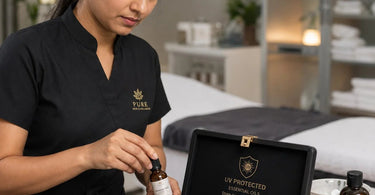
Efficiency redefined for modern professionals starts with one simple truth: those precious little bottles of plant magic are basically the drama queens of your spa supply inventory. One minute they are filling your aromatherapy room with blissful lavender clouds, and the next they have evaporated into thin air, taking your profit margin with them. If you have ever opened a bottle of expensive premium skincare oil only to find it smells more like a science experiment gone wrong than the calming eucalyptus blend you paid top dollar for, friend, this one is for you.
We at Pure Spa Direct have seen things. We have seen perfectly good massage oils go rancid because someone left them on a sunny windowsill (spoiler: the sun does not care about your zen vibes). We have watched waxing rooms lose the potency of their calming chamomile additives because the storage was as chaotic as a toddler on espresso. Storing highly volatile essential oils is not rocket science, but it is definitely a little bit of chemistry, a dash of common sense, and a whole lot of “why did nobody teach me this in beauty school?”
What Even Is a Volatile Essential Oil? (The Science-y But Fun Version)
Let us break this down without the boring textbook jargon. Volatile essential oils are the wild child molecules of the plant world. They evaporate quickly, they react to everything, and they have a shelf life shorter than that reality TV marriage you knew was doomed. Think citrus oils like lemon, orange, and grapefruit, along with tea tree, eucalyptus, peppermint, and frankincense. These babies are potent, powerful, and picky. They oxidize when exposed to air, light, and heat, which turns them from “ahhh, relaxing” to “ewww, what is that smell?” faster than you can say high-quality towels.
If you are running a busy hair salon, a high-end spa, or a waxing studio, you are likely using these oils in everything from diffusers to custom body treatments. And when those oils go bad, your retail products lose their oomph, your massage services lose their therapeutic edge, and your budget loses its mind. So let us fix that, shall we?
Rule #1: Keep It Cool, Keep It Dark (Your Oils Are Not Sunbathers)
Imagine you are a delicate little molecule of aromatherapy oil. Would you want to live on a shelf above a steaming towel steamer or next to a sunny window where the UV rays can break down your chemical structure? No. You would not. You would want a dark, cool, consistent environment—like a fancy wine cellar, but for plants. The ideal temperature for storing highly volatile essential oils is between 35 and 45 degrees Fahrenheit. That is right—your fridge might just become your new best friend.
If you have the space, designate a small mini fridge in your back-of-house for your most precious oils. Citrus oils, in particular, will thank you by lasting twice as long. No fridge? No problem. Find the darkest, coolest cupboard away from your facial steamers, wax warmers, and that space heater Cheryl insists on using. Heat accelerates oxidation, and oxidation is the enemy of effective products. Remember: hot oils are sad oils.
Rule #2: Air Is Not Your Friend (Stop Opening Every Bottle Just To Sniff It)
We get it. You have a client who is allergic to everything, and you want to find the perfect massage oil blend. But every time you pop the cap off a bottle of rosemary essential oil, you are letting oxygen in. Oxygen causes oxidation. Oxidation turns your lovely sugaring additive into a sticky, smelly mess. The fix? Decanting. Invest in smaller, dark-glass bottles for daily use. Keep your bulk inventory sealed tight with minimal headspace. If you are using half a bottle, transfer it to a smaller container so there is less air floating around in there.
And for the love of all things sanitary and wellness-focused, use a clean dropper or pipette every single time. Do not double-dip. Do not pour directly from the stock bottle over a steaming pedicure chair where water vapor can get in. Water plus oil equals bacteria party, and nobody wants to RSVP to that.
Rule #3: Date Everything Like You Are Starting A Romance Novel
Here is where most salon and spa pros trip up. You buy a beautiful bulk deal on aromatherapy oils, shove them in a cabinet, and six months later you cannot remember if that bottle of tea tree oil was purchased last Tuesday or last decade. Spoiler alert: it is the latter, and it has gone full-on “paint thinner” on you. Grab a roll of table paper or a sharpie and label every single bottle with the purchase date AND the date you opened it.
Most volatile essential oils have a shelf life of one to two years unopened, but once that seal is cracked, the clock is ticking. Citrus oils? Six to nine months tops. Patchouli and sandalwood? They actually get better with age, like a fine wine or your favorite pair of salon leggings. But when in doubt, sniff it out. If it smells sharp, metallic, or like turpentine, throw it out. Do not pass go. Do not collect two hundred dollars. Your client’s skin and your reputation are on the line.
Rule #4: Glass Is Class (Plastic Is Tragic)
Somewhere out there, someone is storing their precious lavender essential oil in a plastic squeeze bottle. That someone is living a life of quiet desperation and ruined product. Volatile oils are strong solvents. They can actually break down certain plastics over time, leaching who-knows-what chemicals into your once-pristine blend. Always, always, ALWAYS use dark amber or cobalt blue glass bottles. These colors filter out UV light, which is one of the biggest villains in our story.
If you are buying in bulk from ItalWax or Berodin or any of the amazing brands we carry at Pure Spa Direct, those oils likely come in proper glass containers. Keep them there. Do not transfer to cute but dangerous plastic decor bottles unless you are using them up within a week. And for the love of all that is holy, do not store your oils in those little clear glass vials with the rubber bulbs—the rubber will degrade, and the light will destroy the oil. Use proper Boston rounds with polycone caps. Your future self will send you a fruit basket.
Rule #5: Location, Location, Location (No, Seriously)
You might think that cute shelf above your hair styling station is the perfect spot for your aromatherapy display. It is not. It is a trap. Heat rises, and that shelf is probably toasty warm. Plus, every time your stylist reaches for a pair of shears, they knock over the peppermint oil. Keep your oils in a dedicated, low-traffic area away from:
- Direct sunlight
- Heating vents
- Facial steamers (obviously)
- Towel steamers
- Wax warmers
- The reception area where the afternoon sun streams in
- Anywhere near bleach or other harsh chemicals
A locked cabinet in a climate-controlled back room is ideal. If you are a massage therapist doing mobile work, invest in a hard-sided, insulated carrying case. Those little portable massage tables are great, but they do not protect your oils from the trunk of your car in July. Speaking of which...
Rule #6: Transport With TLC (Your Car Is Not A Climate-Controlled Vault)
You load up your massage oils and essential oil kit into your car on a scorching Florida afternoon. You drive to your wellness center client. By the time you arrive, your oils have been cooking in a metal oven on wheels for forty-five minutes. Congratulations, you have just flash-aged your inventory into uselessness.
Always transport volatile oils in an insulated bag with an ice pack (wrapped in a towel to prevent freezing—we are not making essential oil popsicles here). Keep them in the passenger compartment of your car, not the trunk. And never, ever leave them in a parked car while you grab lunch. That is the equivalent of leaving a baby or a dog in a hot car, but for your sugar scrub ingredients. Just do not do it.
Rule #7: Know When To Say Goodbye (Discarding Rancid Oils Without Guilt)
You paid good money for that bottle of organic, wild-crafted, fair-trade, unicorn-tears rose essential oil. It hurts to throw it away. I know. I have been there. But here is the thing: rancid oils are not just ineffective—they can be irritating to the skin. Using them in a waxing service or a facial treatment is a fast track to a bad Yelp review.
Signs your oil has gone to the great garden in the sky: it smells sour, metallic, or like crayons. It has changed color (clear oils turning yellow or brown). It has become thick or sticky. Or you just honestly cannot remember when you bought it. If you see any of those red flags, say a small thank you for its service, and pour it into an absorbent material (like kitty litter or old cotton rounds) and dispose of it in the trash—never down the drain unless you want to call a plumber. Then go treat yourself to a fresh batch from one of our trusted premium brands.
Pro-Level Bonus Hacks For The Overachievers
If you have made it this far, you are serious about your craft. Here are some ninja-level storage tips that will make your spa bedding smell fresher and your profit margins healthier:
Use a wine cooler. Those small, thermoelectric wine fridges are PERFECT for storing volatile oils. They maintain a consistent, cool temperature without the humidity fluctuations of a regular kitchen fridge. Plus, they look super fancy in your luxury spa back room.
Nitrogen blanketing. If you are storing large volumes of oil for a long time, you can buy wine-preserving inert gas sprays. A quick spritz of nitrogen or argon into the bottle before you cap it pushes out the oxygen. This is next-level stuff, but if you are buying bulk wax deals with essential oil additives or making your own signature massage blends, this trick is a game-changer.
Organize by volatility. Keep your most fragile oils (citrus, conifers, angelica) in the coldest part of your storage. Place sturdier oils (vetiver, patchouli, cedarwood) on slightly warmer shelves. And for the love of all that is wellness-focused, label everything with a color-coded system because your memory is not as good as you think it is after that fourth Brazilian wax of the day.
What NOT To Do (A Cautionary Tale Of Horror)
Once upon a time, a well-meaning nail tech decided to store her cuticle oil blends in a beautiful ceramic pot on her manicure table. It looked gorgeous for Instagram. It also sat directly under the LED lamp and next to the UV sterilizer. Within three weeks, her custom blend had the viscosity of motor oil and the fragrance of a burning tire. Do not be that nail tech.
Also, do not store your oils near your hair bleaches and lighteners. The fumes from chemical services can actually cross-contaminate and alter the scent profile of your oils. Keep your aromatherapy world and your chemical world in separate zip codes. And please, for the safety of everyone, do not store essential oils in your mask or loofah drawer. Just... no.
Real Talk: How Pure Spa Direct Has Your Back
We are not just a bunch of spa apparel-wearing, towel-stacking distributors. We are your partners in not wasting money. When you buy your essential oils from our carefully curated brands—like ESS Aromatherapy or Bon Vital—you are getting products that were stored properly before they even reached you. We rotate our stock faster than a spinning facial brush on double speed.
And if you need storage solutions? We have got amber glass bottles in every size. We have got lockable cabinets. We have got disinfectants to keep your storage area pristine. We have got everything you need to run a tight, profitable, and non-stinky ship.
Let’s Wrap This Up Before Your Peppermint Oil Evaporates
Storing highly volatile essential oils does not have to be a full-time job or a source of constant anxiety. It just requires a little respect for chemistry, a few good habits, and the willingness to be the “oil police” in your own salon or spa. Keep them cool. Keep them dark. Keep them sealed. Date your bottles like you are in a committed relationship. And when in doubt, throw it out.
Your clients will notice the difference. Your massage therapists will stop sneezing. Your waxing specialists will wonder why their pre-wax oils suddenly work better. And your accountant will stop sending you those sad, disappointed looks.
Now go forth, organize your oil cabinet, and treat those precious plant essences with the respect they deserve. And remember: when you need fresh, high-quality oils and all the storage accessories a modern professional could want, Pure Spa Direct is just a click away. We have got the deals, the equipment, and the supplies to keep your business running smoothly—and your essential oils fresher than a facial steamer after a deep clean. Happy storing, you brilliant, oil-saving genius, you.
%20With%20These%20Pro%20Tips)