
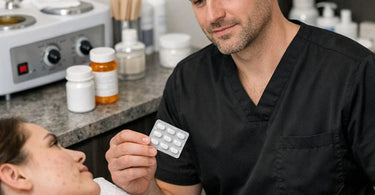
Enhance services with this pro favorite... But wait—hold that wax warmer for just a hot second. You’ve got a client in your chair, sweet as pie, who’s finally getting their acne under control thanks to their dermatologist. They’re glowing (metaphorically, for now), and they want a brow wax so sharp it could cut glass. You’re ready to go, spatula in hand, when a tiny alarm bell rings in your head: 'Hey, dummy, are they on the ‘tretinoin train’?' Because if you wax someone using strong prescription acne meds without a game plan, you’re not going to get a smooth finish. You’re going to get a ‘de-roofing’ event that will make you both want to cry. And not the good, emotional-release cry. The ‘I have to go to work tomorrow looking like a tomato’ cry.
Lucky for you, I’ve got the 4-1-1 on how to navigate this sticky (but not too sticky—literally) situation. At Pure Spa Direct, we don’t just sell the gear; we help you keep your clients’ skin attached to their faces. Let’s dive into the do’s and don’ts of waxing clients who are on prescription acne medications, shall we? I promise there will be no actual skin lifting by the time we’re done.
Why Prescription Acne Meds And Hot Wax Are Like Oil And Water (Explosive)
First, a little science lesson that won’t put you to sleep. Prescription acne treatments like Accutane (isotretinoin), Retin-A (tretinoin), and even strong oral antibiotics work by aggressively speeding up skin cell turnover or reducing oil production. Sounds great, right? For acne, yes. For waxing? Not so much. These meds thin the epidermis and mess with the bonds that hold your skin cells together. When you rip that wax strip off, you’re not just taking the hair—you’re taking the top layer of skin with it. Congratulations, you just gave them a chemical peel they didn’t ask for. It’s called skin lifting, and it’s the number one reason estheticians have nightmares.
The ‘Red Light’ List: Which Meds Require A Pause
Not every pill is a villain, but you need to know the heavy hitters. If your client mentions any of these, put the ItalWax down and start asking questions.
- Isotretinoin (Accutane, Claravis): The big boss. Most pros wait at least 6 months (yes, MONTHS) after the last pill before waxing.
- Tretinoin (Retin-A, Renova): A common culprit. Discontinue use on the area to be waxed for 5-7 days prior.
- Adapalene (Differin): Even the over-the-counter stuff now is strong. Wait 3-5 days.
- Tazarotene (Tazorac): This stuff is potent. Give it a week.
- Oral Antibiotics (Doxycycline, Minocycline): They make skin photo-sensitive and fragile. You can usually wax, but use a lower temperature wax and do a test strip.
Pro Tip: Always have a current intake form. If it doesn’t ask about ‘Topical or Oral Prescription Acne Treatments,’ it’s time for an upgrade.
The Patch Test: Your BFF (And Liability Saver)
I know, I know. Patch tests take time. You have a schedule to keep and a towel steamer full of fluffy towels waiting. But trust me, a 24-hour patch test is cheaper than a lawsuit or a bad Yelp review. Have the client come in the day before. Pick a small spot behind the ear or inside the elbow. Use the exact soft wax or hard wax you plan to use. If they come back red, inflamed, or missing skin, you pivot to sugaring or tweezing. If they are totally fine, proceed with caution. Document everything!
Waxing Technique: Gentle Is The New ‘Go Hard’
Alright, you’ve done the test, they passed, and they’re ready to go. Now you channel your inner Jedi and use the gentlest touch known to womankind.
- Switch to Hard Wax: Please, for the love of all that is holy, put down the soft wax and muslin strips. Hard wax (or non-strip wax) adheres to the hair, not the skin. It shrinks around the follicle and is pulled off without traumatizing that fragile epidermis. Brands like Lycon or Starpil are lifesavers here.
- Low Temp is King: Your professional wax warmer should be set to a lower temperature. You want the wax to be a honey-like consistency—not molten lava. No one wants a thermal burn on top of a skin lift.
- Thin Layers: Apply a very thin, pliable layer in the direction of hair growth. Let it cool completely (it should be flexible but not sticky).
- The Hold: Hold the skin taut with one hand. Like, really taut. Pull the wax off parallel to the skin (not up toward the ceiling) in one swift, low motion. If you pull up, you’re inviting disaster.
- Small Sections: Do not wax the whole upper lip in one giant strip. Break it into tiny sections. It takes longer, but hey, so does growing back a skin barrier.
The Perfect Pre & Post Protocol
You can’t just slop the wax on and send them out the door. What happens before and after the strip rips is equally important.
Before: Cleanse the skin with a gentle, non-stripping cleanser. Do not use alcohol or astringents. Do not use high frequency machines right before waxing if they are on these meds—too much stimulation. Dust the area with pre-wax powder. This absorbs moisture and creates a barrier, protecting the skin further.
After: Calm that skin down immediately! No fragranced lotions. Look for post-wax oils with anti-inflammatory ingredients like azulene or chamomile. Apply a cool compress. And for heaven’s sake, send them home with strict instructions:
- No hot showers, paraffin dips, or saunas for 24 hours.
- No makeup on the area for 12-24 hours.
- Do not pick at the area (even if it looks flaky).
- Do not resume their prescription acne medication on the waxed area for at least 48-72 hours, or until the redness is completely gone.
- Wear SPF! Sunscreen is their new best friend.
When To Say ‘No, Honey’ (And Offer An Alternative)
Sometimes, you just have to be the bad guy. If a client is on high-dose Accutane and finished the course two weeks ago, it is a hard no. You are not ‘being difficult’; you are being a medical professional. If you rip their face, they will not remember that you warned them. They will only remember the scab.
What can you offer instead?
- Dermaplaning: Actually, wait. Dermaplaning is also a hard no on Retin-A/Accutane for the same reason. Scratch that.
- Tweezing: It’s manual, it’s slow, but it’s safe. Put on a good playlist and go to town.
- Threading: This is usually safe for medicated skin because there’s no heat or adhesive involved.
- Trimming: Grab your facial trimmers or small detail shears. A trim is better than a bald patch of raw skin.
Setting Up Your Station For Success
Your environment matters. You need to look professional and prepared. If a client walks in and sees you fumbling for the right supplies, they will lose confidence. Keep your waxing supplies for professionals organized. Have a separate spatula for dipping (never double dip—that’s how we get infections!). Make sure your hygienic table paper is fresh. And always have a bottle of ingrown hair products on hand for their next visit, specifically one that is ‘non-comedogenic’ (won’t clog pores). Because even with perfect technique, fragile skin loves to trap hairs.
I also love keeping a massage table warmer on my massage table for the cooling down period. A warm, cozy table helps relax the client after the stress of a potentially risky wax. It builds trust. And trust builds return clients.
Real Talk: Communicating With The Client
Let’s be honest, most clients don’t read the intake form. They will lie (or forget) about their skincare routine. You need to literally ask: 'Are you using any prescription creams, gels, or pills for your skin or acne right now? Including Retin-A, Tretinoin, or Accutane?'
If they say yes, explain the risk in simple terms. 'Honey, that medicine is amazing for clearing breakouts, but it makes your skin super fragile. If I wax you today, there is a high chance the wax will rip your skin off instead of just the hair. I don’t want to hurt you. Let’s look at a different option today.' They will respect you for it. If they insist, make them sign a waiver. A detailed, scary-looking waiver.
I once had a client beg me to wax her upper lip even though she was on Retin-A. I warned her. She signed the waiver. We did a test patch (she was fine). I waxed a tiny section (she was fine). I waxed the rest. She looked great. She came back three days later with a perfect red mustache-shaped scab. She didn’t listen to the aftercare and exfoliated the next day. Guess who got yelled at? Me. On Instagram. You cannot win them all, but you can cover your assets with paperwork and protective gloves (for you, to hide the shaking hands).
Stock Your Cabinet With The Right Brands
At Pure Spa Direct, we know that success starts with the right products. You don't want to be using cheap strip wax from the drugstore on sensitive skin. You need professional-grade equipment.
- Check out ItalWax for incredible low-temp hard waxes.
- Looking for something hypoallergenic? Berodin is a dream.
- Need a serious post-wax soothing lotion? Mancine Professional has a killer calming gel.
Remember, we carry everything you need to run a safe, profitable, and face-skin-saving business. From professional cotton to luxury spa furniture to lay your anxious client on, we’ve got your back (and their face).
Wrapping It Up (Without Ripping The Skin)
Waxing clients on prescription acne medications isn't impossible. It just requires you to use the brain the good Lord gave you, plus a little help from complete waxing kits that prioritize gentleness. Always check the meds, always do a patch test (just do it!), always use hard wax, and always, always err on the side of caution. A lost brow wax today is better than a lost client forever because you gave them a permanent scar.
Now go forth, read those intake forms, and keep your wax gentle and your powder heavy. And if you need a replacement wax strip roll? You know where to find us.
)