
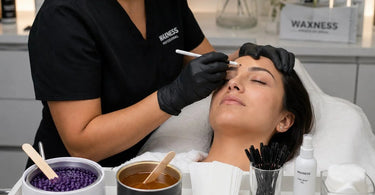
Put your best work forward, but let's be real—sometimes it feels like our clients expect us to perform miracles with a spatula and a prayer. You know the drill: the client settles into your chair, points at a magazine cover, and says, "Give me these brows." But here's the sticky situation no one talks about at beauty school graduation: the battle between hard wax and soft wax for brows is real, and picking the wrong side can turn a simple brow shape into a red, irritated disaster that has your client questioning every life choice that led them to your chair. I've been in the trenches, armed with nothing but a wax warmer and good intentions, watching a perfectly good brow service go sideways because I grabbed the wrong wax formula. So grab your favorite beverage, put your feet up (you've earned it after that Brazilian this morning), and let's settle this wax debate once and for all, with a heavy dose of humor and zero judgment.
Whether you're a seasoned esthetician with battle scars from wax that was too hot or a fresh-faced beauty pro just learning the ropes, understanding the difference between hard and soft wax for brow services is absolutely non-negotiable. Your clients' eyebrows are the first thing people notice about their faces—they frame the eyes, express the emotions, and frankly, can make or break an entire makeup look. Using the wrong wax isn't just a professional misstep; it's practically a crime against eyebrow-kind. So let's dive into the wonderfully weird world of wax, where the stakes are high, the hairs are stubborn, and your waxing supplies can either be your greatest ally or your worst enemy. Trust me, by the time we're done here, you'll be waxing brows like a boss and sending clients out the door with arches so perfect they'll want to tip you in gift cards.
The Great Wax Debate: Hard vs. Soft for Delicate Brow Skin
Let me paint you a picture. You're working on a client named Sarah. She has gorgeous brown eyes, a great sense of humor (she laughed at your joke about the exploding wax warmer—bless her heart), and skin so sensitive that just looking at a facial steamer wrong makes her blush. She wants her brows shaped into a perfect arch, but she's also mentioned that she uses retinol every night like it's going out of style. My friend, if you reach for soft wax in this scenario, you might as well hand her a coupon for a free chemical peel because that's exactly what you're about to give her—whether she asked for it or not. Hard wax, with its gentle, stripless application, is your sensitive-skin superhero here, swooping in to save the day (and Sarah's epidermis) .
Here's the science-y stuff without the boredom: hard wax, also known as stripless wax, is a thick, resin-based formula that hardens as it cools. You apply it in a nice, generous layer, wait for it to set (cue the dramatic pause), and then pull it off directly with your fingers—no strips required. Because it adheres primarily to the hair rather than the skin, it's like that friend who knows how to keep their hands to themselves at a party. Soft wax, on the other hand, is a thinner consistency that requires cloth or paper strips for removal. It's applied in a thin layer and then yanked off with the strip, taking hair and a fine layer of skin cells with it . Great for larger areas like legs, sure. For delicate brow skin? Sometimes it's about as subtle as a bull in a china shop, especially if your client has any sensitivity issues or is using active skincare ingredients .
Why Hard Wax is the Reigning Champion for Brow Services
If brows were a kingdom, hard wax would be sitting on the throne, wearing a tiny crown, and sipping something fancy. For precision work like brow shaping, hard wax offers control that soft wax simply can't match. You can sculpt it, shape it, and target specific areas without worrying about the wax spreading into places it doesn't belong—like your client's actual eyeball (been there, panicked about it, do not recommend). Plus, because hard wax doesn't require strips, you can see exactly what you're doing at all times. No more guessing games about whether that strip is positioned correctly or if you're about to remove half the brow along with the stray hairs. Professional stripless hard wax gives you the visibility and precision that makes brow artists everywhere breathe a sigh of relief .
Let's talk about the pain factor, because we all know that one client who acts like a single hair removal is equivalent to major surgery. Hard wax generally operates at a lower temperature than soft wax, which means less thermal shock to the skin and a more comfortable experience overall . The wax cools and hardens quickly, creating a flexible "film" that grips the hair from all angles. When you pull it off (in the opposite direction of hair growth, obviously—we're professionals here), the hair releases cleanly without tugging the surrounding skin. Your dramatic client might still flinch, but she'll be secretly impressed by how much it didn't hurt. Meanwhile, ItalWax hard wax formulas take it even further with skin-loving ingredients that soothe as they remove. It's like getting a facial and a wax at the same time—minus the hefty price tag.
The Case for Soft Wax: When to Break Out the Strips
Now, before you throw all your soft wax in the garbage and pledge eternal loyalty to hard wax, hear me out. Soft wax has its place in the brow universe, and dismissing it entirely would be like saying you never use towel steamers because room-temperature towels are "fine." (They're not. You know they're not.) Soft wax, also known as strip wax, can be incredibly effective for clients with less sensitive skin and for cleaning up larger areas like the forehead or sideburns. Its thinner consistency allows it to spread easily and grip even the finest baby hairs that hard wax might miss . Plus, soft wax treatments can be quicker since you're covering more surface area with each application—perfect for those busy days when you have five brow appointments back-to-back and you haven't peed since breakfast.
Some estheticians swear by soft wax for creating those razor-sharp, Instagram-worthy brow lines that look like they were carved by a plastic surgeon with a ruler. Because soft wax adheres to the skin as well as the hair, it can provide a slightly more exfoliating effect that leaves the skin incredibly smooth and polished . The key is knowing your client. Is their skin tough as nails? Do they have a high pain tolerance and zero sensitivity issues? Soft wax might be your new best friend. Are they using retinol, advanced facial treatments, or any kind of exfoliating acid? Run—do not walk—to your hard wax stash. And for the love of all things holy, always do a patch test on new clients before going all in with soft wax on their entire brow area. Your client's skin will thank you, and you'll avoid that awkward "why is my face on fire" conversation that no one enjoys.
Product Spotlights: Hard Wax Heroes for Brow Perfection
Let's get specific, because knowing which wax to use is only half the battle—you also need to know which products will actually deliver the results your clients deserve. At ItalWax, they've created something magical for brow services called the ItalWax Film Wax - Selfie Wax for Face. This hypoallergenic hard stripless wax was specifically formulated for the sensitive skin of the face, and let me tell you, it's a game-changer for brow services. The natural oils complex cushions the skin during waxing, creates maximum protection, and provides extra comfort during the procedure. It operates at a low temperature of just 100.4°F / 38°C, which means no burning, no unnecessary discomfort, and no lingering redness—even on the thinnest, most sensitive skin . For brow shaping, the pros recommend dividing one long application into two shorter ones to maintain control and precision. Use a small spatula to create sharp, clear lines, and press carefully to help the wax grip those stubborn hairs better. It's like having a brow-sculpting superpower in a 500-gram bag.
Another heavy hitter in the hard wax world is Cirepil, a brand that's practically synonymous with quality waxing. Their hard wax formulas are beloved by professionals for their gentle touch and effective grip on even the coarsest brow hairs . If you're working with male clients who want their brows cleaned up (yes, it's becoming a thing, and yes, you should be offering it), Cirepil handles thicker, more stubborn hair without breaking a sweat. The wax hardens to a flexible consistency that removes cleanly without leaving sticky residue behind, and the skin looks calm and happy afterward. Pair it with some pre- and post-waxing products, and you've got a service that clients will book again and again. Because let's face it—when someone finds an esthetician who can wax their brows without turning their face into a tomato, they don't let that person go.
Soft Wax Standouts: Precision Strip Wax for Brow Artists
Don't count soft wax out just yet! The market has evolved, and modern strip waxes are nothing like the sticky, painful messes your predecessor might have used back in the day. Take the advanced strip wax formulas now available from brands like Berodin and Waxness. These waxes are designed with skin-loving ingredients that reduce adhesion to the skin while still gripping hair effectively—basically, they're trying to be more like hard wax while keeping the efficiency of strip application. For brow artists who have mastered their technique, these modern soft waxes can provide incredible results with less irritation than traditional formulas . Some even include nourishing ingredients like niacinamide to strengthen the skin barrier, cica extract to calm inflammation, and hyaluronic acid to lock in hydration. That's right—your wax is now practically a skincare product. The future is now, people.
When using soft wax on brows, technique is everything. Apply the wax in a thin, even layer following the direction of hair growth. Use high-quality wax strips and rolls that won't fall apart mid-pull (there's nothing quite as embarrassing as a strip that disintegrates in your hand while your client watches). Hold the skin taut, and remove the strip quickly in the opposite direction of hair growth, keeping it parallel to the skin surface. Work in small sections—don't try to wax the entire brow area at once unless you enjoy chaos and unpredictable results. And always, always have post-waxing products ready to soothe and calm the skin immediately after service. A little post-wax oil or calming gel goes a long way toward preventing redness and ensuring your client leaves looking like a million bucks—not like they just survived a battle with a honey badger.
Pro Tips for Flawless Brow Waxing Every Time
Let me drop some knowledge bombs that took me years of trial and error (and a few client complaints) to figure out. First, always cleanse the brow area thoroughly before waxing. Makeup, oils, and skincare residue will prevent the wax from adhering properly to the hair, which leads to poor results and unhappy clients. Use a gentle, alcohol-free cleanser that won't strip the skin's natural barrier. Second, test your wax temperature on the inside of your wrist before applying it to your client's face. If it's too hot for you, it's definitely too hot for them. Third, when waxing brows, always apply the wax in the direction of hair growth and remove it in the opposite direction. This is waxing 101, but you'd be surprised how many people get it backwards. Fourth, for hard wax brows, don't make the application too thick or too thin. You want it to be substantial enough to grip the hair but not so thick that it takes forever to harden. About the thickness of a nickel is usually perfect .
Fifth, and I cannot stress this enough, communicate with your clients about their skincare routines. If someone is using retinol, professional hair products with exfoliating properties, or any kind of prescription acne treatment, you need to know about it before you wax. These ingredients thin the skin and make it more susceptible to lifting and irritation . In some cases, you might need to recommend alternative hair removal methods like tweezing or sugaring. It's better to lose a waxing service than to lose a client's trust (and the top layer of their skin). Sixth, invest in quality wax spatulas and applicators and change them between clients—no double-dipping, ever. Cross-contamination is not a good look on anyone. Seventh, stock your treatment room with hygienic table paper and fresh linens for every client. Cleanliness is next to godliness in the waxing world, and clients notice when you cut corners.
Aftercare Matters: Keeping Those Brows Beautiful Between Appointments
Your job doesn't end when the last piece of wax is removed. What you send clients home with (and what you tell them to do) can make the difference between a loyal regular and someone who never comes back because their brows broke out in a rash. Recommend a gentle post-wax calming product that reduces redness and soothes irritation. Ingredients like aloe vera, chamomile, and jojoba oil are your friends here. Advise clients to avoid touching their freshly waxed brows for at least 24 hours—fingers carry bacteria, and bacteria leads to breakouts. Also, no makeup on the brow area for the rest of the day. I know it's hard for some clients to go without their brow pencil, but trust me, the temporary inconvenience is worth the long-term results. Sun exposure, tanning beds, hot showers, saunas, and strenuous exercise should also be avoided for 24-48 hours post-wax. The skin is vulnerable and needs time to recover .
For clients prone to ingrown hairs (yes, brows can get ingrowns too—fun fact), recommend a gentle exfoliation routine starting about a week after their wax. Ingrown hair products containing salicylic acid or glycolic acid can help keep the hair follicles clear and prevent those annoying little bumps from forming. Sugar scrubs or salt scrubs can be used once or twice a week, but remind clients to be gentle—the brow area is delicate, not a driveway that needs de-icing. Also, consider retailing high-quality spa retail products like brow serums or conditioning oils that help hair grow back softer and healthier. Not only does this provide extra value for your clients, but it also adds a nice revenue stream to your business. Everyone wins, especially your bank account.
Common Brow Waxing Mistakes (And How to Avoid Them)
Let me save you from the mistakes I've made so you don't have to learn the hard way. Mistake number one: waxing over the same area twice. This is the fastest route to skin irritation, redness, and in severe cases, lifting. If you missed some hairs, tweeze them—don't rewax. Mistake number two: using wax that's too hot. Invest in a quality wax warmer with temperature control and check it regularly. Your clients' faces will thank you. Mistake number three: not holding the skin taut enough during removal. Loose skin equals pain and potential bruising. Get in there with confidence and hold that skin like you mean it. Mistake number four: applying wax that's too thin or too thick. Both will compromise your results. Practice on yourself (or a very patient coworker) until you find the sweet spot. Mistake number five: forgetting to check for contraindications. If your client has sunburn, active acne, rosacea, eczema, psoriasis, or any kind of skin infection in the brow area, do not wax them. It's not worth the liability or the pain you'll cause.
Mistake number six: rushing the service. Brow waxing requires precision and patience. Don't try to speed through it just because you have another client waiting. Quality over quantity, always. Mistake number seven: using the same spatula for the whole service without cleaning it. Wax builds up on the spatula, and that buildup can transfer bacteria back into your wax pot. Use clean spatulas for each application, or wipe your spatula clean between dips. Mistake number eight: forgetting to adjust your technique for different hair types. Fine, sparse brows require a different approach than thick, coarse brows. Get to know your wax and how it performs on different textures. Mistake number nine: neglecting your own comfort and ergonomics. Invest in a good massage table or chair that allows you to work at a comfortable height. Your back will thank you in ten years. And mistake number ten: not having fun! Waxing should be enjoyable. Put on some good music, chat with your clients, and remember why you got into this industry in the first place. Happy estheticians make happy clients.
Building Your Brow Waxing Arsenal: Must-Have Products
Ready to stock up and become the brow guru your city has been waiting for? Here's what you need in your treatment room to offer complete waxing services that keep clients coming back. First, a reliable wax warmer with adjustable temperature settings. Don't cheap out on this—your wax warmer is the heart of your waxing services, and a good one will last for years. Second, both hard wax and soft wax options so you can customize each service to the client's needs. Brands like ItalWax, Cirepil, Starpil, and Lycon all offer excellent formulations for brow services. Third, high-quality applicators and spatulas in various sizes. You want small spatulas for precision brow work and larger ones for bigger areas. Fourth, pre-wax cleansers and post-wax soothers to prep and protect the skin. Fifth, a good pair of tweezers for cleanup—because even the best wax job might leave a stray hair or two. Sixth, magnifying lighting so you can see every single hair you need to remove. Magnifying lights are a game-changer for detail work. Seventh, comfortable professional spa apparel that allows you to move freely and look put-together at the same time. When you look good, you feel good, and your clients notice.
Don't forget the little things that make a big difference. Cotton products, sponges, and wipes for cleaning and applying products. High-quality towels that are soft and absorbent. Protective gloves and masks for hygiene and safety. Bottles and jars for storing and dispensing products. And consider offering bulk wax deals to save money on the products you use most often. The more you buy, the more you save—and those savings can either boost your profit margins or be passed along to your clients as competitive pricing. Either way, it's a win. Finally, make sure you have a system for tracking inventory so you never run out of essential supplies in the middle of a busy Saturday. Nothing kills your momentum like realizing you're out of post-wax oil with three more clients waiting. Ask me how I know.
So there you have it, beautiful people—the complete, no-holds-barred guide to choosing between hard and soft professional wax for brows. The bottom line? Hard wax is usually your best bet for delicate brow skin, especially if your clients have any sensitivity issues or use active skincare ingredients. It's gentle, precise, and effective. But soft wax has its place too, particularly for clients with tougher skin and for creating those sharp, defined lines that look amazing in before and after photos. The key is to offer both options and know when to use each one. Build relationships with your clients, ask about their skin and their routines, and tailor each service to their individual needs. That's what separates good estheticians from great ones. Now go forth and wax those brows with confidence, humor, and maybe a little bit of sass. Your clients are waiting, and their arches aren't going to shape themselves. And remember—at Pure Spa Direct, we've got your back with thousands of professional products to help you succeed. Happy waxing, friends!
