
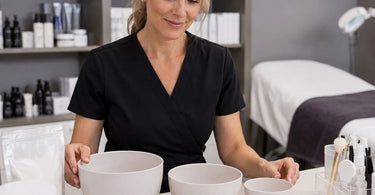
Efficiency drives success with this pick... and if your bowl isn't the right size, you're starting your back-to-back appointments with a huge disadvantage. Let's be real, the perfect alginate mask is a beautiful thing, but the path to that perfect, peel-off moment starts way before you apply the product. It starts with the right bowl. Picking the wrong mixing bowl might feel like a tiny detail compared to the serums you use or the fancy Facial Steamer in your treatment room, but that little mistake can cost you time, product, and client satisfaction. An improperly sized bowl can lead to inconsistent mixing, excess air bubbles, and a messy, lumpy mixture that is a nightmare to apply, leaving you with a clumpy mess instead of a flawless, skin-pampering mask. This is not a drill. This is about how to choose the bowl that turns you into an alginate artist, one perfect application at a time."
Because we here at Pure Spa Direct adore a good beauty hack, but we worship a professional-standard protocol, we are going to deep-dive into the surprisingly complex world of bowl sizes. Think of this as your official guide to mastering the art of the alginate mix. We're talking about the size that works for your specific type of service, the material that makes clean-up a breeze (so you can get to your next appointment without scrubbing forever), and why getting this right makes you look like a total pro in front of your clients. Gone are the days of using whatever bowl is closest or mixing a huge batch when you only need a little bit. We are stepping into an era of precision and pure, unadulterated mixing zen.
The Goldilocks Principle of Alginate Bowls
The central problem for many estheticians is simple: they are using the wrong bowl. It is either a massive mixing bowl that is overkill for a single facial, or a tiny little cup that forces you to mix too slowly or creates a giant mess on your station. This is where the Goldilocks principle comes in. You don't want too big, and you definitely don't want too small. You need one that is just right. The perfect bowl should make it easy to achieve a smooth, lump-free consistency without wasting product or creating a whole lot of extra work. When you are working with alginate, timing is everything, because once you start mixing, that timer is ticking. You need a bowl that allows for quick and efficient blending while maintaining a professional, tidy workspace.
Small Bowls (100-200 ml): The Facial Specialist's Best Friend
For estheticians who focus on facial treatments, the small bowl is the undisputed champion. Typically ranging from 100 to 200 ml, this size is designed for precision. It's perfect for mixing smaller batches of alginate, which is exactly what you need for a standard facial. Using a smaller bowl allows you to mix just the right amount of product, eliminating unnecessary waste and ensuring that you are not scrambling to use a huge batch before it begins to set.
Also, let's talk about the practical side of this. A compact bowl is much easier to maneuver around your workstation, which is always a good thing when you have a spa essentials kit scattered around. According to many industry sources, a 200 ml silicone bowl is a go-to for many professionals because it provides enough capacity for a single-serving facial mask while keeping the mixing process controllable . These smaller bowls are also perfect if you are working with a specific, high-end product that you don't want to waste, or if you are mixing custom blends for individual skin concerns. If a standard alginate mask requires about 30 grams of powder and 90 ml of water, you have the perfect amount of room to mix it without it sloshing over the edge .
Medium Bowls (250-400 ml): The All-Rounder for Full Coverage
Now, let's say you are doing a more extensive service. Maybe it's a full face and neck mask, or perhaps you are offering a combination treatment that requires a thicker layer. This is where the medium-sized bowl steps into the spotlight. These bowls, typically holding between 250 and 400 ml, are the all-rounders of the spa world. They provide the extra capacity needed for larger applications without being so massive that you feel like you are mixing a batch of cement in a construction site.
The 400 ml bowl is often cited as the optimal volume for mixing alginate masks for an entire face and neck . It gives you enough space to work the mixture to that perfect sour cream-like consistency that is so essential for a successful application . This size is perfect for those of us who hate being limited by space. You can really get your spatula in there and stir vigorously without worrying about throwing the mixture out of the bowl. This is the bowl you want when you are offering a full-service experience and want to ensure your client leaves looking like they just stepped out of a luxury magazine.
Large Bowls (Over 500 ml): For Body Masks and Crazy Busy Days
Okay, so this is the beast of the mixing bowl world. The large bowl, generally anything over 500 ml, is not for the faint of heart. This is your heavy hitter, your go-to for a full-body alginate mask or for those incredibly busy days when you are prepping for multiple treatments. If you are working in a high-volume spa where you are doing back-to-back services, having a large bowl can save you precious seconds.
However, let's be honest. Unless you are mixing for a body wrap or a group treatment, a large bowl is often overkill for a standard facial. You need to be careful here because if your bowl is too large for the amount you are mixing, you are going to have a hard time getting a consistent blend. The mixture will tend to spread out and you'll end up with a thin, watery layer that doesn't thicken properly. The large bowl is a specialized tool for a specific job, but when you need it, there is no substitute.
Silicone: The Superior Choice for Bowl Material
Now that we have size sorted, let's talk material. You want a flexible silicone bowl, and we are not just saying that because it looks cute on the shelf. Silicone mixing bowls are the clear winner for alginate masks for a host of very practical reasons . First and foremost, they are easy to clean. Alginate can be a bit of a beast to wash off, but a flexible silicone bowl can be inverted or flexed to pop the dried mask right out . No more soaking and scrubbing for an hour.
Moreover, silicone is non-reactive. Metal bowls are a no-go because the metal can chemically react with the alginate, altering its setting time and consistency . Plastic bowls can also be problematic if they are not the right kind; flimsy plastic can make mixing awkward and they are prone to staining. Silicone, on the other hand, has a smooth, non-stick surface that ensures the product mixes cleanly and slides right off after you are done . It also doesn't break when accidentally knocked off the table, which is a major bonus for anyone who has had that heart-stopping moment of dropping a glass bowl . The flexibility of a silicone bowl is a lifesaver, allowing for a more efficient and less messy mixing experience.
How to Use Your Bowl Like a Pro
Choosing the right bowl is only half the battle. You also need to use it correctly to ensure you are getting those perfect results every time. The process is pretty straightforward, but there are some pro tips that can make a world of difference. First, make sure your bowl is clean and completely dry before you start. Any residual moisture can affect the consistency of your alginate. Then, measure your ingredients accurately. Using the provided scoop or a digital scale is essential for replicating results. Most recipes follow a specific powder-to-water ratio, usually around 3:4 , so stick to it to avoid a runny or crumbly mess.
When mixing, the order of operations matters. It's generally recommended to add the powder to the water, not the other way around . This helps prevent lumps and ensures a smoother blend. Mix quickly and thoroughly, aiming for a smooth, thick consistency akin to sour cream. Once it is ready, apply immediately because the clock is ticking. With the right bowl size, the process is faster, cleaner, and way more satisfying.
The Bottom Line: Matching the Bowl to Your Treatment
Ultimately, the size of your alginate bowl should be driven by the services you offer and your personal workflow. There is no one-size-fits-all answer here, but there is a best bowl for your specific needs. A versatile professional will likely want a small bowl for facial masks and a medium one for full face-and-neck treatments. If you are a lash & brow enhancement specialist who occasionally offers facial masks, the small size is your new best friend.
Here's the quick breakdown you can apply to your practice: For a standard facial mask or smaller face areas, go with 100-200 ml. For full-face and neck masks, step up to 250-400 ml. And if you are doing body treatments, you will need the heavy-duty large bowl (500 ml+). It is all about making your job easier and giving your clients the best possible experience. You can find high-quality silicone bowls in various sizes in our Mixing Bowls collection. When you look at your mixing bowl collection, think about the services you offer most. Does your current selection match your needs? If not, it is time for an upgrade. A good bowl is an investment in your sanity and your client's satisfaction, and you can find the perfect one at Pure Spa Direct.
