
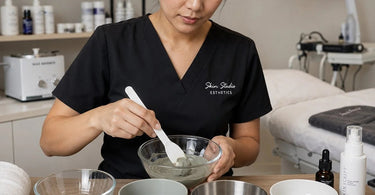
Clients notice this every single time. They might not say it out loud, but the moment you whip out that chipped, stained bowl that looks like it survived the 90s, they're mentally checking out. Maybe they're wondering if that's the same bowl you used for the last client's charcoal peel-off mask. Or worse, they're envisioning their expensive skincare blend picking up ghost flavors from last week's pumpkin enzyme concoction. Let's face it, ladies—we're professionals, and the tools of our trade should scream "expert," not "college dorm kitchen." Your mixing bowl is the unsung hero of your treatment room, a foundational spa essential that deserves way more thought than grabbing whatever's clean. It's the vessel where your magic happens, so let's chat about choosing the right type of bowl for professional face masks—because your clients deserve the perfect custom blend, served up in a bowl that's as sharp as your skills.
Let's dive into the surprisingly deep world of mixing bowls. From the clatter of stainless steel to the satisfying flex of silicone, there's a whole universe of options out there. Your choice impacts everything: from how well your products mix, to how easy they are to clean, and even how you vibe with your clients as you're crafting their treatment. The wrong bowl can make a simple task feel like a wrestling match with a sticky, lumpy mess. The right bowl? It makes you feel like a skincare genius. And honestly, who doesn't want to feel like a genius while mixing up a custom hydrating cocktail? We're going to break down the pros and cons of every kind of bowl we could get our spatulas on, so you can stop worrying about your bowl game and focus on what you do best: making skin look phenomenal.
Why Your Bowl Choice Actually Matters (Besides Looking Cute on the Trolley)
Okay, let's get real for a second. You might think a bowl is just a bowl, but in the world of professional skincare, that's like saying a scalpel is just a knife. The bowl you use can affect your client's experience and the treatment's effectiveness. We are talking about a crucial part of your Spa Essentials for Professionals kit. Think about it: you invest serious cash in premium, active ingredients. You wouldn't pour a fine wine into a dirty glass, would you? Same principle applies here. A non-reactive bowl ensures your Premium Skincare Products stay pure, potent, and perfectly balanced. Nobody wants a mask that smells like last week's dead sea mud because the bowl absorbed the odor.
Furthermore, in a high-paced salon or spa environment, durability is key. The constant wash, rinse, sanitize, and repeat cycle is brutal on your equipment. You need a bowl that can handle the heat—literally and figuratively. A bowl that cracks, chips, or stains easily isn't just an eyesore; it's a hygiene hazard and a waste of money. By choosing a high-quality, durable mixing bowl, you're making a smart investment in your business and showing your clients you value their safety and their time. Plus, let's be honest, fumbling with a flimsy bowl while trying to chat with your client is a recipe for disaster. A stable, well-designed bowl gives you the confidence to mix with one hand while holding a mini conversation with the other. You’re a multitasking queen, and your tools should keep up.
Material Matters: The Great Bowl Showdown
So, what are your options? Let's break down the contenders, from the classic to the modern, and see which one deserves a spot on your treatment cart. We'll examine the good, the bad, and the messy of each material .
Stainless Steel: The Professional's Workhorse
Ah, stainless steel. It’s the classic choice for a reason. This material is durable, non-porous, and incredibly easy to sanitize. In fact, medical-grade stainless steel bowls, like those from Equipro, can even be sterilized via autoclaving . That's the kind of clean you want when dealing with a client's skin. Steel bowls are also great for holding tools like dermaplane blades, keeping everything organized and within reach. They won't stain, they won't absorb smells, and they have a certain gravity that says, "I mean business." The downside? They can be a bit noisy if you're mixing vigorously, and they don't have that squeezable, flexible feel that some professionals love. But for pure functionality and hygiene, stainless steel is a top-tier choice for any Spa Tools & Implements inventory.
Silicone & Rubber: The Flexible Friend
If there's one trend that has taken the beauty world by storm, it's the rise of silicone and rubber mixing bowls. These flexible wonders are fantastic, and here's why: you can squeeze them to get every last drop of product out, minimizing waste and maximizing your high-end ingredients. Plus, they're non-slip, non-reactive, and gentle on your mixing tools. As our research shows, silicone bowls are odorless and easy to clean , making them a hygienic choice. They are perfect for mixing everything from clay masks to gels. You can even find ones with built-in measuring guides, like the ForPro Professional Collection Silicone Mixing Bowl, which takes the guesswork out of formulation . They're also great for travel or mobile services because they're lightweight and practically indestructible. Just make sure you're getting a high-quality, food-grade silicone to avoid any off-gassing or weird smells. A reliable rubber mixing bowl from brands like Graham Beauty can be a game-changer for your Advanced Facial Treatments.
Plastic (Polyethylene, Polypropylene): The Practical Picks
Don't sleep on plastic bowls, specifically those made from professional-grade polythene or polypropylene. These bowls strike a fantastic balance between cost-effectiveness, durability, and functionality. For instance, the Hive Polythene Bowl is praised for its resistance to staining, even when working with deeply pigmented products like charcoal masks . A smooth interior surface ensures you can get all that precious product out, and a flat base prevents tipping—a small feature that saves a ton of mess. Polypropylene (PP) is also known for its high clarity and chemical stability, making it a popular choice in cosmetic packaging . Bowls like these are lightweight, stackable for easy storage, and can handle the rigorous cleaning demands of a busy spa. They might not have the same high-end "wow" factor as a sleek metal bowl, but for pure practicality and performance, they are a solid choice for your Mixing Bowls collection.
Size and Shape: It's Not Just About the Look
You've picked your material, but the decision isn't over yet. Size and shape play a huge role in how easy and effective your mixing process is. For standard facial masks, a bowl with a 4-inch diameter is often ideal, offering enough space to mix comfortably without being unwieldy . However, if you're mixing larger batches for body treatments or creating masks for multiple clients, you'll want to scale up. Think about the depth too. A deeper bowl is great for whipping up masks that require a bit of air incorporation, while a shallower, wider bowl is better for mixing thicker, paste-like products.
Also, consider the shape of the interior. A bowl with a curved interior makes it much easier to scoop out every bit of product with your spatula, reducing waste. And don't forget about the base! A stable, non-slip base is non-negotiable. The last thing you want is your bowl sliding across the cart as you're mixing, potentially causing a spill and, more importantly, taking your focus away from your client. Whether you're setting up a Professional Nail Care station or a luxurious facial suite, the right sized bowl makes all the difference.
The Esthetician's Verdict: My Top Picks for Your Bowl Arsenal
After all this research, you might be wondering what I personally reach for in the treatment room. Honestly, my answer is "all of the above," but for different purposes. For my everyday, go-to mask mixing, I am a huge fan of a high-quality silicone bowl. The flexibility and non-stick surface just make the process so smooth and efficient. It's a joy to use and my clients love seeing the clean, modern design. I have been known to recommend the ForPro Professional Collection Silicone Mixing Bowl to my esthetician friends for its practicality and built-in measuring guide.
But when I'm doing a particularly luxe treatment, or if I'm preparing a blend with essential oils, I'll often reach for a stainless steel bowl. It feels more clinical and precise, which can be a great vibe for certain advanced treatments. It also holds up incredibly well over time. And for my travel kit or for quick, single-use masks, I always have a few stackable polythene bowls on hand. They're reliable, easy to clean, and just work. The key is having options. You wouldn't use the same brush for a powder contour and a liquid foundation, so why use the same bowl for every mask? Diversify your toolkit to make your job easier and your results better. And remember, no matter which you choose, proper sanitation is key. A great bowl is useless if it's not kept impeccably clean.
Conclusion: Elevate Your Practice, One Bowl at a Time
Choosing the right type of bowl for professional face masks is a small but mighty decision that impacts your professionalism and treatment outcomes. From the durable resilience of stainless steel to the flexible practicality of silicone and the reliable performance of professional plastics, each material has a place in a well-stocked spa or salon. The best bowl is the one that fits your workflow, budget, and style, helping you deliver the incredible, consistent results your clients expect and deserve.
Don't settle for subpar tools. Elevate your treatment room with high-quality mixing bowls that make you feel like the skincare goddess you are. Stock up on a variety of options to tackle any treatment that walks through your door. A confident professional knows her tools, and with the right bowl by your side, you're ready to craft the perfect mask for every beautiful face that trusts you with their skin.
