
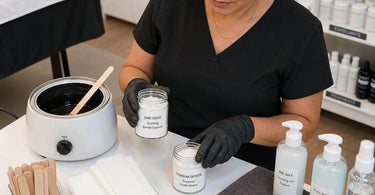
The smarter way to work... is knowing exactly what is in your wax pot before you go near a client with skin that throws a tantrum faster than a toddler denied candy. We have all been there, right? You are prepping for a Brazilian, the wax is the perfect temperature, your wax strips are ready, and then boom. Two hours later, your client looks like a tomato that lost a fight with a cheese grater. It is not you, honey. It is the chemistry. In the world of professional waxing supplies, two superhero ingredients are fighting for the crown of sensitivity: Zinc Oxide and Titanium Dioxide. They sound like robots from an 80s sci-fi movie, but I promise you, understanding these two will make you the miracle worker of the pre and post-waxing world.
Let's be real. Your clients are not walking in with perfect, pH-balanced, Instagram-filter skin. They are walking in with retinol rashes, mystery allergies, and that one friend who says, I never usually react to anything (spoiler: she always reacts). As a distributor of the best brands like ItalWax, Berodin, and Gigi, we have seen the good, the bad, and the ugly when it comes to reactions. So, grab a cup of coffee and let us nerd out on minerals so you can save your clients' skin (and your tip).
Why Your Sensitive Skin Clients Actually Hate Your Wax (And How to Fix It)
Before we pit Zinc vs. Titanium like a celebrity boxing match, we have to talk about why sensitive skin is such a drama queen. Sensitive skin often has a compromised moisture barrier. Think of it like a picket fence. In normal skin, the fence is solid. In sensitive skin, the pickets are loose, and the dog keeps getting out. When you apply heat and friction from hard wax or soft wax, the skin freaks out. It gets red, inflamed, or even breaks out in hives.
That is where our mineral heroes come in. Unlike synthetic fragrances or dyes that can make things worse, Zinc Oxide and Titanium Dioxide are physical properties. They sit on top of the skin like a tiny, microscopic security blanket. They do not penetrate; they protect. When you are shopping for bulk wax deals, looking for these ingredients is the smartest move you can make for your client retention.
Zinc Oxide: The Soothing Firefighter for Reactive Skin
If your client has skin that looks angry just by walking past a perfume counter, you need Zinc Oxide in your life. This stuff is the gentle giant of the professional stripless hard wax world. Historically, Zinc Oxide is what you put on a baby's bum to stop diaper rash. It is the same ingredient in calamine lotion. It is an astringent with mild antiseptic properties, meaning it dries out the oops and calms the red.
In wax formulations, Zinc Oxide acts as an anti-inflammatory. It actively reduces the histamine response. For your clients with rosacea, acne, or extreme sensitivity, a wax formulated with Zinc Oxide will stop the screaming (both the client and their skin). It is particularly excellent for brow waxing and lamination services because the skin around the eye area is the thinnest on the body. A study in the patent world even highlights how Zinc Oxide offers superior absorption in the UVA range, protecting vulnerable, thin skin from environmental stressors while you work .
Titanium Dioxide: The Velvet Rope for Physical Protection
On the other side of the ring, we have Titanium Dioxide. Do not let the fancy name scare you. You have seen this before; it is the white stuff in your sunscreen that makes you look like a ghost for a TikTok filter. In wax, Titanium Dioxide is a bit of a magician. It creates a physical barrier. It reflects heat away from the skin's surface .
This is a game-changer for soft strip wax applications. Because soft wax adheres to the hair and the strip, you want the skin itself to be as shielded as possible. Titanium Dioxide is inert, meaning it does not react chemically with the skin. It just sits there and says, Nope, not today, irritation. It gives the wax a creamy, opaque texture that spreads like a dream without dragging on the epidermis. It is the MVP for that professional wax warmer when you are doing full leg waxes and need the glide to be flawless .
The Showdown: Which One Wins for Your Salon Menu?
So, which one do you buy when you are restocking your complete waxing kits? The truth is, you usually do not have to choose. The best waxes for sensitive skin use both. However, let us break down the specific use cases because I know you have that one client.
Go for Zinc Oxide if: Your client has active acne, redness, or pustules. Zinc is drying and healing. If you are doing a back wax on a teenage athlete with breakouts, a Zinc-heavy formula (like the Satin Smooth Ultra Sensitive wax) is your holy grail . It will help clear the skin while removing the hair.
Go for Titanium Dioxide if: Your client has thin, aged, or highly fragile skin. Think of your 70-year-old client who wants her upper lip done. Titanium Dioxide is heavy on the physical protection. It also reflects heat, which is great for those who complain about the wax being too hot even when your wax warmer is set to low. It reduces the redness that happens purely from thermal trauma.
I often tell my esties that Zinc is the medication and Titanium is the armor. One heals, one protects. Use them together for a knockout punch.
Real Talk: When Sensitive Skin Waxes Go Wrong
Okay, let me vent for a second. You cannot just buy any wax labeled sensitive and call it a day. I have seen sensitive waxes full of rosin (a known sticky irritant) or artificial colorants that turn skin neon pink. The magic of Zinc and Titanium is that they are naturally white. If your ItalWax or Berodin formula is packed with dyes to make it look like a blue raspberry slushie, you are masking the ingredients that actually matter.
Also, application technique matters! Even the best premium skincare grade wax will fail if you apply it too thick or rip it against the grain. Always use a fresh wax spatula for every dip to avoid bacterial contamination. Sensitive skin is often actually just infected skin from double-dipping. Don't be that salon. Pure Spa Direct has the disposables to keep you safe.
Beyond the Wax: Building the Ultimate Sensitivity Protocol
You cannot just slap Zinc Oxide wax on a dirty face and expect a miracle. You need a system. At Pure Spa Direct, we believe in the holistic approach to waxing supplies. You need a killer prep step. Stop using alcohol! It strips the barrier and makes the sting worse. Use a pre-wax oil. It creates another layer of protection. The Titanium Dioxide in your wax will work with the oil, not against it.
And post-wax? I love a powder-based ingrown hair product for Zinc-heavy protocols. Because Zinc is already drying, follow up with a light, non-comedogenic moisturizer. For Titanium-heavy waxes, you often need less aftercare because the skin was so protected during the service. It is all about balance.
You should also consider the temperature of your room. If your room is too hot, the towel steamers are creating a sauna effect, and the wax is melting too thin. That changes how the Titanium Dioxide settles on the skin. Keep it cool, keep it clinical, keep it clean.
Product Spotlights: What to Buy Right Now
Since we are a distributor (not a manufacturer), I can give you the inside scoop on which brands are crushing the sensitivity game.
For a beautiful blend of both ingredients, look at the ItalWax sensitive lines. They have mastered the ratio that keeps the wax flexible (less cracking) while maintaining that skin-friendly barrier. If you want a hard wax that grips the coarse hair but leaves the skin calm, ItalWax is your ride-or-die.
For the luxury seekers, Lycon uses high-grade Titanium Dioxide to create a velvety texture that feels like butter on a hot biscuit. It is expensive, yes, but your clients who cry during Brazilians will convert to believers.
And for the budget-conscious but quality-obsessed, Starpil has a blue sensitive wax that uses Titanium Dioxide to reflect heat. It is a godsend for roll-on wax cartridges because it maintains viscosity without burning.
Mixing and Matching Your Supplies
Do not forget the accessories! The best Zinc Oxide wax in the world is useless if your hygienic table paper is giving your client a rash (yes, cheap paper can be scratchy). Also, check your gloves. Latex allergies are real. If you are treating sensitive skin, you should be wearing nitrile gloves. You cannot touch a face with lotion from your hands and expect the wax to work purely. The chemistry is only as clean as your setup.
I also recommend looking at your facial treatment products. If you are doing a sensitive skin wax before a facial, make sure the esthetician knows you used a Titanium-heavy wax. It can leave a slight residue that might interfere with chemical peels or hydrodermabrasion. Communication is key, team!
Conclusion: Stop the Redness, Start the Retention
At the end of the day, Comparing Zinc Oxide vs Titanium Dioxide In Sensitive Skin Waxes is not about finding a winner. It is about building a toolbox. Zinc Oxide is your healer for acne and inflammation. Titanium Dioxide is your shield for thin and reactive skin. Having both options in your salon means you never have to turn away a client because they are too sensitive. You just pull out the right warmer and the right wax, and you become the hero of hair removal.
Remember, we at Pure Spa Direct are here to make your life easier. We carry thousands of products from Tuel Skincare to CND, but today, my heart is with the waxers. Stock up on the good stuff, keep your accessories clean, and watch your business bloom. Now go forth and make those follicles fear you (in a gentle, mineral-based way).
