
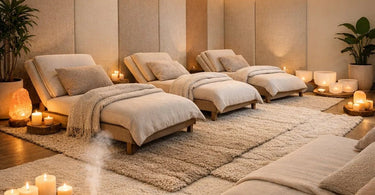
Put excellence into every detail, especially when that detail is the difference between a client hearing a gong and actually feeling it in their soul. Let's be real—if you are going to invest in a Sound Bath room, you want it to sound less like a clumsy dishwasher and more like the universe giving your clients a warm, vibrating hug. We have all seen those stunning photos of perfectly lit rooms with crystals and singing bowls, but if the acoustics are off, it is just a very expensive nap on the floor. A proper sound bath is a full-body experience, and as a professional in the spa and wellness industry, you need the environment to match the intention. At Pure Spa Direct, we believe that a successful sound bath relies on two major pillars: controlling the bounce of those healing frequencies (acoustics) and keeping your guests so comfortable they forget they have a spine (furniture). So, grab your favorite mug of tea, and let's build a sonic sanctuary that will have your clients floating out the door.
Before we dive into the nitty-gritty of wood veneers and zero-gravity chairs, we need to talk about the elephant in the room: sound waves are sneaky little rascals. They bounce off hard surfaces like a pinball machine. If you try to run a sound bath in a room with tile floors and glass walls, your beautiful crystal singing bowls are going to turn into a chaotic, echoey mess. You want to capture the resonance, not let it escape out the door. Think of the room as a musical instrument itself. You wouldn't play a Stradivarius violin with a hole in it, right? The same logic applies to your new wellness space. You are the conductor, and the room is your orchestra. Let's make sure every frequency hits the right note.
Why Your Spa Absolutely Needs a Sound Bath Room (Yes, Even You!)
Look, we know you are busy. Between scheduling waxing appointments, stocking up on gel polish, and ensuring your facial steamers are mint, adding a sound bath room might feel like "extra." But honey, in 2026, extra is the rent. Clients aren't just looking for a quick eyebrow wax anymore; they want a full mental health reset. A sound bath offers incredible benefits, from reducing anxiety to lowering blood pressure. It is the ultimate add-on service. Imagine this: a client comes in for a stressful waxing session (hey, it happens), and then they float into your sound room for 30 minutes of vibration therapy. They leave happy, relaxed, and booking their next appointment before they even hit the parking lot. It is a value-add that costs you relatively little in consumables but pays off massively in client loyalty. Plus, it looks amazing on your Instagram.
Acoustic Considerations: Taming the Wild Echo
Alright, let's get nerdy for a second. If you have a room with lots of hard surfaces—tile, glass, quartz—you are dealing with what acousticians call "reverberation time." In a bad room, that time is long, meaning sounds overlap and turn to mud. In a good meditation room, you want to keep the sound crisp and the overtones clean. The goal is to create a "dead" enough space that the sound doesn't bounce wildly, but a "live" enough space that the vibrations feel rich. So, how do we do that? Absorption and diffusion. Absorption kills the echo; diffusion scatters the sound so it feels smooth. You need a mix of both.
Let's talk about aromatherapy and sound working together. While you cannot smell acoustic panels, you can cover them in natural textures. The best sound bath rooms use natural materials. Wood, fabric, and wool are your new best friends. If you look at high-end installations like the Lamellow Spa acoustic panels , they use wood veneer over a recycled felt backing. These are perfect for spas because they can withstand up to 100% humidity (because we know your estheticians love their steam). These panels absorb the harsh high frequencies while letting the low, grounding tones of a gong travel through the room. It is a game-changer. You want to avoid plastic or cheap foam unless you want your space to look like a college radio station. Invest in moisture-resistant, beautiful acoustic solutions that match your spa's aesthetic.
The Floor and Ceiling: Don't Forget the Fifth and Sixth Walls
Everyone looks at the walls, but what about where your clients are lying down? Concrete floors are the enemy of a good sound bath. If you have tile or concrete, you must cover it. Hardwood is okay, but ideally, you want a thick, plush carpet or a cork floor. Cork is fantastic because it is sustainable, soft underfoot, and has natural sound-absorbing properties. However, since we are in the spa business, we also have to think about hygiene. You cannot just throw down a shag rug from the 70s. Look for washable, dense wool rugs or high-quality commercial carpet tiles that offer high Noise Reduction Coefficients (NRC).
And the ceiling? Oh, the ceiling. If you have drop ceilings with those standard white tiles, you are losing half your magic. Swap them out for wooden slats or acoustic clouds. There are even light therapy devices that double as acoustic diffusers now! A wooden slat ceiling allows the sound to travel up and bounce back down in a scattered, gentle way. It creates that "cathedral" effect without the echo. If you are on a budget, heavy, thick drapes (think velvet theater curtains) hung on the ceiling in a swag pattern can also break up sound waves. Remember, every surface is an opportunity to either ruin the vibe or enhance it.
Furniture Considerations: The "No-Crunch" Zone
Now for the fun part: the stuff your clients actually touch. You cannot have a sound bath if everyone is shifting around because their hip fell asleep. Standard yoga mats are okay for a 15-minute meditation, but for a 60-minute sound bath? Your clients will sound like a bag of potato chips every time they move. Crinkle, crinkle, pop. Not exactly zen. You need high-density, quiet materials. Massage tables are a great option if you raise them slightly off the ground, but they can feel clinical. The trend right now is moving toward floor-based luxury.
Invest in Zero Gravity Chairs or thick, padded floor loungers. Look for furniture covered in soft, durable fabrics like microfiber or high-quality cotton twill. Avoid leather or vinyl at all costs unless you want your clients sticking to the furniture (awkward!). Brands like Earthlite and Oakworks offer amazing zero-gravity options that are built to last in a commercial setting. You also need massage bolsters and pillows. You want to support the neck and knees. When a client is fully supported, they can let go of their muscles completely, allowing the sound waves to travel deeper into the tissue. It is the difference between listening to music and being played like an instrument.
Lighting: Set the Mood Without the Strobe Effect
You have the sound under control, and the furniture is cozy. Now, kill the lights. Harsh fluorescents will ruin the vibe faster than a cell phone ringing. You need dimmable, warm lighting. Think 2700 Kelvin or lower—that orange, fire-like glow. Better yet, use salt lamps or candle flickers (LED, please, we don't need a fire hazard). The lighting should be indirect. Point your lights at the walls, not the floor. You want to create a "cocoon" effect. Color-changing LED strips hidden under the furniture or behind acoustic panels can also enhance the sound bath. For example, a deep blue light helps lower heart rate, while a soft amber light encourages warmth and grounding.
If you are feeling fancy (and we know you are), consider a fiber optic star ceiling. Nothing says "transcendental experience" like lying down and looking up at a twinkling night sky while a gong washes over you. However, avoid any lighting that has an audible hum. Some cheap LED bulbs and transformers emit a high-pitched whine. In a silent room, that whine is deafening. Buy commercial-grade, silent drivers for your lighting. Your sound healer will thank you.
The Tech Setup: Speakers, Cables, and Crystals (Oh My!)
While live sound baths with a human playing the instruments are the gold standard, sometimes you need a recorded backup. Or, you might want to overlay nature sounds (like rain or ocean waves) with your live instruments. For this, you need a quality sound system. But here is the secret: do not use standard stereo speakers placed in the front of the room. That creates a "concert" feel. You want ambisonic or 360-degree sound. Look for speakers that sit in the middle of the room or multiple small speakers placed around the perimeter (in-ceiling is great) to create a surround effect. Recent innovations, like the Overtone installation by MindFidelity, use sculptural suspended circular speakers called "The Aureole" to place sounds in three-dimensional space around the listener . That is the level of immersion we are aiming for!
Hide your cables. Seriously. Nothing ruins a peaceful trance like tripping over a stray power cord. Use cable management systems and floor boxes. Also, consider the Klangwiege (Sound Cradle) concept . This is a piece of furniture designed like a wooden cradle where the strings are on the outside, making the whole wooden body vibrate. While that specific piece is specialized, the concept is vital: furniture that vibrates. You can achieve this with vibro-acoustic transducers attached to the bottom of your floor loungers. When the gong hits, the chair actually hums. It is a full-body massage without the hands.
Managing Moisture and Smells (Because Spas Are Wet)
Here is the harsh reality of the spa industry: water gets everywhere. Whether it is from the steam room next door, a spilled diffuser, or just the humidity from bodies breathing for an hour, your sound bath room needs to be waterproof. If you use wood, it must be sealed. If you use fabric, it must be antimicrobial and washable. The Lamellow Spa panels we mentioned earlier are designed to handle direct water splashes and 100% relative humidity . You need that level of durability. Similarly, Cambois Stone Acoustic Panels offer a real stone finish with a recycled PET felt backing, making them moisture-resistant and gorgeous .
Don't forget about disinfectants. You will be cleaning these floors and loungers constantly. Ensure your furniture can handle hospital-grade wipes without fading or cracking. And for the love of all that is holy, invest in a high-quality essential oil diffuser. Scent is the fastest route to the brain. A little lavender for relaxation, frankincense for spirituality, or cedarwood for grounding. But keep it subtle. You don't want your clients feeling like they licked a tree.
Putting It All Together: Your Shopping List from Pure Spa Direct
Ready to build this sanctuary? Here is your cheat sheet. First, check out our spa equipment collections. You need the bones of the room right. Second, look for luxury spa furniture that offers zero-gravity positioning. Your back will thank you. Third, do not sleep on the heated table toppers. A warm surface relaxes muscles instantly, making the sound waves travel further. We have hot stone warmers that double as towel warmers for the room—place a warm, rolled towel under the neck for a hug-like sensation.
Don't forget the accessories. Plush towels are a must for wiping away happy tears or sweat. Cotton pads soaked in rose water placed over the eyes block out light and soothe the skin. And if you are offering this as a high-end service, consider retailing small items. Let them take the calm home with spa retail products like sleep sprays or magnesium lotions.
Marketing Your New Sonic Sanctuary
You built it, but will they come? Absolutely, if you market it right. This is not just a "meditation class." It is a Sound Bath. It sounds sexy and mysterious. Use social media to record the feel of the room. Post videos of the singing bowls vibrating water (slow motion, please!). Partner with local yoga instructors or massage therapists to host special events. Sell it as a package: a 60-minute deep tissue massage followed by a 30-minute sound bath. Call it the "Reset Button." People will pay premium prices for that level of self-care. Highlight your new Serenity Essentials on your website. Make sure when clients search for wellness tools, they find you. This is your chance to stand out from the strip mall waxing salon down the street. You are offering an experience, a journey, a vibe shift.
In conclusion, creating a sound bath room is about balancing science (acoustics) with soul (furniture). You need to kill the echo, warm the floor, soften the lights, and support the spine. Whether you are a high-volume hair salon looking to add wellness services or a dedicated day spa, this addition will elevate your brand. So, get shopping! Grab some wax applicators while you are at it (because bills have to be paid), but treat yourself to that zero-gravity chair. Your clients are waiting to float away on a cloud of sound. And hey, if they fall asleep and snore? That is just positive feedback. Happy building, spa warriors!
