
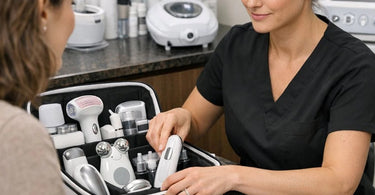
Unlock new revenue streams with this... reality check: at-home beauty devices are not going away. Clients are buying LED masks, microcurrent gadgets, cleansing brushes, facial toning tools, and every glowing little beauty contraption social media can toss into a cart. That can sound intimidating for salons and spas at first, especially when clients start saying things like, "I bought a device online, so I may stretch my appointments a bit." But the real story is much more interesting. At-home devices are not just affecting salon retention by creating competition. They are also creating a huge opportunity for beauty professionals who know how to position their expertise, treatment plans, and retail guidance in a smarter way.
The truth is, clients love convenience. They love control. They love feeling like they are "doing something" between appointments. But they also still crave results, reassurance, customization, safety, and the kind of visible improvement that only professional services can consistently deliver. That means the businesses that adapt well are not fighting the at-home trend. They are using it to strengthen loyalty, improve rebooking, and become the trusted guide in a much more device-happy beauty world.
Why At-Home Beauty Devices Are Changing Client Behavior
At-home beauty devices have changed how many clients think about maintenance. Instead of seeing professional services as the only path to results, some now see home devices as a way to delay, replace, or "stretch" visits. Even when those tools do not deliver professional-level outcomes, they can create the feeling of progress. And in beauty, perception is powerful. A client who feels productive at home may decide she can wait longer between facials, brow services, or skin consultations.
That shift can absolutely affect retention if a business depends only on routine rebooking without ongoing education. If the service experience is treated like a one-time event instead of part of a bigger skin or beauty strategy, clients can start thinking their home gadget is doing more of the heavy lifting than it really is. Suddenly, the appointment feels optional instead of essential.
That is where professional businesses need to get sharper. Clients do not just need a service. They need context. They need to understand the difference between home support and professional correction. They need help seeing how in-spa treatments, home care, and realistic expectations work together.
The Good News: Devices Have Not Replaced Expertise
Here is the part many professionals forget in moments of mild retail panic: a device is not a licensed professional. It cannot assess the skin in real time. It cannot adjust technique based on sensitivity, contraindications, seasonal changes, or treatment response. It cannot spot overuse, recommend the right companion products, or say, "Sweetheart, put the mystery wand down and let us talk about why your barrier is upset."
Clients may enjoy at-home tools, but that does not mean they are equipped to replace professional care. In fact, the rise of home devices often makes professional guidance even more valuable. People use devices more confidently when they understand how, when, and why to use them. They also need help knowing what not to do. That is a major opportunity for estheticians, spa owners, salon professionals, and treatment-based businesses.
Professional services tied to Advanced Facial Treatment Products for Salons & Spas, Hydrodermabrasion, Microdermabrasion, High Frequency Machines, Galvanic Machines, and Microcurrent Machines still offer a level of control, consistency, and customization that at-home tools simply do not match.
Where Retention Gets Hurt
Retention tends to suffer when a business says nothing about the home-device trend and hopes it quietly goes away. If clients are experimenting at home and the professional never brings it up, the client starts building her own beauty logic. Maybe she assumes her LED mask replaces her professional facial. Maybe she thinks her cleansing device means she no longer needs exfoliation guidance. Maybe she uses too many gadgets at once and blames your treatment when her skin gets cranky. None of that is ideal.
Retention also slips when appointments feel too generic. If a client can get a similar feeling at home, she becomes more sensitive to whether your treatment truly feels worth leaving the house, parking the car, changing into a robe, and pretending she did not just answer one last work email in the waiting area. Professional services need to feel more personalized, more strategic, and more results-driven than whatever is happening in her bathroom mirror at 10:30 p.m.
Where Retention Gets Stronger
The businesses that win are the ones that become the interpreter of beauty technology. Instead of acting threatened by at-home devices, they ask smart questions. What is the client using? How often? What results is she expecting? What does her skin do after? Is the device supporting her treatment goals or quietly sabotaging them?
That conversation instantly changes the relationship. Now the professional is not competing with the device. She is leading the plan. She becomes the expert who helps the client get better results safely and realistically. That kind of guidance builds trust, and trust is retention gold.
It also opens the door to more meaningful treatment plans built around professional services plus proper home support. A client may use a home device between visits, but the professional helps decide how often she should come in, what services she truly needs, and what products will complement her routine. That is much stronger than hoping she rebooks because the room smelled nice and the blanket was cozy, although to be fair, that never hurts.
Education Is the New Retention Tool
If at-home beauty devices are changing the market, education needs to become part of the service. Not in a boring lecture way. In a confident, helpful, client-loving way. Explain what the device can do, what it cannot do, and how professional treatments create deeper or more targeted outcomes. Help clients understand maintenance versus transformation. Clarify that home tools may support consistency, but professional services guide results.
This works beautifully in treatment categories linked to Premium Skincare Products for Spas and Salons, Dermaplaning, Ultrasonic Skin Scrubbers, Oxygen Facial Machines, and Radio Frequency (RF) Machines. It also applies outside skincare. Clients using home tools for nails, hair, or body care still need professional structure, safer use habits, and higher-level service results.
When you educate well, you remove confusion. And confused clients are far more likely to drift than guided ones.
How to Keep Clients Booking Even When They Love Their Gadgets
The first step is to reposition appointments as progress checks, not isolated treats. Clients should understand that their professional visit is where the strategy gets refined. You assess what is working, what needs adjusting, and what the next step should be. That makes the appointment more valuable because it is connected to a bigger plan.
The second step is to make services feel distinctly professional. That may include better treatment customization, stronger consultations, visible progress tracking, or more elevated service layering with categories such as Facial Steamers, Magnifying Lights, Wood's Lamps, Ultrasonic Facial Machines, and Spa Tools & Implements for Professionals. The more your treatment feels intentional and expertly tailored, the less likely a client is to think her home device is an equal substitute.
The third step is to connect professional services with home care, not separate them. Recommend products and routines that support what you are doing in the treatment room. That may include cleansers, serums, masks, barrier support, or finishing care found through Must-Have Spa Retail Products for Enhanced Client Experience or relevant searches like LED light therapy, microcurrent, and home skincare routine.
Do Not Ignore the Retail Opportunity
At-home devices are also a reminder that clients are willing to spend money on beauty technology and self-care if they believe it matters. That is not bad news. That is proof of demand. The opportunity is to guide that demand more intelligently. If a client is excited about results at home, she is often a great candidate for retail recommendations, maintenance products, and service-based upgrades that help her use those tools more effectively.
This is where retail can become part of retention instead of just an extra sale. A client who buys the right post-treatment products, soothing support, or routine-enhancing items is more likely to stay engaged with your recommendations. That ongoing engagement keeps her connected to your business between appointments.
And yes, it is perfectly acceptable to remind clients that not every device sold online is the glowing miracle it claims to be. Some are helpful. Some are underwhelming. Some are one clever video away from becoming drawer decor. Professional guidance helps clients spend better, use better, and stay loyal longer.
Retention Belongs to the Professional Who Leads
At-home beauty devices are affecting salon retention, but not in a simple all-bad, all-good kind of way. They are changing client expectations, creating new routines, and shifting how people think about maintenance. That can weaken retention when businesses stay passive. But it can strengthen retention when professionals step up as educators, strategists, and trusted experts.
At Pure Spa Direct, we know beauty and wellness businesses do not win by pretending trends are not happening. They win by adapting with confidence. The salons, spas, and treatment-based professionals who keep clients coming back are the ones who make their services more valuable, their guidance more useful, and their client relationships more intentional. Home devices may be here to stay, but so is the need for real expertise. And that is very good news for professionals who know how to use it.
