
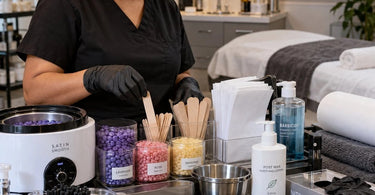
Quality drives loyalty with this tool... and in hands-on waxing education, the right tool is really an entire thoughtfully organized training kit. A well-built Complete Waxing Kit for Salons & Spas gives students, new hires, and developing professionals the supplies they need to practice a complete service instead of learning one isolated step at a time. Nobody becomes beautifully efficient at waxing by spending half the class hunting for the missing petite applicators, wondering who used the last strip, or staring into the warmer as if the wax might personally explain what went wrong.
For instructors, salon owners, spa managers, and experienced estheticians mentoring newer team members, a better training kit should do more than contain wax. It should reproduce the actual workflow of a professional service: consultation preparation, workstation setup, skin preparation, wax selection, temperature management, application, removal, cleanup, aftercare, sanitation, and resetting the station for the next service. Building the kit around that sequence makes training easier to teach, easier to repeat, and much closer to what trainees will eventually perform with paying clients.
Build the Kit Around the Service Flow
One of the easiest mistakes in training is organizing supplies by what they are instead of when they are used. A shelf full of wax is impressive, but it does not teach workflow. Organize the training kit in service order so trainees learn a repeatable routine from the beginning.
A practical sequence starts with consultation and preparation supplies, moves into wax and application tools, then finishes with removal, post-wax care, cleanup, and sanitation. Keeping Pre & Post-Waxing Products physically positioned before and after the application supplies can even reinforce the order visually. It sounds simple, but visual organization is a wonderful teacher. It also reduces the classic training-room question, "Wait... what do I use next?"
Include Both Hard Wax and Soft Wax
A strong hands-on training kit should give trainees meaningful exposure to more than one wax format whenever the curriculum includes both. Professional Stripless Hard Wax helps students practice controlling bead size, consistency, pressure, edges, and removal without a strip. Hard wax is especially useful for developing the deliberate application technique required for smaller or more sensitive service areas.
Soft Strip Wax for Effective Salon Hair Removal introduces a different set of skills. Trainees need to understand thin application, efficient coverage, strip placement, pressure, and removal technique. Practicing both formats helps prevent a student from becoming comfortable with only one product style and then feeling completely betrayed by physics when handed something different.
Brands can also provide useful variety during training. Collections such as Waxness, ItalWax, Berodin, Cirepil, and Gigi give professional educators and businesses different options when developing a program. The goal is not to overwhelm beginners with seventeen formulas on day one. Start with a manageable selection, teach the fundamentals well, and expand as technique becomes consistent.
Choose a Warmer That Supports Learning
The Professional Wax Warmers for Salons & Spas section of the kit deserves serious attention. Trainees need to learn that wax temperature is part of technique, not a background detail handled by mysterious warmer magic.
A training setup may use a single-pot warmer when concentrating on one wax or a multi-pot arrangement when students need to work with hard and soft wax during the same session. For example, Pure Spa Direct offers Waxness student kits built around both single digital warmers and double warmers. Those kits combine warming equipment with hard wax, soft wax, preparation products, post-wax products, applicators, and strips, creating a useful model for how a training station can be assembled.
Whatever warmer configuration you choose, trainees should practice setting up safely, monitoring consistency, keeping the exterior tidy, and following the manufacturer instructions for the specific wax and equipment being used. Learning to recognize workable wax consistency is far more valuable than memorizing one universal setting, because professional formulas and warmers can behave differently.
Stock More Applicators Than You Think You Need
Hands-on training consumes applicators at an almost supernatural rate. A student who is practicing section after section should never feel pressured to reuse a disposable implement simply because the practice kit was stocked too lightly.
Include several sizes from the Professional Wax Spatulas and Applicators for Salons & Spas collection. Larger body applicators support broad applications, while smaller applicators allow more controlled work on detailed areas. Having multiple sizes also creates opportunities to discuss why tool selection changes with the treatment area rather than teaching students to attack every service with the same wooden stick.
Consumables should be replenished generously before every training session. If the instructor has to ration spatulas like precious artifacts, the kit needs a restock.
Add Plenty of Strips in Useful Sizes
Soft wax practice requires an abundant supply of Quality Wax Strips & Rolls for Effective Hair Removal. Include different sizes when possible so trainees can practice matching the strip to the area being treated.
Pre-cut strips are convenient for structured sessions, while rolls can help trainees practice preparing materials for different treatment areas. The important part is providing enough inventory that students can repeat techniques until their movement becomes deliberate and consistent. Hands-on education works through repetition. Nobody masters strip placement because an instructor demonstrated it once while everyone nodded very professionally.
Make Skin Preparation a Required Part of Every Practice
Training kits often focus heavily on wax while treating preparation products like optional extras. That teaches the wrong lesson. Proper professional waxing begins before the applicator ever touches wax.
Include professional pre-wax products for cleansing and preparing the skin according to the selected system. Depending on the wax and protocol, the kit may also contain powder or another preparation product intended to help manage surface moisture. A complete student kit from Waxness, for example, pairs its waxes with pre-wax gel, pre-post oil, and waxing powder, demonstrating how preparation can be integrated into the system instead of treated as an afterthought.
Require trainees to practice the preparation sequence during every exercise, even when they are impatient to reach the exciting wax part. Repetition builds habits, and good habits are much easier to establish during training than to repair six months into somebody's professional schedule.
Teach Aftercare During Training Too
The service is not finished when the wax comes off. Post-service care deserves its own section of the kit and its own place in the training curriculum.
Include appropriate professional products for removing residue and finishing the service according to the product manufacturer's directions and your established protocol. You can also use training sessions to discuss professional aftercare communication and products clients may use between appointments, including relevant Ingrown Hair Products.
A trainee who learns application beautifully but freezes when asked what happens after removal has only learned half of the service. The better goal is a professional who can move confidently from preparation through finishing without mentally screaming for an instructor.
Create a Dedicated Sanitation Section
A better waxing training kit should make sanitation impossible to ignore. Include the appropriate disposables and Protective Gloves & Masks for Salon and Spa Professionals required by your procedures, along with access to Professional Cleaners & Disinfectants for Salons and Spas appropriate for the surfaces and implements in your workplace.
Training should include workstation preparation, contamination prevention, proper handling of disposable materials, cleanup, and resetting the treatment area. Follow applicable state licensing requirements, local regulations, product labeling, manufacturer directions, and your facility's established sanitation procedures.
A perfectly shaped wax strip does not cancel out a sloppy workstation. Professional technique and professional hygiene belong in the same lesson.
Use Table Protection and Disposable Supplies During Every Session
Practical training gets messy because practical training is supposed to get messy. Protecting the workspace lets students concentrate on technique without turning every accidental drip into a tiny workplace emergency.
Keep Hygienic Table Paper for Waxing, Spa & Massage Tables, appropriate wipes, cotton products, and other disposables readily available. Professional Cotton, Sponges, and Wipes for Salons & Spas can support preparation and cleanup tasks where appropriate to the specific products being used.
Training is also the ideal time to teach efficient reset habits. Students should finish an exercise by restoring the workspace to a defined ready state rather than wandering away from a battlefield of strips and applicators while pretending not to see it.
Consider Starting With a Complete Professional Kit
Building a training kit one component at a time provides maximum customization, but an existing professional kit can be a practical foundation. Pure Spa Direct's Complete Waxing Kits for Salons & Spas collection brings together options designed around professional service needs.
The Waxness Student Complete Waxing Kit with W-CUBE Digital Black Warmer, for example, includes a digital warmer, Russian Pearl hard wax beads, Azulene soft wax, body spatulas, small and large non-woven strips, pre-wax gel, pre-post oil, powder, instructions, and training-video access. A version with a double warmer provides a similar core assortment while allowing a training setup with two warmer chambers.
Another approach is a broader professional system such as the GiGi Pro 1 Kit, which includes a warmer, multiple wax options, applicators in several sizes, strips, preparation products, post-wax products, and support materials. For training focused specifically on hard wax, professional hard-wax kits can combine a warmer, larger quantities of wax, pre-wax lotion, powder, post-wax product, and multiple applicator sizes.
These examples illustrate the basic principle nicely: a useful training kit supports the whole service instead of handing a trainee one bag of wax and wishing her good luck.
Separate Training Inventory From Daily Service Inventory
If your salon or spa trains regularly, designate supplies specifically for education. Mixing classroom consumables with everyday backbar inventory creates shortages, inconsistent setups, and the delightful Friday-afternoon discovery that someone used the last sleeve of strips during Tuesday's practice session.
A dedicated training bin, cart, or cabinet can contain wax, applicators, strips, preparation products, finishing products, disposables, cleaning supplies, and backup items. Label quantities or establish minimum par levels so instructors can identify shortages before class begins.
For operations with frequent training, buying selected consumables through Bulk Wax Deals or larger professional supply formats may also simplify replenishment. Purchasing decisions should reflect training frequency, class size, product shelf life, storage requirements, and expected consumption.
Standardize the Kit for Every Trainee
If several students or new hires are training together, try to give each workstation the same basic layout. Standardized stations make demonstrations easier because everyone reaches for the same category of item in the same sequence.
Create a simple checklist that covers warmer setup, wax, applicator sizes, strips, skin preparation, finishing products, disposables, table protection, gloves where required, cleaning products, waste handling, and replacement inventory. Keep the checklist with the kit so trainees can learn to inspect their own station before beginning.
This also helps instructors evaluate workflow. When everyone receives roughly the same setup, technique differences become easier to identify. If one student finishes efficiently while another spends twelve minutes searching through a drawer, you know the problem probably is not the drawer.
Train for Consistency Before Training for Speed
Speed matters in a professional waxing business, but it should be built on top of controlled technique. New trainees need enough supplies to repeat applications without rushing toward a stopwatch before their movements are reliable.
Begin with deliberate practice: correct workstation setup, appropriate product selection, consistent wax handling, controlled placement, clean edges where relevant, confident removal, and organized finishing. Once those actions become repeatable, instructors can introduce timed exercises designed to improve efficiency without sacrificing service standards.
A well-stocked training kit makes this progression possible because students are not repeatedly interrupted by missing supplies. The equipment disappears into the background, and the instructor can focus attention where it belongs: observation, correction, repetition, and confidence.
Build a Kit That Can Grow With the Team
The smartest hands-on waxing kit is not frozen forever. As trainees develop, add products and exercises that expose them to different wax textures, application areas, service flows, and professional challenges. Browse Waxing Supplies for Professionals when expanding the program, or use targeted collections for wax, warmers, strips, applicators, and pre- or post-service care to fill specific gaps.
Pure Spa Direct is a distributor serving professional spas, salons, estheticians, and beauty businesses, so training managers can build a customized setup from individual supplies or start with coordinated professional kits. The best choice depends on your curriculum, team size, service menu, and the techniques you want trainees to practice.
Ultimately, building a better kit for hands-on wax training means giving learners everything they need to practice the entire professional workflow repeatedly and correctly. Stock the fundamentals generously, organize them in service order, make sanitation part of the routine, and create consistency between training stations. Do that, and your kit stops being a box of waxing stuff and becomes what it should have been all along: a practical teaching system that helps turn nervous beginners into confident professionals.
