
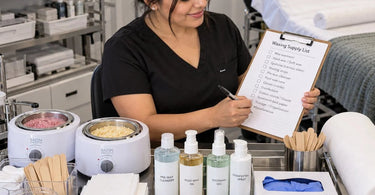
Invest in solutions that work for you, especially when you are turning an empty room into the professional waxing suite you have been dreaming about. Opening your own esthetician suite is exciting, empowering, and just a tiny bit overwhelming when you realize how many supplies are involved in removing unwanted hair professionally. From choosing the right professional wax warmers to stocking enough applicators for a busy appointment schedule, every purchasing decision contributes to your workflow, client experience, and operating costs. The good news? Building a professional waxing supply list does not require buying every shiny gadget in the beauty industry. With a thoughtful plan, you can create an efficient, comfortable, beautifully organized treatment space without accidentally spending your entire startup budget on decorative storage baskets.
A successful waxing suite needs more than excellent wax. You also need sanitation supplies, professional furniture, dependable equipment, disposable essentials, skin preparation products, and a reliable inventory system. This comprehensive guide breaks down the professional waxing supplies new estheticians should consider, explains what to purchase first, and offers practical strategies for making your investment work harder from your very first appointment.
Start With Your Waxing Service Menu Before Shopping
Before placing your first wholesale order, decide which waxing services your new esthetician suite will offer. Your service menu determines the types of wax, applicator sizes, treatment furniture, and consumable quantities you will need.
For example, an esthetician specializing in eyebrow shaping, facial waxing, and Brazilian waxing may prioritize flexible hard wax formulas and smaller applicators. A professional offering full legs, arms, backs, and other larger areas may also need soft wax, strips, and additional treatment supplies.
Common services to consider include:
- Eyebrow shaping and facial waxing
- Upper lip, chin, and sideburn waxing
- Underarm waxing
- Bikini and Brazilian waxing
- Full-leg and half-leg waxing
- Arm, chest, and back waxing
- Specialized waxing services permitted by your license and local regulations
Write down your planned services and estimate how many appointments you expect each week. This simple exercise prevents unnecessary purchases and helps you prioritize the professional waxing supplies that support your actual business model.
1. Choose Professional Wax Warmers You Can Depend On
Your wax warmer is one of the most important pieces of equipment in your treatment room. Consistent, manufacturer-recommended heating helps you maintain the appropriate working consistency and deliver efficient services.
When comparing professional wax warmers for salons and spas, consider capacity, temperature controls, cleaning convenience, compatibility with your selected wax, and the manufacturer's operating instructions.
A smaller warmer may be sufficient for a facial waxing specialist. A busy full-service waxing suite may benefit from two separate warmers, particularly when regularly using different wax formulas.
Look for equipment with stable construction, accessible controls, and a capacity that matches your appointment volume. Removable inserts can simplify certain maintenance routines when used according to manufacturer guidance.
Startup tip: Never assume that a numbered temperature setting represents the actual temperature of the wax. Follow the wax manufacturer's instructions, mix and test the product appropriately, and verify a safe working temperature before applying it to a client.
Consider keeping a backup plan for equipment problems. You might not need a second warmer immediately, but knowing how you would handle a malfunction can prevent an unexpected equipment issue from disrupting an entire afternoon.
2. Stock the Right Hard Wax and Soft Wax Formulas
Choosing professional wax is not simply about selecting the prettiest color. Although a gorgeous lavender wax certainly looks fabulous on a treatment cart, application characteristics, performance, and suitability for your services matter much more.
Hard Wax for Precision and Targeted Services
Professional stripless hard wax is applied to the treatment area, allowed to set, and removed without a separate fabric or nonwoven strip. It is commonly used for facial, underarm, bikini, and other targeted waxing services.
Different hard wax formulas offer different setting times, flexibility, application thicknesses, and working characteristics. Evaluate formulas based on your training, technique, service menu, and manufacturer recommendations.
Professional lines worth exploring include ItalWax, Berodin, Cirepil, and Waxness.
Soft Wax for Larger Treatment Areas
Soft strip wax is typically applied in a thin layer and removed with a suitable waxing strip. It can be an efficient choice for larger areas such as legs, arms, and backs when used with proper technique.
Some estheticians prefer maintaining both hard and soft wax options to accommodate their service menus. Others build highly specialized businesses around one waxing method.
Neither approach requires stocking an enormous number of formulas. Begin with products you understand, test them through appropriate professional training, and expand your selection as demand becomes clearer.
Smart purchasing strategy: Compare the usable quantity, recommended application technique, cost per service, and overall performance of each wax. A lower container price does not automatically mean lower treatment costs.
3. Do Not Forget Waxing Strips, Spatulas, and Applicators
Small disposable supplies may not be glamorous, but they can bring a perfectly organized waxing appointment to a screeching halt when they run out.
Every new waxing suite should have a dependable supply of professional waxing spatulas and applicators in sizes appropriate for the treatments offered.
Consider stocking:
- Wide wooden spatulas for larger areas
- Medium applicators for general body waxing
- Small precision applicators for eyebrows and facial areas
- Disposable applicators for specialized services
- Professional waxing strips and rolls for soft wax services
- Appropriate disposable containers and workstation accessories
Choose strip materials compatible with your wax formula and techniques. Precut strips offer convenience, while rolls allow professionals to customize lengths for different areas.
Most importantly, establish a strict no-double-dipping procedure. Use a fresh applicator whenever collecting wax from a shared container after contact with a client's skin, and follow applicable state board requirements. Never return a used applicator to the wax pot.
Those little wooden sticks are inexpensive. Your professional reputation is not.
4. Build a Complete Pre-Wax and Post-Wax Skincare Station
Professional waxing involves preparing the skin, performing the service correctly, and providing appropriate finishing care. Your waxing supply checklist should include products for all three stages.
Explore professional pre-wax and post-wax products that complement your selected wax system.
Pre-wax essentials may include:
- Professional pre-wax skin cleanser
- Manufacturer-recommended skin preparation products
- Appropriate pre-wax powder or protective product when indicated
- Disposable cotton rounds, gauze, or wipes
- Clean, labeled dispensing containers
Pre-wax products should be selected for the treatment area, skin condition, and wax manufacturer's application directions. Avoid assuming every client needs the same preparation.
Post-wax essentials may include:
- Post-wax cleansing products or residue removers compatible with the wax
- Soothing professional skincare products
- Fragrance-free finishing options for clients who prefer them
- Appropriate post-treatment moisturizer
- Printed or digital aftercare instructions
Specialized collections such as ItalWax Pre/Post can help you build a coordinated treatment system.
For clients concerned about bumps or ingrown hairs, explore ingrown hair products suitable for professional recommendations and retail. Explain when and how products should be introduced after waxing, according to product directions and individual skin tolerance.
Remember that recently waxed skin can be sensitive. Avoid unnecessary exfoliation or irritating ingredients immediately after services, and communicate realistic aftercare expectations.
5. Select Comfortable, Practical Treatment Furniture
Beautiful furniture makes an impression, but an esthetician suite must also function as an efficient professional workspace.
Your primary treatment table should provide appropriate client support, stable positioning, and practical access to the areas you wax. Consider adjustability, cleaning requirements, weight capacity, room dimensions, and the physical demands of repeated treatments.
Browse professional spa equipment and furniture to compare suitable options.
Your initial furniture checklist may include:
- A stable professional treatment table or suitable waxing bed
- An adjustable esthetician stool
- A mobile treatment cart
- Closed storage cabinets or organized shelving
- Professional task lighting
- A mirror for client consultations
- Hooks or designated space for client belongings
- A conveniently located lined waste container
If your suite is compact, measure everything before ordering. That beautiful oversized cabinet loses some of its charm when you have to turn sideways to reach the wax warmer.
Use appropriate hygienic table paper, clean linens, or other approved table coverings to maintain a practical service setup.
Stock additional salon and spa bedding and professional towels when your treatment protocols require them. Establish a clean-linen storage area and a separate location for used linens.
6. Make Sanitation and Infection Control Nonnegotiable
A professional waxing suite needs a carefully planned sanitation station from day one. Proper infection prevention supports client safety, employee safety, regulatory compliance, and your business reputation.
Stock appropriate professional cleaners and disinfectants intended for the surfaces and equipment you use. Follow product labeling, required contact times, and applicable local regulations.
Your sanitation supply list should include:
- Suitable disposable gloves in the correct sizes
- Hand soap and access to a handwashing sink as required
- EPA-registered disinfectants appropriate for applicable surfaces
- Disposable paper towels and cleaning materials
- Approved reusable-tool cleaning supplies
- Lined waste containers
- Clearly separated clean and used equipment storage
- Appropriate procedures and supplies for accidental blood exposure
Explore professional protective gloves and masks and other consumable protection supplies when organizing your opening order.
Clean and disinfect reusable nonporous implements according to the manufacturer's directions and state requirements. Dispose of single-use products after their intended use. Disinfection products should be used only where their labels authorize their use, and disinfectants intended for hard surfaces should not be applied to skin.
Waxing should not be performed over broken, infected, or otherwise unsuitable skin. Conduct an appropriate consultation and follow professional contraindication protocols. Be especially cautious with medications, recent skin treatments, and conditions that can increase the risk of skin lifting or injury.
Before opening, verify your state's esthetics rules, sanitation standards, permitted scope of practice, and any workplace safety requirements that apply to your business.
7. Organize Your Waxing Cart for Faster Appointments
An organized treatment cart can make your day noticeably easier. Instead of searching through drawers during a service, create a predictable arrangement where frequently used items are accessible without compromising sanitation.
A practical cart setup could include a designated clean supply area, conveniently positioned single-use applicators, skin preparation products, finishing products, and a separate collection point for waste.
Keep clean supplies protected from contamination and maintain appropriate separation between used materials and products intended for future clients.
Use labeled bottles and jars only when repackaging is permitted by the product manufacturer and applicable rules. Preserve required identification, instructions, and safety information.
Arrange products in the same order you use them during a typical appointment. This simple workflow improvement reduces unnecessary movement and helps you prepare consistently between clients.
A few extra minutes spent organizing before opening can save considerable frustration once your schedule fills up.
8. Add Professional Lighting and Helpful Accessories
Good lighting is especially important for facial waxing, eyebrow shaping, and detailed finishing work. Estheticians need to see the treatment area clearly without forcing uncomfortable positions or relying on harsh overhead lighting.
Consider adjustable magnifying lights or LED task lamps designed for professional treatment environments.
Additional helpful accessories may include:
- Precision tweezers appropriate for your services
- Small professional scissors where permitted and needed
- Disposable cotton products and wipes
- Protective table coverings
- Professional aprons or treatment apparel
- Wax residue removers for compatible equipment surfaces
- Product storage trays and labeled drawers
- Appointment consultation supplies
Browse waxing accessories and removers to identify practical additions without buying tools that your initial service menu does not require.
Every accessory should have a purpose. If you cannot explain how an item improves safety, service quality, efficiency, or client comfort, it may belong on your future wish list rather than your opening order.
9. Prepare Consultation Forms and Client Aftercare Materials
Professional services begin before the first application of wax. A thorough client consultation helps identify relevant skin concerns, treatment history, sensitivities, and other factors that may influence whether a service is appropriate.
Depending on your services and applicable requirements, prepare forms and procedures for:
- Client intake and contact information
- Medical and skincare history relevant to waxing
- Medication and topical product screening
- Recent exfoliation, resurfacing, or cosmetic procedures
- Contraindication assessment
- Informed consent and treatment documentation
- Service-specific aftercare instructions
- Future appointment recommendations
Clients using certain prescription skin treatments, retinoids, or other potentially sensitizing products may require modified services, professional clearance, or postponement. Follow your training, manufacturer guidance, and applicable standards rather than relying on a universal waiting period.
Use a secure booking or client record system appropriate for your business. Good documentation can support more consistent services and help you provide personalized, professional care.
Aftercare materials should explain normal temporary skin responses, practical precautions, and circumstances that warrant medical attention.
10. Consider Retail Products Without Overloading Your Shelves
Retail can complement your waxing services and give clients convenient access to appropriate home-care products. However, a new suite does not need to resemble a department store beauty counter.
Start with a small selection that supports your services and responds to questions clients frequently ask.
Potential retail categories include gentle moisturizers, suitable exfoliating products, and targeted ingrown hair care.
Explore professional spa retail products for options that align with your client needs.
Evaluate retail inventory using actual demand, product expiration dates, storage requirements, and realistic profit margins. Avoid recommending products that are inappropriate for a client's skin simply to increase a sale.
When retail recommendations are thoughtful and relevant, they can extend the client experience beyond the treatment room.
11. Build a Realistic Startup Budget for Waxing Supplies
One of the biggest mistakes new suite owners make is spending too much on attractive equipment while overlooking the recurring cost of disposables.
Divide your startup purchasing plan into three categories.
Category One: Essential Equipment. These are purchases such as your treatment table, professional wax warmer, stool, task lighting, and cart. Prioritize durability, safety, and everyday functionality.
Category Two: Recurring Treatment Supplies. These include hard wax, soft wax, strips, applicators, gloves, cleansers, finishing products, paper products, and other single-use materials. They must be replenished based on actual service volume.
Category Three: Optional Upgrades. Decorative displays, upgraded furniture, additional equipment, and extensive retail inventory may enhance your suite later but should not prevent you from purchasing essential service supplies now.
Rather than setting one enormous spending target, calculate how much your planned services will consume.
For example, if a typical service uses a certain quantity of wax, applicators, gloves, and finishing products, total those costs and compare them against your service price. Include cleaning supplies, laundry, transaction fees, rent, utilities, insurance, labor, and other overhead in your broader profitability calculations.
Use a simple formula: Estimated supply cost per service = total consumable cost used during that appointment.
This number is not your complete service cost, but it provides a useful foundation for pricing and inventory planning.
When your appointment schedule becomes predictable, consider bulk wax deals for products you consistently use. Bulk purchasing can lower unit costs when quantity, shelf life, storage space, and actual demand justify the investment.
A bargain is only a bargain if you use it before it expires.
12. Create a Reordering System Before Your First Busy Week
Nothing inspires an emergency shopping session quite like discovering you have enough applicators for three appointments and seven clients booked tomorrow.
Establish an inventory tracking process before opening your doors.
For each frequently used supply, record the product name, supplier, package size, typical weekly usage, average delivery time, and minimum quantity you want available.
A useful reorder calculation is: Reorder point = expected usage during supplier lead time + safety stock.
For example, suppose your suite uses approximately 200 applicators weekly, your expected replenishment time is one week, and you want another 100 applicators available as backup. Your reorder point would be 300 applicators.
This is an illustrative calculation, not a universal stocking requirement. Adjust the numbers for your appointments, supply chain reliability, and storage limitations.
Review stock levels weekly when your business is new. As you collect more information, refine your ordering quantities and identify products worth purchasing in larger packages.
Keep frequently used supplies within easy reach while protecting unopened backup inventory from heat, moisture, contamination, and unsuitable storage conditions.
Your Professional Waxing Supply Checklist: What to Order First
Ready to turn your research into an actual opening order? Use this organized checklist as your starting point.
Essential Waxing Equipment:
- Professional wax warmer compatible with your wax
- Appropriate hard wax formulas
- Soft wax if included in your service menu
- Stable treatment table
- Esthetician stool and treatment cart
- Adjustable task lighting
Application and Removal Supplies:
- Small, medium, and large disposable applicators
- Professional waxing strips if needed
- Precision tweezers
- Pre-wax cleanser and compatible preparation products
- Post-wax finishing products
- Cotton rounds, wipes, and other necessary disposables
Sanitation and Client Protection:
- Disposable gloves
- Appropriate cleaning and disinfecting products
- Hand hygiene supplies
- Clean linens or disposable coverings
- Lined waste containers
- Separate clean and used supply storage
- Relevant workplace safety procedures and supplies
Business and Client Experience Essentials:
- Consultation and consent documentation
- Printed or digital aftercare instructions
- Booking and payment system
- Inventory tracking worksheet or software
- Storage organizers and product labels
- Basic client comfort accessories
For a convenient starting point, explore complete professional waxing kits. Compare kit contents against your checklist before purchasing, since a kit may cover only part of your equipment and consumable needs.
Common Waxing Suite Supply Mistakes to Avoid
Even experienced beauty professionals can underestimate how different managing an independent treatment suite feels from working in an established spa.
Buying too many wax formulas: Start with a focused selection that suits your training and services. Expand after you have practical experience with your chosen products.
Underestimating disposables: Gloves, applicators, strips, and table coverings can disappear surprisingly quickly during a fully booked day.
Ignoring storage space: Bulk cartons may offer appealing pricing, but they still need a clean, appropriate place to live.
Choosing furniture based only on appearance: Evaluate comfort, durability, cleaning requirements, and accessibility before making a major purchase.
Skipping sanitation planning: Safe treatment procedures and adequate supplies must be established before serving clients, not after an inspection or unexpected incident.
Forgetting inventory replenishment: A stocked opening day does not guarantee a stocked second month. Build reordering into your weekly business routine.
Buying optional extras before essentials: Your suite can absolutely become an Instagram-worthy beauty sanctuary. First, make sure it has everything necessary to perform the services clients are booking.
Where to Find Professional Waxing Supplies for Your New Suite
Building a professional waxing supply list becomes much easier when you can compare treatment essentials, equipment, consumables, and compatible skincare products in one place.
Pure Spa Direct is a professional beauty and wellness supply distributor offering products from a broad selection of manufacturers and brands. That makes it a practical resource for estheticians comparing supplies for different budgets, treatment menus, and professional preferences.
Explore the professional waxing supplies collection for foundational products, then browse specialized categories including hard wax, soft wax, wax warmers, applicators, and pre-wax and post-wax care.
You can also compare professional waxing brands such as Starpil, Lycon, and Gigi, depending on the formulas and systems you prefer.
Check individual product specifications, packaging quantities, equipment compatibility, and availability when building your final order.
Frequently Asked Questions About Starting a Waxing Suite
What waxing supplies does a beginner esthetician need?
A new professional waxing suite generally needs a suitable wax warmer, appropriate wax formulas, disposable applicators, waxing strips if using soft wax, pre-wax and post-wax skincare, gloves, sanitation supplies, a treatment table, and organized storage. Exact requirements depend on services offered, professional training, and local regulations.
Should a new esthetician buy hard wax or soft wax?
That depends on the planned service menu and the waxing methods the esthetician has been trained to perform. Hard wax is commonly selected for targeted and sensitive areas, while soft wax is frequently used for larger areas. Many professionals use both.
How much wax should I purchase before opening?
Estimate your expected appointments, product usage per service, supplier lead time, and available storage space. Begin with a manageable inventory and increase purchasing quantities when you have reliable usage data.
Is a professional waxing kit enough to open a suite?
A professional waxing kit can be a useful starting point, but it may not include treatment furniture, sanitation products, protective supplies, linens, client documentation, or enough consumables for ongoing appointments. Review all kit contents carefully.
What should I prioritize when my startup budget is limited?
Prioritize safe, dependable equipment, suitable professional wax, sanitary disposables, appropriate cleaning and disinfection supplies, and functional treatment furniture. Consider postponing decorative upgrades and extensive retail inventory until your business generates more predictable demand.
How can I reduce waxing supply costs without sacrificing quality?
Track consumable usage, compare package quantities, avoid unnecessary product duplication, reduce preventable waste, and establish consistent reordering procedures. Bulk orders can be helpful for frequently used products when shelf life and storage requirements make sense.
Build a Waxing Suite That Works as Beautifully as It Looks
Opening your own esthetician suite is a major professional milestone. A thoughtful waxing supply list gives you a practical foundation for delivering consistent services, managing expenses, and creating a comfortable client experience.
Focus first on the essentials: reliable equipment, appropriate wax formulas, disposable supplies, sanitation products, effective skin preparation, and a functional treatment room layout. Then build your inventory around your actual appointment schedule rather than every exciting product launch.
As your business grows, you can expand your wax selection, refine your treatment protocols, introduce thoughtful retail options, and invest in additional equipment that supports your goals.
Ready to start stocking your space? Explore professional waxing supplies at Pure Spa Direct and build an opening order around the services you plan to offer.
Your dream suite deserves a strong foundation, your clients deserve professional care, and your future self deserves a treatment cart that actually contains enough applicators. Now that is what we call a smooth start!
