
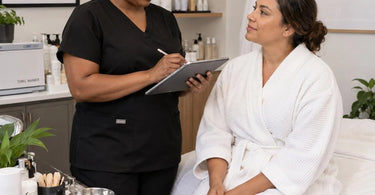
Small changes make a big difference. Especially when those small changes involve remembering that Mrs. Patterson hates the scent of lavender, that Jessica always wants the extra firm massage pressure, and that Amanda prefers complete silence during her lash and brow services. You know what I am talking about. The difference between a client who books once and a client who becomes your Thursday afternoon regular often comes down to one simple thing: whether they have to repeat themselves. When a client walks in and you already know their preferences, it feels like magic to them. It is not magic. It is documentation. And it is the secret weapon that transforms your professional salon equipment investment into a client retention machine.
Here is the thing about client documentation that nobody tells you in beauty school. Allergies get all the attention. And yes, knowing that someone is allergic to lidocaine before a waxing service is pretty important. But what about the client who cannot stand the feeling of cold hands during a massage? Or the one who specifically requested the chair by the window because she likes the natural light? Those details matter too. They matter a lot. Because when you remember them, you are not just providing a service. You are providing an experience. And experiences are what keep people coming back.
Why Documenting Preferences Matters More Than You Think
Let us talk numbers for a moment. Industry research shows that personalization during visits is important to the vast majority of salon and spa regulars. When clients feel known and remembered, they return. When they have to re-explain their preferences every single time, they start looking at the salon down the street that might actually remember them.
Think about the last time you went somewhere and had to repeat your entire life story to a new person. Annoying, right? Now imagine paying premium prices for that privilege. Your clients feel the same way.
The solution is not complicated. It just requires a system. A place where you capture the little things. The quirks. The preferences. The stuff that makes each client unique.
The Anatomy of a Client Preference Profile That Actually Works
A client consultation form is a great start. But most forms stop at medical history and allergies. They miss the gold. Here is what a preference profile should actually include.
Comfort and environment preferences. Does she want the room warmer or cooler? Does she prefer the lights dimmed? Is she a talker during her facial steamer treatment or does she want to zone out in silence? These are the details that separate a good experience from a great one.
Service-specific notes. For massage therapy, document pressure preferences. Does she want deep tissue work that makes her question her life choices, or is she looking for something more relaxing? For gel polish services, note her preferred nail shape and whether she likes to be chatty or needs quiet time. For ItalWax waxing, document her pain tolerance and whether she wants a conversation distraction or a deep breathing session.
Product preferences and aversions. She loves the scent of the sugar scrub you used last time. She hated the texture of that one moisturizer. She has a strong opinion about which massage lotion absorbs faster. Write it down.
Communication style. Does she prefer text reminders or phone calls? Does she want you to reach out about appointments or will she book when she is ready? Respecting communication preferences is a form of respect, period.
Personal details that build rapport. Her dog's name. Her daughter's wedding date. The fact that she is training for a marathon. These small pieces of information turn transactions into relationships.
How to Capture Preferences Without Making It Weird
Nobody wants to feel like they are filling out a government background check when they come for a hydrodermabrasion treatment. The key is to make preference documentation feel natural and conversational.
Start during the consultation. When you are doing your intake conversation, ask open-ended questions. Not just about allergies and medications, but about what they are hoping to get out of the experience. What they loved about their last service somewhere else. What they would change if they could.
Observe during the service. Pay attention to non-verbal cues. Did she flinch when you turned up the steam? Did she seem uncomfortable with the room temperature? These observations become notes in her profile.
Ask at checkout. A simple question like, Is there anything we could do differently next time to make your experience even better? opens the door for valuable feedback.
Update immediately. The moment the client leaves, take thirty seconds to jot down what you learned. If you wait until the end of the day, you will forget. Your memory is good, but it is not that good.
The Tools That Make Preference Documentation Easier
You do not need fancy software to do this well. You need a system that works for your workflow.
Paper cards in a file box. Old school, yes. But it works if you are organized. Keep a card for each client with sections for allergies, preferences, service history, and personal notes. Store them alphabetically so you can pull a file before the client arrives.
Digital client management systems. Many salon and spa business tools include client profile features that let you store notes, preferences, and service history in one searchable place. The advantage here is that anyone on your team can access the information instantly.
A simple spreadsheet. If software feels like overkill, a well-organized spreadsheet can work. Columns for name, contact info, allergies, service preferences, and notes. Sort it, search it, update it. Not glamorous, but effective.
A notes app on your phone. If you are mobile or work solo, a simple notes app can be your best friend. Create a note for each client. Search is instant. Updates are easy.
What to Do With the Information Once You Have It
Documentation is only valuable if you actually use it. Here is how to make that information work for you.
Review before every appointment. Before your client walks through the door, take thirty seconds to review her profile. What did she love last time? What did she mention was coming up? What did she say she wanted to try next?
Personalize the service. If she hates the smell of eucalyptus, skip the eucalyptus towels. If she loves a warm massage table warmer, make sure it is on before she gets on the table. If she always wants a steamed towel for her hands after a pedicure, have it ready.
Reference past conversations. How did the marathon go? How was the wedding? Did her son end up choosing that college? Remembering the details of her life tells her that you see her as a person, not just an appointment slot.
Send personalized follow-ups. A quick text the day after a service checking in on how her skin feels is nice. A text that says, Hope the marathon training is going well! is better. The more specific, the more meaningful.
Train your team. If you have staff, make sure everyone knows how to access and use client preference information. A client should not have to re-explain her preferences just because she got a different team member this time.
The Business Case for Becoming the Memory Keeper
Clients who feel known spend more. They refer friends. They leave reviews that mention specific staff members by name. They become the foundation of a stable, thriving business.
The inverse is also true. A client who feels like a stranger every time she visits is a client who is one Groupon deal away from leaving. She might not say anything. She might just quietly stop booking. And you might never know why.
Documenting preferences is not just about being nice. Although it is nice. It is about building a business that operates on relationships rather than transactions. It is about creating an experience that clients cannot get from the discount salon down the street. It is about making your top-quality equipment and premium skincare products even more valuable by pairing them with genuine care.
Common Mistakes to Avoid
Not writing things down immediately. You will forget. You think you will not, but you will. Write it down the moment you learn it.
Making assumptions. Just because a client liked a certain pressure last time does not mean she wants the same every time. Ask. Confirm. Preferences change.
Overstepping with personal notes. There is a line between remembering that she has a dog and asking about her recent divorce. Keep notes professional and kind. If you would not say it to her face, do not write it down.
Forgetting to update. A profile that still says she loves lavender when she has developed a sensitivity is worse than no profile at all.
Making it creepy. You know the difference between attentive and invasive. Trust that instinct.
Start Small, Start Today
You do not need to overhaul your entire client management system overnight. Start with one thing. Write down one preference for one client today. Then do it again tomorrow. Build the habit. The compound effect of small, consistent documentation will transform your client relationships.
Your clients will notice. They might not say anything explicitly, but they will feel it. The feeling of walking into a place where you are known. Where your preferences are remembered. Where you do not have to explain yourself.
That feeling is what keeps them coming back. And it all starts with a note, a card, or a profile that says: This client matters enough to remember.
