
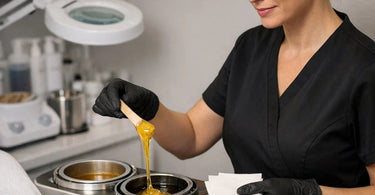
Stay ahead in a competitive world by mastering the art of the wax—specifically, the strategic use of hard wax to banish ingrown hairs and folliculitis. Let's be real, ladies: there is nothing quite like the horror of a client returning to your pristine salon with a map of angry red bumps that look suspiciously like a topographical map of the moon. You did everything right. The wax warmer was humming, the lighting was flattering, and you channeled your inner zen master. Yet, those little bumps (medically known as folliculitis) still crashed the party. Before you blame your technique or swear off waxing supplies forever, take a deep breath. The culprit isn't always the waxer; often, it's the wax itself—or rather, how we wield it. We are going to turn you into an Ingrown Hair Assassin, armed not with a magnifying glass and tweezers (though we have those too), but with strategic, science-backed hard wax techniques that keep skin smoother than a dolphin's belly for weeks. Grab your spatula, bestie; we are going to war against the bumps.
First, a quick pep talk about why your current BFF (soft wax) might actually be your frenemy in the fight against folliculitis. Soft wax is that friend who is great for a big night out—efficient, fast, and covers a lot of ground quickly. But like that friend who accidentally overstays their welcome, soft wax adheres to EVERYTHING, including the top layer of the epidermis. When you rip that strip off, you are exfoliating the hell out of the skin and often snapping the hair off above the follicle rather than pulling the whole bulb. This creates a sharp little tip that immediately tries to grow back, but because the skin is now slightly traumatized and sticky from the wax residue, that hair gets lost. It curls back into the skin like a teenager retreating to their bedroom, causing inflammation, bacteria (hello, ingrown hairs), and full-blown folliculitis. Hard wax, darling, is the upgraded, emotionally intelligent partner we discussed earlier. Because it is stripless and only shrinks around the hair shaft (not the skin), it yanks the entire hair out by the root, bulb and all. No breakage means no sharp tips to curl back and ruin your client's beach day.
Why Your Hard Wax Technique is Either Saving or Sabotaging Your Client's Skin
You can have the most expensive ItalWax on the market, but if your application technique is sloppy, you are still going to see those angry red bumps. Folliculitis often isn't just about the hair; it is about the bacteria getting trapped in the micro-tears left by improper removal. Strategic hard waxing is a dance, and you are the lead. The golden rule for preventing ingrowns is direction, direction, direction. Unlike soft wax, which you slather on with the grain, hard wax requires a specific flick of the wrist. Apply the wax AGAINST the direction of hair growth. Yes, you heard me. Push that creamy stripless hard wax into the hair. This allows the wax to encapsulate the hair from underneath. Then, create a tiny lip or tab at the edge. Once it is set (but not brittle—if it cracks when you flick it, you waited too long, sister), you pull it off AGAINST the direction of growth. This ensures the hair is pulled straight out of the follicle rather than dragged sideways. When you pull sideways? That is when the hair follicle gets scratched, the hair breaks, and you have essentially laid out a red carpet for bacteria to march right in and cause Folliculitis.
Pre-Wax Prep: The Secret Sauce to Bump-Free Skin
I cannot stress this enough: clean skin is happy skin, and happy skin doesn't throw a tantrum two days later. Before you even open that pot of Lycon or Starpil, you need to deep clean. Many of us are guilty of just wiping the area with a quick spritz of alcohol or a generic wipe. Stop that. You need a pre-wax cleanser that is specifically formulated to remove oil, sweat, and (gross but true) bacteria without leaving a residue. If you leave oil on the skin, the hard wax won't grip the hair. If you leave bacteria on the skin, when you open those follicles by pulling the hair, you are essentially injecting germs directly into the pore. Look for cleansers with antiseptic properties—think tea tree oil or salicylic acid. These are your soldiers. After cleansing, apply a thin layer of pre-wax oil. Wait, didn't I just say no oil? This is different, babe. Pre-wax oil creates a barrier. It coats the skin cells so the hard wax slips off the epidermis but holds tight to the coarse hair. This is the "strategic" part of strategic hard waxing. It prevents the wax from grabbing the skin and causing that superficial trauma that leads to post-inflammatory hyperpigmentation and, you guessed it, ingrown hairs.
The Products You Need to Banish the Bumps for Good
Let's talk retail therapy, because fighting folliculitis isn't just about the service; it is about what they take home. If you send a client out the door without a plan, they are going to go home, wear tight leggings, sweat at hot yoga, and then text you a photo of their angry bikini line demanding a refund. Arm them with the good stuff. First, you need a hard wax that is designed for sensitive skin. Look for Rosin-Free formulas. Rosin is a common adhesive agent that is also a top allergen. Switching to a brand like Waxness or Cirepil—which are known for their low melting points and flexible finishes—can be a game changer for clients who swear they are "allergic to wax." They aren't allergic to wax; they are allergic to cheap ingredients sticking to their live skin cells.
Next, you must stock up on Ingrown Hair Products. Specifically, serums that contain a cocktail of glycolic and salicylic acid. These chemical exfoliants work 24/7 to dissolve the dead skin cells that trap hairs. Tell your clients, "Use this every single night, or I will know, and I will judge you." Okay, don't say that, but be firm. Physical exfoliation is also key, but be gentle. Recommend a Sugar Scrub for the body (avoiding the area for 48 hours) to keep the skin turning over. For the love of all that is holy, tell them to stop wearing lace underwear and tight synthetic fabrics for at least 72 hours. Friction is the enemy of the follicle. Friction creates heat, heat creates sweat, sweat creates bacteria, and bacteria creates folliculitis. It is a domino effect of disaster.
How to Handle Active Folliculitis Without Losing Your Mind (or Your Client)
Okay, deep breath. Your client is already broken out. They have red pustules, and they are desperate. Do not wax over active folliculitis. I will say it again for the people in the back: DO NOT WAX ACTIVE BACTERIAL INFECTIONS. You will spread the bacteria, rupture the pustules, and turn a small breakout into a massive lawsuit waiting to happen. Instead, put on your esthetician nurse hat. If the case is mild (just redness, no oozing), use a cool compress to calm the inflammation. Apply a calming post-wax lotion with bisabolol or aloe. Recommend a spot treatment with salicylic acid or even a gentle benzoyl peroxide wash for the shower. If it looks truly angry (yellow crusts, spreading rapidly), refer them to a dermatologist. You are a waxing goddess, not a medical doctor. However, for prevention, your secret weapon is consistency. Encourage them to come back every 3-4 weeks like clockwork. When hair grows too long, it mats down. When it grows too short, the wax can't grab it. Consistent scheduling keeps the hair growth cycle synced, so you are always pulling mature hairs instead of breaking off baby hairs that are destined to become ingrown terrors.
Upgrade Your Tools and Your Technique
Finally, let's look at your hardware. Are you using a dirty spatula? Are you double-dipping? Stop it. Cross-contamination is a leading cause of Hair Folliculitis. Use a clean wax spatula for every single dip. It is annoying, yes. It uses more supplies, yes. But it saves your reputation. Also, check your wax warmer temperature. If the wax is too hot, it burns the follicle and causes a histamine reaction that looks exactly like folliculitis (but is actually just a thermal burn—yikes). If the wax is too cool, it gets crumbly and requires you to flick it five times, traumatizing the area. You want that honey-like, spreadable consistency.
Investing in a high-quality magnifying lamp isn't just for lash artists. Being able to see the direction of the hair growth on a microscopic level changes the game. You can spot the swirls (those annoying vortexes of hair) that are 90% likely to cause ingrowns if you wax them the wrong way. With hard wax, you can apply a small, circular patch over a swirl, let it dry, and flick it off from multiple angles. You cannot do that with strip wax without ripping the client's skin off. This is your superpower. When you master strategic hard wax techniques, you aren't just removing hair; you are performing corrective skin care. You become the specialist that people travel across town for. So, stock up on your bulk wax deals, grab your favorite professional stripless hard wax, and get ready to save the world from the tyranny of the ingrown hair. Your clients' thighs (and their summer bikini pics) will thank you.
)