
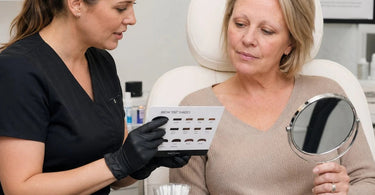
Tools that simplify your success... but let us be real for a hot second: there is no tool in your kit that can replace the power of knowledge, empathy, and a killer consultation. When a client with alopecia areata sits in your chair for a tinting service, they are not just looking for darker lashes or more defined brows. They are looking for a moment of normalcy, a boost of confidence, and a professional who "gets it." Alopecia areata is an autoimmune condition that causes unpredictable patchy hair loss, and while it is not contagious or life-threatening, the emotional toll can be significant for those who experience it . As beauty professionals, we have a unique opportunity to provide a sanctuary of skill and sensitivity. This guide will walk you through everything you need to know to handle tinting services for clients with alopecia areata, turning a potentially nerve-wracking appointment into a transformative experience. After all, our job is to enhance natural beauty, and sometimes, that means working with what we have—and making it look absolutely amazing.
Before we dive into the nitty-gritty of tinting, let us talk about the elephant in the room. Actually, let us talk about the "patchy" elephant in the room. Alopecia areata manifests as sudden, round patches of hair loss, often appearing on the scalp, eyebrows, or eyelashes. It is one of several types of alopecia, and it is crucial to distinguish it from other forms like traction alopecia (caused by excessive pulling) or alopecia totalis (complete scalp hair loss) . When a client discloses they have alopecia areata—or you observe the telltale smooth, round patches—it is your cue to switch from standard protocol to high-touch, high-empathy service. This condition can be unpredictable, and stress is a known contributing factor . So, while you are a brow and lash guru, you are also an unofficial therapist for the day. Make them feel heard, safe, and confident that you know exactly what you are doing. Your calm, assured demeanor is the first step in a successful service.
Consultation Is King (And Queen!)
So, how do you handle the actual consultation for a client with alopecia areata? It starts with being proactive. Do not wait for them to bring it up; create an environment where they feel comfortable sharing their concerns. A thorough consultation is non-negotiable, and for clients with alopecia, it is even more critical. Your goal is to assess the extent of hair loss, the condition of the remaining hair, and the sensitivity of the skin in the affected areas. You will want to ask about their medical history, specifically any history of eczema, psoriasis, or severe skin sensitivities, as these can be contraindications or require modified treatment . Plus, you need to know if they have had any recent eye surgeries, are using retinoids or blood thinners, or have a history of cancer or recent chemotherapy, as these are all absolute "no-go's" for most tinting services .
Document everything on their record card. Is the hair in the area sparse, brittle, or fragile? Are the bald patches completely smooth, or is there some fine vellus hair (peach fuzz) present? This information will dictate your entire approach. For example, if the brow area has very little hair, you might lean toward a tint that stains the skin slightly to create the illusion of density, similar to a henna brow effect . This technique is a game-changer for clients with thinning brows. And do not forget to manage expectations. Be honest with your client about what tinting can and cannot do. Tinting will not regrow hair, but it can beautifully enhance what is there and, when done correctly, can camouflage sparse areas by depositing color on the skin . That honesty builds trust, and trust brings clients back.
Prepping The Canvas: Skin Sensitivity and Safety First
Alright, you have had the talk and decided to proceed. Now comes the prep work. Clients with alopecia areata can sometimes have sensitive skin, so barrier protection is your new best friend. For eyebrow tinting, the goal is to prevent the tint from staining the skin around the hairs, but with alopecia, we are often trying to do the opposite on the bald patches themselves. It is a delicate balance. Use a barrier cream or petroleum jelly around the healthy brow hairs to keep the tint confined to those strands . However, on areas with sparse hair or complete loss, you might carefully apply the tint to stain the skin, creating the appearance of follicles. This is a powerful technique, but it must be done with precision. For eyelash tinting, the standard protocol applies, but with even more caution. Make sure you have your eye shields securely in place underneath the lower lashes to protect the eye, and apply a barrier cream to the skin above and below the lashes to prevent staining .
And for goodness sake, do not forget the patch test! This is non-negotiable for any tinting service, but even more so for a client with a condition that may indicate a more reactive immune system . Recommend they remove their contact lenses before the service to avoid irritation . The eyes are a delicate area, and the last thing you need is a client's eyes watering mid-application, which can ruin the tint and cause a mess. Keep a clean eye bath and distilled water on hand, just in case . It is better to be a Boy Scout and be prepared than to have a panicked client with pink eyes. Your preparation shows them you are a professional who cares about their safety and well-being, not just getting them out the door.
Tinting Techniques: The Art of The Camouflage
Now for the fun part—the actual application. The technique you use will depend heavily on the areas of hair loss. Let us break it down by service:
Brow Tinting for Alopecia Areata
For brows that have patches of missing hair, the approach is two-fold. First, tint the existing hairs as you normally would. Then, for the bald patches, you can use the tint to stain the skin. This is where a product like Brow Henna can be an absolute lifesaver because it is formulated to stain the skin and hair simultaneously, creating a much more natural, fuller look . Work slowly, using a fine-tipped brush or a cotton-tipped orange stick . Apply the tint to the skin in the direction of natural hair growth. It is like drawing individual hair strokes with color. For clients with resistant hair, such as red or white hairs, you may need to leave the tint on a little longer, checking the color development every minute or so . Remember, it is easier to add more color than to remove it if it is too dark.
Lash Tinting for Alopecia Areata
Lash tinting for clients with alopecia requires a steady hand and extra patience. If the lashes are thinning or have gaps, your application needs to be meticulous. Use a Professional Lash and Brow Tint and mix it according to manufacturer instructions . Ask the client to look down and apply the tint to the top of the lower lashes, then have them close their eyes and apply it to the upper lashes, getting right down to the base . To get those tricky baby lashes, gently lift the fold of the eyelid with your fingers to expose the base of the lash line . Cover the eyes with slightly dampened cotton pads to trap in warmth and aid development. Do not apply tint and wander off—check the development frequently. And remember, the shortest lashes are often the most important to color for the full-eyed effect.
Aftercare Advice: Setting Them Up For Success
Congratulations, you have just given your client a major confidence boost! But your job is not done until you have given them proper aftercare advice. This is a crucial part of the service that ensures the tint looks fantastic for as long as possible and prevents any adverse reactions . For lash and brow tinting, the main rule is to avoid getting the area wet for the first 24 hours. Advise them to steer clear of steam, saunas, and heavy sweating for a couple of days . Remind them to use oil-free makeup removers around the eye area, as oil can break down the tint and cause it to fade faster. For clients with alopecia, also suggest they be gentle when cleansing the area, using a soft touch to avoid irritating the skin or pulling out fragile hairs. This is also a great opportunity to recommend some top-notch retail products like a gentle skin cleanser or a nourishing conditioning oil that is safe for sensitive skin.
For clients who have used the tint to stain their skin, let them know that the skin stain will fade faster than the hair tint. This is completely normal and they should expect to schedule a touch-up sooner than the standard 6-8 weeks . Reassure them that the next appointment will be even quicker since you have already mapped out the areas that need coverage. The aftercare chat is the final touch that cements your reputation as a caring professional. It shows you are not just a one-and-done service provider but a partner in their beauty journey.
Building A Loyal Clientele: The Trust Factor
Becoming a specialist in services for clients with alopecia areata is not just about learning new techniques; it is about building a reputation as an inclusive, safe, and understanding professional. Clients with alopecia often feel vulnerable and anxious about seeking beauty services. When you master the art of tinting for their specific needs, you are not just gaining a customer; you are gaining a loyal advocate. Word-of-mouth is powerful, and the trust you build with one client will ripple through their community. Make sure your service menu highlights your ability to work with clients who have hair loss conditions. And guess what? You are going to need the right tools and products to deliver these specialized services consistently. That is where a robust wholesale partner like Pure Spa Direct comes in.
Think about it. You need a vast selection of Professional Lash and Brow Tints to handle every hair type from jet-black to resistant grey. You need the best barrier creams to protect sensitive skin, top-notch eye shields for safe lash application, and the most precise applicators and spatulas for detailed work. A trusted supplier ensures you are using high-quality, professional-grade products that deliver consistent results. With a wholesale account, you can stock up on everything from the Lash and Brow Enhancement Services category to the professional cotton and wipes you use for cleanup. When you have the right supplies, you can focus entirely on what matters most—giving your client an incredible experience.
The Bottom Line
Handling tinting services for clients with alopecia areata is an essential skill that elevates you from a good technician to a great one. It is about recognizing that our industry has the power to heal, to build confidence, and to make people feel seen. By combining your technical expertise in professional tinting with a hefty dose of empathy and clear communication, you can turn a potentially anxious appointment into a transformative, self-esteem-boosting experience. Remember, it all starts with a thorough consultation, moves through careful preparation, relies on precise application, and ends with detailed aftercare advice. And when your clients leave your chair, they are not just leaving with darker lashes or brows—they are leaving feeling like themselves again. So, stock up on your spa essentials, invest in the best tinting products, and get ready to welcome a whole new group of loyal clients into your chair. They are going to love you for it, and honestly, who does not love being a hero?
