
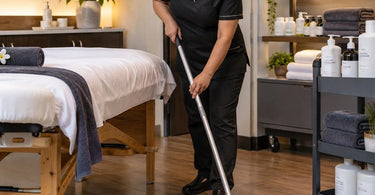
Proven results await you... and sometimes they start with something as simple as keeping your massage room floor from turning into an accidental skating rink. A beautifully designed treatment room loses a little of its relaxing charm when the therapist has to shuffle across the floor like a penguin on ice. Between massage oils, lotions, creams, cleaning products, and everyday foot traffic, slippery floors can become a surprisingly common problem in professional spas and massage studios. Fortunately, learning how to keep massage room floors from becoming slippery does not require a major renovation or an elaborate cleaning ritual. With smart product choices, consistent housekeeping, and a few practical changes to your treatment routine, you can help protect your staff, maintain a professional environment, and keep your clients focused on relaxation rather than their next step.
For busy massage therapists, spa owners, and wellness professionals, floor safety is both a housekeeping priority and an important part of the client experience. At Pure Spa Direct, we understand that professionals need effective solutions that fit into real treatment schedules. Let us look at what causes slippery massage room floors, how to prevent the problem, and which professional supplies can make daily maintenance easier.
Why Do Massage Room Floors Become Slippery?
The biggest culprit is often the very product that helps make a massage feel wonderful: massage lubricant. Professional Massage Oils, Lotions, and Creams for Therapists are essential tools for providing comfortable glide, controlling friction, and delivering an enjoyable treatment. Unfortunately, these products can also find their way onto the floor.
Small amounts of massage oil may drip from dispensers, transfer from a therapist's hands, or accumulate around treatment tables. Even when a spill is barely visible, it can reduce traction underfoot. Over time, repeated exposure may leave a thin film that ordinary dusting or a quick pass with a damp mop does not completely remove.
Other contributors include:
- Massage oil residue: Small spills and repeated drips can create slick areas near treatment tables and product stations.
- Body lotion and cream buildup: Rich formulations may leave residue when they contact the floor.
- Improper cleaning products: Certain cleaners, polishes, or incompatible floor treatments can leave surfaces unexpectedly slick.
- Overly wet mopping: Excess water creates a temporary slipping hazard, especially on smooth flooring.
- Footwear contamination: Product residue on shoe soles can spread across the treatment room.
- Loose mats and rugs: Unsecured floor coverings can slide or create additional tripping hazards.
Identifying the actual source matters. A floor that becomes slippery immediately after a massage may need better oil management, while a floor that feels slick first thing in the morning may point to cleaning residue or an unsuitable floor finish.
Choose Massage Oils and Lotions With Floor Safety in Mind
Not all massage lubricants behave the same way. Some oils remain slippery for extended periods, while certain creams and lotions offer more controlled glide and different absorption characteristics.
For treatments where heavy oil use is unnecessary, consider whether a professional massage lotion or cream can provide the glide you need without excessive dripping. This is not a guarantee against spills, but thoughtful product selection can reduce unnecessary mess.
Explore the professional massage formulations from brands such as Biotone, Bon Vital, and Soothing Touch. Compare consistency, dispensing requirements, treatment suitability, and the amount of product typically required for each service.
Remember that more lubricant does not automatically mean a better massage. An appropriate amount supports smooth technique without leaving excess product on towels, equipment, and surrounding surfaces. Your clients are booking a professional massage, not an oil wrestling championship.
Stop Massage Oil Drips Before They Reach the Floor
Preventing spills is generally faster and easier than cleaning them. One of the simplest improvements is organizing your massage lubricant station so products are easy to reach and controlled during dispensing.
Consider keeping frequently used products in appropriate Bottles & Jars with secure closures or dispensing pumps suited to the product's viscosity. A well-functioning pump allows therapists to dispense smaller, more controlled quantities without repeatedly handling an open container.
Place bottles on a stable, easy-to-clean tray or cart surface. Inspect pumps for leaks, wipe container exteriors regularly, and replace damaged dispensers. A small absorbent wipe beneath a bottle can help catch minor drips, provided it is replaced when soiled and kept away from electrical equipment.
Train therapists to dispense products over the treatment table or a protected work surface rather than directly above the floor. Encourage them to wipe oil from their hands before handling door knobs, stools, storage drawers, and equipment controls.
These small habits help prevent residue from spreading beyond the original treatment area.
Use the Right Floor Cleaner for Massage Oil Residue
A common mistake is assuming that any general-purpose cleaner will remove massage oil effectively. Water alone may spread oily residue instead of removing it. Some cleaners can leave behind films of their own, especially when used at incorrect concentrations.
Look for a commercial floor-cleaning product specifically compatible with your flooring material and suitable for removing oily or greasy soils. Many facilities benefit from a properly formulated neutral-pH cleaner for routine maintenance, but heavier oil contamination may require a manufacturer-approved degreasing product.
Browse Professional Cleaners & Disinfectants for Salons and Spas when building your treatment-room cleaning inventory. Keep in mind that a disinfectant and a degreaser serve different purposes. A product intended to disinfect surfaces is not automatically designed to break down massage oil.
Always follow the cleaning product label, including dilution, contact time when applicable, surface compatibility, rinsing instructions, and ventilation requirements. Never mix cleaning chemicals.
For a particularly greasy area, remove visible residue first, apply the appropriate cleaner according to its directions, and use a clean mop or cloth to lift away the loosened soil. Rinse when required by the manufacturer and allow the floor to dry completely before reopening the area.
Build a Massage Room Cleaning Routine That Actually Works
A treatment room can look spotless while still having a slippery floor. That is why cleaning should be based on both appearance and actual floor conditions.
Between clients: Inspect the floor around the massage table, lubricant station, and therapist's usual working positions. Address spills immediately using the appropriate cleaner and drying method. Keep clients and staff away from affected areas until they are safe.
At the end of each shift: Check for sticky or slick spots, clean dispensing stations, inspect the flooring around rolling stools, and address any buildup near table legs or equipment.
At closing: Perform a more thorough cleaning using the floor manufacturer's recommended procedure. Pay particular attention to corners, edges, product stations, and high-traffic paths that may be overlooked during quick room turnovers.
Weekly or as needed: Review recurring trouble spots, inspect mats, clean reusable housekeeping equipment, and assess whether the current cleaning procedure is effectively removing residue.
Assigning responsibility is important. A written cleaning checklist helps prevent the classic spa housekeeping mystery: everyone thought someone else had already mopped.
Keep Cleaning Tools From Spreading Oil Around
Even the best cleaning solution can struggle when paired with a saturated or dirty mop. Reusing a mop head filled with oil residue may redistribute contamination across the room.
Keep dedicated floor-cleaning tools for massage treatment spaces. Replace cleaning solution when it becomes dirty, change mop pads as necessary, and launder reusable mop heads according to their care instructions.
Microfiber mop systems can be useful because they allow controlled application of cleaning solution and convenient pad changes. Choose products that are suitable for the flooring and cleaning chemicals in your facility.
Stock sufficient High-Quality Towels and appropriate cleaning cloths for wiping down oil containers and washable work surfaces. Use separate, clearly designated cloths for housekeeping rather than repurposing linens intended for client treatments.
Most importantly, never leave wet floors accessible while they dry. Use appropriate warning signs, restrict access, and verify that the surface is safe before the next treatment begins.
Choose Massage Room Flooring That Supports Better Traction
Flooring plays a major role in how easily a room can be maintained. Smooth, glossy finishes may look elegant in a spa brochure, but appearance alone should never determine suitability for a professional treatment environment.
When planning a renovation or selecting new flooring, evaluate slip resistance, cleanability, moisture tolerance, durability, and compatibility with massage oils and cleaning products.
Commercial luxury vinyl, suitable textured tile, and other professionally installed flooring systems may be options, depending on the treatment room and the manufacturer's specifications. However, not every product within these categories provides adequate traction under oily or wet conditions.
Ask flooring suppliers for documented slip-resistance information relevant to your expected conditions. Confirm how recommended cleaners and massage lubricants affect the surface, and make sure seams, transitions, and edges can be maintained safely.
A flooring material that performs well when dry may behave differently when exposed to oil. Whenever practical, evaluate actual samples using representative products and cleaning procedures before committing to a large installation.
Are Non-Slip Mats a Good Idea in Massage Rooms?
Non-slip mats can provide useful traction in selected areas, but they are not a substitute for keeping floors clean and dry. A poorly chosen mat may slide, curl, trap oil underneath, or introduce a tripping hazard.
Choose commercial-grade mats designed for the intended flooring and exposure conditions. Look for stable edges, appropriate backing, easy cleaning, and compatibility with massage oils and other products used nearby.
Position mats only where they do not interfere with therapist movement, client access, treatment equipment, or accessibility requirements. Avoid loose decorative rugs next to the massage table, particularly where clients step down after a treatment.
Inspect mats routinely for deterioration, curling, movement, and trapped residue. Remove any mat that cannot be kept securely positioned and clean.
Remember that mats designed primarily for water exposure may not perform as expected when contaminated with oil. Select them based on the actual hazard, not simply because the packaging says non-slip.
Do Not Forget Massage Therapist Footwear
Floor safety also depends on what therapists wear while working. Shoes with appropriate slip-resistant soles may help improve traction during long treatment shifts.
Encourage staff to use professional footwear suited to the work environment, with secure fit, good support, and soles designed for dependable grip. Regularly inspect soles for wear and accumulated oil residue.
A therapist can unknowingly transfer massage lotion from one treatment room to another on the bottom of a shoe. Establish a simple procedure for checking and cleaning footwear when spills occur.
Footwear is an additional layer of protection, not permission to leave oil on the floor. The primary goal should always be eliminating the slipping hazard.
Pay Special Attention to the Massage Table Area
The area immediately surrounding a massage table deserves extra attention because it combines several potential hazards. Therapists frequently move around the table, reach for products, shift their weight, and work in different positions throughout the session.
Clients also step onto this flooring when getting on and off the table. After a relaxing treatment, they may be barefoot, wearing socks, or adjusting to standing again. This makes a dry, unobstructed pathway especially important.
Keep products organized, store equipment cords away from walking paths, and position carts so therapists can move naturally without stepping around obstacles.
Review your treatment setup when choosing Top Quality Massage Tables Chairs for Relaxation & Wellness and other treatment-room furnishings. Consider whether the layout gives staff enough working space and allows complete access for cleaning around the equipment.
Securely fitted Salon & Spa Bedding can also support a tidier treatment environment by keeping linens from dragging across the floor and collecting residue.
Watch Out for Hot Stone Massage and Body Treatment Spills
Traditional relaxation massage is not the only service that can introduce slipping hazards. Spa body treatments, hot stone services, aromatherapy treatments, and specialty massage rituals may involve additional oils, water, creams, or treatment products.
For example, therapists using Hot Stones and Warmers may need to manage both lubricant residue and moisture around equipment. Body treatments involving rich creams or scrubs can create additional opportunities for spills during product preparation and cleanup.
Review each service separately and identify where spills are most likely to occur. Keep containers stable, avoid overfilling, and use protective trays where appropriate.
For Aromatherapy Supplies, promptly clean any leaked carrier oils or essential oil preparations using a method compatible with the flooring. Never assume that a small amount of concentrated oil is harmless simply because it smells amazing.
The objective is to preserve the treatment experience while controlling the mess that sometimes comes with it.
Make Floor Safety Part of Employee Training
Even experienced massage professionals benefit from consistent housekeeping expectations. During onboarding and periodic staff training, review your treatment-room floor safety procedures.
Make sure every team member knows how to identify slippery residue, where approved cleaning supplies are stored, which cleaner is appropriate for each floor surface, and how to report a recurring problem.
Establish clear rules for dealing with spills. If a slippery spot cannot be corrected immediately, the affected area should be kept out of use until the hazard is addressed.
Encourage therapists to report problems without hesitation. A near miss is useful information, not a reason to blame someone. Repeated reports about the same location may reveal a leaking dispenser, unsuitable cleaner, damaged flooring, or problematic room layout.
Document inspections and corrective actions according to your facility's policies. This creates accountability and helps management recognize patterns before an accident occurs.
Five Common Mistakes That Make Massage Floors Slipperier
1. Using too much cleaning solution. Excess concentrate can leave residue behind. Follow the manufacturer's dilution instructions rather than assuming stronger is better.
2. Mopping with dirty water. A contaminated mop bucket can spread oils from one area to another. Refresh cleaning solution and use clean tools.
3. Applying unnecessary floor polish. Some finishes can create slippery conditions or interact poorly with massage oils. Use only floor treatments approved for the surface and commercial setting.
4. Ignoring tiny spills. Small amounts of oil can spread underfoot and become more difficult to see. Clean them as soon as they are discovered.
5. Rushing the drying process. Opening a treatment room before the floor is completely dry creates an avoidable hazard. Plan cleaning around adequate drying time.
Fixing these mistakes often produces better results than simply adding another cleaning product to an already crowded supply closet.
What If Your Massage Room Floor Is Still Slippery After Cleaning?
If the floor remains slick despite careful cleaning, stop using the affected area until the cause has been investigated and corrected.
Start by checking whether residue is coming from massage lubricants, detergent buildup, worn floor finishes, leaks, or unsuitable maintenance products. Review cleaning instructions from both the flooring manufacturer and the chemical supplier.
If the problem persists, consult a qualified commercial floor-care professional or flooring specialist. Some surfaces require specialized cleaning, stripping of incompatible coatings, repair, or replacement. Do not apply an unverified anti-slip treatment without confirming that it is appropriate for the flooring and treatment environment.
Also consider whether recurring moisture or slickness is coming from an adjacent service area. Problems that appear to originate inside the massage room may actually be tracked in from hallways, showers, laundry areas, or other treatment spaces.
A Simple Daily Checklist for Safer Massage Room Floors
Make the following checks part of your regular operating routine:
- Inspect the massage table perimeter before the first client arrives.
- Check oil bottles, lotion pumps, and dispensing stations for leaks.
- Keep towels and cleaning cloths available for immediate spill response.
- Clean spills promptly with a flooring-compatible product.
- Check therapist footwear for oil contamination.
- Keep cords, carts, and loose items out of walking paths.
- Verify that mats are secure, clean, and lying flat.
- Keep clients away from wet or slippery areas until fully corrected.
- Use clean mops and properly diluted cleaning products.
- Inspect the floor again before every client enters the treatment space.
A checklist does not have to be complicated to be effective. Consistency matters far more than creating a housekeeping binder impressive enough to need its own reception desk.
Stock Your Massage Room With the Right Professional Essentials
Managing slippery floors becomes easier when staff have dependable products close at hand. The right combination of massage lubricants, dispensing supplies, cleaning products, towels, and practical treatment-room furnishings can support a cleaner, more organized workspace.
Pure Spa Direct supplies professional spa, salon, massage, and wellness businesses with a broad assortment of products from established industry manufacturers. Whether you are restocking everyday massage essentials, reviewing your cleaning supplies, or equipping a new treatment room, you can find options designed around professional service environments.
Explore our Professional Massage & Wellness Products, browse Spa Essentials for Professionals, or search for massage room cleaning supplies to help build a practical maintenance system for your business.
Keep the Relaxation Flowing, Not the Massage Oil
Knowing how to keep massage room floors from becoming slippery comes down to prevention, smart product handling, appropriate floor care, and consistent staff habits. Control massage oil at the source, clean spills immediately, choose suitable cleaning products, and make floor inspections a routine part of every treatment day.
A clean, dry, properly maintained floor supports safer movement for therapists and clients while helping your space look and feel polished. Your team should be concentrating on excellent bodywork, and your guests should be enjoying the peaceful experience they came for.
After all, the only thing that should be effortlessly gliding through your massage room is your therapist's technique. Keep the floor firmly out of the performance.
