
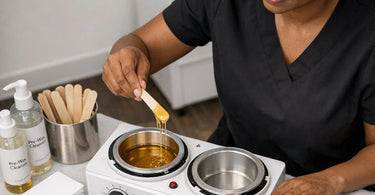
Your success is one step away... but honestly, if your Professional Wax Warmers heating element throws a tantrum right before a bridal party arrives? That success is going to feel about ten miles away. Let's talk about the unsung hero of your waxing suite. That little coil inside your machine works harder than a one-armed paper hanger, yet we usually ignore it until it starts smoking or decides to cook our ItalWax into a crispy brick. I see you. You are busy. Between back-to-back Lash & Brow appointments and scrubbing wax off the floor (why is it always on the floor?), scrubbing the heater falls to the bottom of the list. But here is the tea: protecting that heating element is the secret to a long, prosperous relationship with your equipment. Let's fix those bad habits before your warmer files for divorce.
Before we dive into the nitty-gritty, we need to understand what we are dealing with. A professional wax warmer relies on a heating element—usually a coil or a ceramic plate—nestled under an aluminum or stainless steel pot. Its job is to bring your hard wax, soft wax, or sugaring paste to that perfect, honey-like consistency. But here is the kicker: that element is delicate. It is not a campfire. You cannot just throw logs on it and walk away. When you leave it cranked to \"Hellfire\" overnight or let old wax carbonize onto the surface, you are essentially forcing the heating element to work in a straight jacket. It overheats, it burns out, and suddenly you are crying into a bowl of cold soft strip wax because you have a lobby full of angry clients.
Why Your Heating Element Needs TLC (And Not Just On Sundays)
Think of your wax warmer like a sports car. You would not put cheap gas in a Ferrari, and you definitely would not leave it running in the garage all night. Yet, so many of us treat our wax warmers like junk-yard dogs. We leave them on \"just in case\" we have a walk-in, or we ignore the crusty residue because \"it still melts the wax.\" Spoiler alert: that crust is murdering your machine. When wax residue builds up on the inner pot, it acts like insulation. The heating element has to push harder and stay on longer to get the heat to the wax. This constant strain is what leads to thermal stress and premature death of the unit. Plus, burnt wax smells like regret and singed hair—not exactly the \"spa vibes\" we are going for.
And look, I know you are tough, but your heating element is not. It cannot handle the abuse of a salon environment without regular check-ups. We are talking about the heart of your waxing operation here. When that element dies, you are not just out fifty bucks; you are out the revenue from the six Brazilian waxes you could have done while waiting for a replacement to ship. So, take a deep breath, put down the credit card (stop browsing for a new one on Amazon), and let us save the one you have.
The Cardinal Sin: Leaving It On Overnight
I know you are tired. At the end of a shift, your feet hurt, your back hurts, and your brain is fried. The last thing you want to do is wait for the wax to cool so you can scrape it. But leaving that warmer on overnight is the number one killer of heating elements. When you leave the unit on, the thermostat cycles on and off all night. Every time that cycle hits, it sends a surge through the coil. It is death by a thousand tiny cuts (or surges).
Additionally, running a warmer dry (or low) is a disaster. If the wax level drops below the \"MIN\" line and the heating element is exposed to air while at max temperature, you risk burning out the coil instantly. Manufacturers like ItalWax and Starpil specifically warn against this in their manuals. It is the equivalent of running your car without oil. It gets hot fast, and it dies faster.
The Fix: Get into the habit. The second your last client walks out the door, turn the dial to \"Off\" and unplug it. Make it a ritual. Touch the plug, say \"Goodnight, sweet prince,\" and pull it out. Your electricity bill will thank you, and your heating element will live to see another day.
The Deep Clean: Rescuing the Pot
Cleaning the inside of the warmer isn't just about hygiene (though that is huge); it is about thermal conductivity. A clean pot transfers heat efficiently. A crusty pot forces the heating element to work overtime. We need to purge the goo.
Here is the safest, most effective way to deep clean without damaging the internal wiring or the non-stick coating.
The \"Cold Block\" Method (Best for Hard Wax):
- Unplug and Walk Away: Let the unit cool completely. We want the wax as hard as a rock.
- The Reheat Trick: Once hard, plug it back in and set it to low heat for exactly 10 to 15 minutes. You want the sides to warm up, not the whole block.
- Pop It Out: Unplug again. Use two wooden sticks or the handles of wooden spoons to lift the solid block of wax out. It should pop out like a giant hockey puck. Throw it away. (Never pour wax down the sink!)
- The Finish: Wipe the interior with paper towels. Use a wax-specific cleaner (like ItalWax Cleaner) or mineral oil on a soft cloth to remove the sticky residue. Never use water! Water + electric heating element = Zzzzt. Fried.
The Quick Clean (For Soft Wax/Residue):
If you are using soft strip wax and dealing with a sticky mess, turn the unit to a warm (not hot) setting. Unplug it (safety first!), then use a cloth soaked in mineral oil to wipe the interior. The oil breaks down the wax residue instantly, leaving a shiny, clean surface without scratching the metal.
Daily Habits That Save the Coil
You do not have time for a full overhaul every day, but you have 60 seconds. Here is your \"closing shift\" checklist.
- Skim the Floaties: Just like skimming foam off a latte, use a small spatula or skimmer to remove debris, hair, and dead skin cells from the surface of the melted wax at the end of the night. This prevents that sludge from sinking to the bottom and burning onto the element.
- Wipe the Rim: Dried wax on the rim acts like a seal, trapping heat inside and stressing the thermostat. A quick wipe with a cotton round and cleaner prevents the \"crusty lid\" syndrome.
- Mind the Line: Look at the \"MAX\" and \"MIN\" lines on your wax warmer . If the wax is low, top it off with fresh beads or a new roll-on cartridge. Running low exposes the pot to excessive heat cycles.
Choosing the Right Wax Matters
I am going to let you in on a secret: cheap wax kills warmers. Low-quality waxes often have inconsistent melting points and fillers that leave a thick, sticky, almost burnt-sugar-like residue on the inside of the pot. You end up scraping like a maniac, potentially scratching the inner coating. Scratches create places for bacteria to hide and make future cleaning a nightmare.
Invest in premium waxes from reputable brands like Lycon, Cirepil, or Waxness. They melt like butter, apply like a dream, and clean up in seconds. Your heating element will run smoother, and your clients will feel the difference (spoiler: less pain!).
Troubleshooting: Is Your Heating Element Dying?
Sometimes, despite our best efforts, things break. Here is how to diagnose a failing heating element before you are in crisis mode.
- The Slow Melt: If your wax used to melt in 30 minutes but now takes 90 minutes, your heating element is losing efficiency. It is on its last legs.
- The Inconsistent Heat: If you have a pool of liquid wax in the center but hard wax stuck to the sides, the element is failing to distribute heat evenly.
- The Burning Smell: If the wax smells \"toasty\" or burnt even though you just changed it, the element is likely overheating (thermostat failure) and scorching the product.
- It Just Won't Turn On: Before you panic, check the outlet and the plug fuse. If those are fine, and the unit is dead, the heating coil has likely snapped.
If you see these signs, it is time to shop for an upgrade. Head over to our Professional Wax Warmers collection and grab a reliable workhorse. But for now, let's keep the one you have running like a top.
Look, maintaining your heating element isn't rocket science. It is about respect. Respect for your tools, respect for your clients (no one wants burnt wax residue on their skin), and respect for your bottom line. You work hard for your money. Do not let a lazy cleaning habit force you to spend it on replacement warmers every six months.
Tonight, before you lock up, go give your wax warmer a hug. Unplug it. Wipe it down. Say sorry for leaving it on that one time. Your heating element will forgive you, and it will reward you with silky smooth, perfectly melted wax for years to come. Now go forth and wax, you beautiful, sanitation-obsessed warrior!
Ready to upgrade your setup? Explore our range of professional waxes, waxing supplies, and pre and post-waxing products to keep your services top-tier!
)