
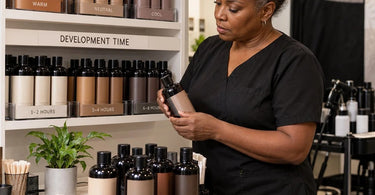
Take pride in the results you deliver, but do not make your spray tan shelf audition for a reality show called Which Brown Bottle Is This? A well-organized solution station can make consultations faster, reduce accidental formula grabs, simplify staff training, and help you deliver more consistent color from appointment to appointment. For professionals working with multiple professional sunless tanning products for salons and spas, organizing bottles by both undertone and development time creates a system that actually reflects the decisions you make behind the spray gun.
That second part matters. Organizing solutions only by brand, darkness level, or bottle size may look tidy, but it does not necessarily help when a client says she wants a natural golden glow, has noticeably cool or pink undertones, and needs to shower before dinner. Your shelf should help answer the same questions you ask during the consultation.
Why Undertone and Development Time Belong Together
Professional spray tanning involves more than choosing light, medium, or dark. The cosmetic bronzer or color base can have warm, cool, violet, olive, caramel, brown, or other tonal characteristics depending on the formula, while the development system determines how long the client should wait before the manufacturer's recommended first rinse.
Those are two separate variables. A solution can have the right undertone but the wrong timing for today's client, or the perfect rinse schedule but produce a color direction that is not what you intended. Organizing around both variables helps your inventory mirror your service process.
Manufacturers also formulate development systems differently. Some rapid solutions may offer different rinse windows that influence the eventual depth of color, while traditional formulas can require considerably longer before the initial rinse. Never assume that every bottle labeled rapid follows the same schedule. The instructions on that specific professional formula win every time.
Step One: Create Undertone Families
Start by grouping your solutions according to the color base or undertone identified by the manufacturer. You might end up with sections such as violet or cool, olive or green, caramel or warm, neutral brown, rose or warm-rosy, and specialty blends.
This is where reading the actual product information is important. Do not judge a formula solely by what the liquid looks like through the bottle. Cosmetic bronzers can be surprisingly dramatic in the cup, and two formulas that appear similar may be designed to create different finished tones.
If you carry several spray tan solutions, give every undertone family a clearly labeled physical zone. That could be a shelf section, divided bin, drawer, or dedicated portion of your tanning cart. The goal is instant recognition, not interior decorating worthy of a magazine spread.
A Simple Color-Coding System Helps
Small removable labels or shelf markers can make the system wonderfully obvious. For example, designate one label style for violet-based formulas, another for olive-based formulas, and another for warm or caramel formulas. Keep the manufacturer label completely visible and avoid covering lot information, expiration information, ingredient lists, or directions.
You do not have to match the sticker color literally to the formula. In fact, choosing highly distinguishable labels can be easier for staff. What matters is that everyone in the business uses the same legend.
Create a small key and post it inside the cabinet door or beside the solution station. New team member? No archaeological expedition through fifteen bottles required.
Step Two: Divide Each Undertone by Development Style
Once the solutions are grouped by undertone, divide each group again by development time. A practical setup might include traditional or standard development, rapid development, and any specialty timing category required by the formulas you stock.
Think of your shelf as a grid. Undertone answers the color question. Development category answers the scheduling question.
For example, one section might hold cool or violet traditional solutions and another cool or violet rapid solutions. Your warm section can follow the same pattern. This makes it much harder to accidentally reach for a standard formula after promising a client a rapid rinse appointment.
Professionals building or expanding a sunless service area can also organize nearby professional sunless tanning equipment for salons separately from solution inventory so hoses, guns, cups, accessories, and liquids each have an intentional home.
Do Not Turn Rapid Rinse Times Into Universal Rules
One of the easiest mistakes in a busy spray room is treating development times as interchangeable. They are not. Professional rapid formulas can have manufacturer-s instructions that associate different first-rinse windows with different color depths, while another formula may use a completely different schedule.
That means your shelf label should identify the development category, but your service protocol should preserve the exact instructions for the individual product. Instead of writing something overly broad like RAPID = RINSE IN 2 HOURS, label the zone RAPID and keep the formula's specific rinse chart immediately accessible.
This prevents a tidy organizational system from accidentally becoming an inaccurate technical guide. Cute labels are helpful. Cute labels are not chemists.
Build a Quick-Reference Solution Matrix
Next, create a simple professional reference chart for the team. List each solution with columns for brand, product name, manufacturer-described undertone or color base, development type, available rinse windows, intended color depth, and any important application notes.
Keep that chart where consultations and solution selection happen. A laminated copy near the spray area can be useful, while a digital version can make updates easier whenever your inventory changes.
The matrix is especially valuable if several artists share the same room. Instead of relying on individual memory, everyone works from the same information. This can also make it easier to compare which sunless tanning formulas you actually use most often.
Organize for the Consultation, Not Just the Stockroom
Picture the typical consultation. You are assessing the client's natural coloring, discussing her desired result, checking what she has planned afterward, and determining when she can follow the first-rinse instructions. Your organization should let you narrow the selection using that same sequence.
First choose the appropriate tonal family based on your training, the manufacturer's guidance, and the client's desired finish. Then move within that family to the development option that fits her schedule and service goals.
This approach is far more useful than lining bottles up alphabetically unless, of course, your clients commonly arrive saying, Give me whichever formula comes first after M.
Keep Active Bottles Separate From Backup Inventory
Your treatment room does not need every unopened bottle you own sitting beside the spray machine. Keep active working inventory in the service area and backup inventory in a designated storage location that follows each manufacturer's storage requirements.
Separating working and reserve stock reduces clutter and makes inventory counts easier. It also gives you a clearer picture of what is already open.
Use first-in, first-out inventory rotation when appropriate, paying close attention to manufacturer expiration or best-by information. When new stock arrives, resist the urge to shove it proudly in front like the newest child in the family photo. Rotate older eligible stock forward so it is considered first.
Add Open Dates Without Covering Important Information
For products where tracking the opening date is useful, place a small removable label on an appropriate area of the bottle and record the date it entered active service. Follow the manufacturer's instructions regarding shelf life, storage, and product handling rather than inventing a salon-wide expiration rule.
This little habit can also help you understand consumption. If one solution disappears at lightning speed while another bottle seems to be pursuing tenure, your purchasing pattern may need an adjustment.
Create a Dedicated Zone for Your Most-Used Formulas
Once you know your workhorses, make them easy to reach without abandoning your undertone and development system. Within each category, place frequently used formulas at comfortable working height and reserve awkward upper or lower storage for backups or less frequently selected options.
Ergonomics counts. Repeating the same reach dozens of times each week because your bestselling solution lives in the least convenient corner is unnecessary. Your shoulder has already submitted a complaint.
Frequently used supporting items such as spray tan accessories, disposable protection, application supplies, and cleanup essentials should also have designated locations near the service workflow without crowding your formula storage.
Separate Similar Bottles That Are Easy to Confuse
Some product families use nearly identical packaging for multiple formulas. If two bottles are easy to mistake at a glance, do not place them shoulder to shoulder without a secondary identifier.
Add large shelf labels, differentiated bottle tags, or clearly divided bins. Development type deserves especially obvious identification because grabbing the wrong bottle can result in giving a client incorrect aftercare timing.
The point is not to make your workspace look like an elementary school supply closet covered in stickers. The point is to create visual cues strong enough to survive a fully booked Saturday.
Give Aftercare Instructions From the Bottle You Actually Used
Your organization system should connect directly to client instructions. Once you select the solution, record which formula was used and provide the correct aftercare and first-rinse guidance for that product.
Do not rely on one memorized speech for every spray tan. Development timing, first-rinse instructions, and aftercare details can vary. Manufacturer directions should remain your primary technical reference.
A consistent service record can also help at future appointments. If a client loved her previous result, you have useful information about the formula, tonal family, and timing rather than trying to recreate perfection from the deeply scientific note that says, looked really good.
Keep the Solution Area Clean and Professional
Organization and sanitation should be friends, not acquaintances who wave to each other from across the room. Wipe exterior drips promptly according to appropriate product and surface care practices, keep caps secure, and follow manufacturer recommendations for maintaining your spray equipment.
Store cleaning products separately from tanning formulas to reduce confusion and keep the station visually clear. Pure Spa Direct also carries professional cleaners and disinfectants for salons and spas for maintaining professional workspaces according to the applicable directions for each product and surface.
Your gun, hose, machine, solution cup, disposables, towels, and client protection items should each have their own designated place. Browse high-quality towels and other professional supplies when setting up a more streamlined treatment area.
Audit Your Spray Tan Shelf Every Month
Even the world's prettiest organization system eventually encounters reality. Bottles migrate. Staff put rapid formulas in the traditional section. A nearly empty container somehow becomes invisible for three weeks. Schedule a quick recurring audit.
Check whether every formula is in the correct undertone family, whether development categories remain clearly marked, whether active inventory is still needed, and whether reorder points make sense based on actual usage. Confirm that product information and timing references are still current whenever a manufacturer updates packaging or instructions.
Also ask whether the categories continue to match the services you perform. If your clients overwhelmingly request rapid appointments, your inventory layout and purchasing quantities should probably reflect that reality.
Use Organization to Make Reordering Smarter
A thoughtful shelf system makes purchasing easier because gaps become visible. Instead of thinking, We need more tan stuff, you can identify exactly which category is running low. Maybe you have plenty of warm traditional formulas but only one remaining rapid option in your cool family.
This is where a broader professional sunless tanning assortment becomes easier to shop strategically. You are not simply adding another bottle. You are filling a specific role within your service menu.
Pure Spa Direct is a distributor serving professional beauty, spa, salon, and wellness businesses, so organizing your existing assortment first can help you shop for genuine inventory needs instead of collecting spray tan solution like extremely bronzed trading cards.
The Best System Is the One Your Whole Team Will Actually Use
You do not need an elaborate spreadsheet with seventeen color categories, three barcodes, a rotating shelf, and its own emotional support clipboard. Start with a system simple enough to maintain: undertone family first, development style second, individual formula instructions always accessible.
Label the sections. Keep active and backup inventory separate. Record opening or rotation information when appropriate. Maintain a solution matrix. Train every artist to return bottles to the correct location immediately after use.
Once your station is organized around the decisions professionals actually make, consultations can feel smoother and inventory becomes easier to understand. Most importantly, you spend less time hunting through bottles and more time focusing on application, client experience, and beautiful, intentional results. And that is exactly where the drama belongs: in the before-and-after, not on the supply shelf.
