
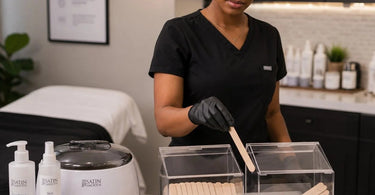
Upgrade treatments with this lifesaver because let's face it, the struggle is real. You're mid-Brazilian, gloved up, in the zone, and you reach for a waxing stick. But wait. Is this one clean? Or is it that one from the last client that you swore you threw away but somehow ended up back in the clean pile like a wax-covered boomerang of doom? We've all been there. That moment of panic where you start questioning your life choices, your organizational skills, and whether the universe is playing a cruel joke on you. Mixing up clean and used waxing sticks isn't just a recipe for a chaotic workstation; it's a one-way ticket to Cross-Contamination City, a place where bacteria thrive and client trust goes to die. But fear not, my fellow wax warriors! Today, we're going to banish the guessing game and transform your waxing station into a fortress of cleanliness and organization. We are going to tackle the "clean vs. used" dilemma head-on with a mix of practical tips, a dash of tough love, and just a little bit of humor, because if you can't laugh at the sticky situations, you're probably doing it wrong.
According to state regulations, like those in South Dakota, a clean spatula must be used each time any wax is distributed to the client, and each end of a disposable spatula or wooden stick may be dipped in the wax only once and discarded . This isn't just bureaucratic red tape; it's the law of the land (and the law of good business). Breaking this rule is the fastest way to turn a loyal client into a former client. No one wants to be the reason someone develops a nasty infection because you were too busy trying to save a penny. So, let's dive into the nitty-gritty of creating a system that's as foolproof as it is fabulous. The goal is to make the process so seamless that you could do it in your sleep (not that we recommend sleeping on the job, but you get the point).
The "CSI: Waxing Station" Approach: Set Up a Crime Scene (of Cleanliness)
The first step to avoiding the great stick mix-up is to set up your workspace like a meticulous detective setting up a crime scene—except your only crime is a sticky mess. You need distinct, clearly defined zones on your waxing cart or table. Think of it as real estate for your tools. On one side, you have the "Clean Zone," which is the VIP area where your pristine, untouched sticks reside. This area should be sacred. We recommend using a specific container for them, like a cute jar or a designated compartment in a drawer. A great option is a wax applicator organizer with multiple compartments, which you can restock with different sizes of sticks . On the complete opposite side, or even on a lower tier of your cart, you have the "Biohazard Zone," which is the designated drop-off point for the used warriors. This could be a small bowl, a paper towel, or a trash receptacle. The key is that they are physically separated by space, making it nearly impossible to confuse a clean stick with a used one. This is like having a "clean" plate and a "dirty" plate at a buffet; you know what goes where.
The "Caddy-Whompus" System: Compartmentalize Like a Pro
If you're just tossing your waxing spatulas and applicators into a drawer willy-nilly, you're playing a dangerous game. It's time to get compartmentalized. Dedicate one drawer or a specific container solely for clean sticks. You can even organize them by size—large for legs, medium for arms, and small for eyebrows or lips. This not only keeps them clean but also streamlines your service, saving you precious time. For your used sticks, consider using a disposable container. Maybe a small paper cup or a plastic bowl that you can easily toss in the trash at the end of the service. The goal is to make disposal quick and touch-free. Remember, the less you handle a used stick, the better. Some professionals use a small trash can or a lined bag attached to the side of the cart for instant disposal . This "one-touch" policy helps prevent the accidental transfer of wax or bacteria from your hands to a clean supply.
The "No Double Dipping" Rule: It's Not an Appetizer
We all know the golden rule: never, ever double-dip a waxing stick. It's the cardinal sin of the waxing world, akin to wearing socks with sandals or offering a client decaf without telling them. Health codes are very clear on this: Applicators may be dipped only once into the wax unless the wax is a single-service item and unused wax is discarded after each service . If you double-dip, you are contaminating your entire pot of wax, turning it into a petri dish of bacteria. This is not only a massive health risk but also a huge waste of product. If you contaminate the wax, you have to empty the wax pot, discard the wax, and disinfect the pot . That's a complete waste of perfectly good ItalWax. So, to avoid this catastrophe, make sure you have a huge supply of sticks on hand, so you never feel tempted to double-dip out of convenience. Keep your bulk wax deals well-stocked to ensure you have plenty of applicators at your disposal, and you won't be tempted to cut corners. Remember, a new stick for every dip! It's the only way to fly.
The "Stick Graveyard" and the Art of Disposal
What happens to the used stick after you pull it out of the wax? It shouldn't just be abandoned on the table like a forgotten soldier. That's how things get messy and confusing. You need a dedicated "stick graveyard"—a place where used applicators go to retire. This is a non-negotiable part of your waxing supplies setup. This could be a small, dedicated trash bowl or a used wax container. The point is, that once the stick touches skin, it goes directly into the graveyard. Don't place it on the table, don't place it on your cart, and for the love of all that is sanitary, don't place it back near the clean sticks. It goes directly into its final resting place. This simple habit will dramatically reduce the risk of mix-ups and keep your workspace looking professional. A client may not know what every tool is, but they can spot chaos from a mile away, and they'll judge you for it. A clean, organized station screams "professional" and builds trust.
Real Talk: Why This is a Business Savior
Let's take a step back and look at the bigger picture. This isn't just about following rules or being neat. This is about the survival of your business. A single incident of cross-contamination can lead to a bad online review, a lost client, and a tarnished reputation that takes months to repair. Clients talk. They share their experiences with friends, and they're not afraid to post their horror stories on social media. By implementing these simple organization tips, you're not only protecting your clients' health but also safeguarding your business's future. It's a win-win scenario. Plus, a well-organized station allows you to work faster, which means you can see more clients and increase your revenue. It's the smart business decision, and it doesn't cost a dime. So, let's raise a clean waxing stick to a future of efficiency, hygiene, and happy clients!
