
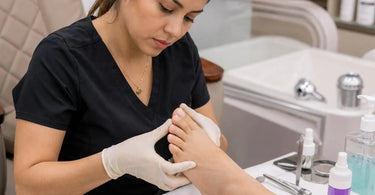
Start every task with confidence... because nothing says 'confidence killer' quite like a client lifting their foot and revealing a toenail that looks like it belongs in a science experiment gone wrong. We love our clients, and we love making their feet feel like they are walking on clouds made of luxury cotton. But part of being a professional is knowing when to say, 'Hold up, honey, we need to talk about your toes before we go any further.' Performing a professional pedicure assessment for fungal risks isn't just about keeping your pedicure chairs clean; it is about protecting your other clients, your reputation, and frankly, your own sanity. You don't want to be the salon that accidentally starts a 'Toe-pocalypse.'
So, grab your protective gloves and your best detective hat (metaphorically, please don't wear a fedora to work), because we are diving deep into the world of nails, cuticles, and the sneaky little fungi that love to crash the party. We will walk you through a step-by-step protocol that is thorough, professional, and just a little bit sassy. Because if we have to stare at fungus all day, we might as well laugh about it.
Why Your 'Spidey-Sense' for Fungus Needs to Be Tingling
Look, you didn't open a luxury spa to play doctor, but you are the first line of defense. Catching a potential fungal issue before you soak those feet in your beautiful pedicure bath is non-negotiable. If you start a service on a client with active nail fungus or Athlete's foot, you are essentially marinating pathogens in a warm, wet environment. Gross, right? That is how you spread the 'yuck' to the next client via a towel or a tool .
According to best practices and regulations (those fun little things that keep us out of court), personal service workers are explicitly told not to provide services if a client shows signs of a nail infection . You are allowed to look, assess, and advise. You are not allowed to diagnose or prescribe cream, but you are absolutely expected to be the gatekeeper of hygiene. If you let a client with a raging fungal infection sit down, you are risking cross-contamination, failing inspections, and honestly, ruining the vibe for everyone .
The Pre-Service Assessment: Channel Your Inner Sherlock Holmes
Before you even turn on the facial steamer for the client next door, you need to do a visual and tactile assessment of the feet in front of you. This takes thirty seconds but saves you thirty days of headaches. Here is the breakdown of what you are hunting for.
1. The Visual Inspection (The 'Eye Test')
Ask the client to remove their socks and shoes and place their feet on a clean towel. Use your magnifying light if you need to (hey, we don't judge aging eyes). You are looking for specific changes in the nail plate. Does the nail look yellow, brown, or white in patches? Is it thick, crumbly, or distorted? Those are classic signs of Onychomycosis (nail fungus) . Also, look at the skin between the toes. Is it peeling, macerated (that wrinkly, wet look), or red? That is likely Tinea Pedis, better known as Athlete's Foot . If you see this, the red flags should be flying.
2. The Olfactory Test (The 'Sniff Check')
Let's be adults here. Feet sometimes smell. However, a fungal infection often has a distinct, musty, or sour odor that is different from regular 'I-wore-sneakers-without-socks' smell. If you lean in (don't get too close, ew) and catch a whiff of something funky that isn't just sweat, proceed with caution.
3. The Client Interview (The 'Gentle Interrogation')
Put on your warmest, most non-judgmental therapist voice. 'Darling, have you noticed this discoloration before?' or 'Does the skin between your toes ever feel itchy or burn?' You are not diagnosing, you are gathering history . Often, clients know they have an issue but hope you won't notice (denial isn't just a river in Egypt, hun). It is your job to politely point it out. This is where you separate the professionals from the amateurs.
Handling the Diagnosis: How to Fire a Client (Nicely)
Okay, you've found the fungus. Now what? Do you scream and run for the hazmat suit? No (although you might want to). You kindly and firmly decline the service. You say, 'To keep you safe and to ensure we don't aggravate that area, I cannot perform a water service on your feet today. I recommend seeing a podiatrist, and once you get the all-clear, I would love to see you back in my chair!' .
If the client protests (and they will, because they drove 20 minutes for this), do not engage in a medical debate. Just explain that state board regulations prohibit services on infected skin or nails to prevent the spread of bacteria and fungi . Offer them a hand treatment or a facial instead. If they leave in a huff, let them. A lost sale is better than a lawsuit or an outbreak of pink slime in your jets.
If They Are Clear: The Safe Service Protocol
Let's say the feet are healthy. Hallelujah! You still need to act like you are prepping for surgery. Hygiene is a performance. When the client sees you putting on gloves and pulling out fresh implements, they feel safe.
Step 1: The Implements
Never double-dip. Never reuse a file. All nail files and buffers should be single-use or properly sterilized between clients . Invest in disposable nail files and let the client watch you open a brand new package. It takes two seconds and instills a lifetime of trust.
Step 2: The Tub
Even if the feet are clean, your pedicure spa is a breeding ground if you aren't careful . Use disposable pedicure liners! They are a game-changer. Or, follow strict EPA-registered disinfectant protocols. You cannot just rinse with water. You need a hospital-grade cleaner that kills bacteria, viruses, and fungi .
Step 3: The Tools
Do not cut the cuticle! Dermatologists agree that the cuticle is the body's natural 'caulk' against infection . Cutting it opens a door for bacteria. Just push them back gently. Also, be careful with credo blades (those little razor things for calluses). In many areas, they are regulated or banned because they can draw blood, and blood = instant infection risk . Stick to a good sugar scrub or a pumice stone for callus removal.
Sanitizing Your Gear: The 'Not-So-Fun' Chore
Okay, the client is gone. Now you have to clean up. Do not be lazy. Do not be the person who just sprays and wipes.
For the basin: Drain the water, remove the liner (if used), and scrub the basin with soap and water to remove debris. Then, fill with water and disinfectant, turn the jets ON, and let it circulate for the full contact time (usually 10 minutes) . If you skip the circulation, you are not cleaning the pipes where the gross stuff hides.
For your tools: If you use metal pushers or nippers, they must be cleaned, then soaked in high-level disinfectant, or run through an autoclave. Store them in a clean, covered, dry container . If you leave them in a wet drawer, the bacteria will throw a party overnight.
Don't forget the table paper on your workstation. Change it. Every. Time. It looks professional, and it ensures that the previous client's skin cells aren't touching the next client's purse.
Retail Therapy: Selling the Solution
While you can't prescribe a fungicide, you can retail preventative maintenance. After a successful (and healthy) pedicure, sell them cuticle oil to keep that barrier healthy. Sell them a loofah for home use. Educate them on the dangers of wearing the same damp gym shoes every day (guilty as charged). When you sell retail products, you aren't just making a profit; you are extending the life of your pedicure and protecting their health.
If you really want to wow them, offer a paraffin wax treatment on healthy feet. It is hydrating, feels amazing, and doesn't aggravate anything (provided the skin is intact).
The 'Oops' Moment: What If You Spot It Mid-Service?
It happens. You are filing away, and suddenly you notice a nail plate lifting or a strange discoloration you missed in the bright light. Stop the service. Do not panic. Politely wrap the foot in a clean towel, remove your gloves, and explain that you have to end the service early due to the condition of the skin/nail. Do not charge them for the full service (charge for the time, but don't be greedy). Then, clean your area like you are decontaminating a nuclear reactor. That sponge you used? Trash. Those files? Trash.
Remember, a professional pedicure assessment isn't about embarrassing the client; it is about running a smart, safe business. You are the expert. You are the gatekeeper. And with the right pedicure supplies from Pure Spa Direct, you can be the hero that saves the world from bad toenails, one flawless, fungus-free foot at a time.
So go ahead, inspect those toes, slay those germs, and keep the 'ick' out of your spa. Your clients (and your state inspector) will thank you.
)