
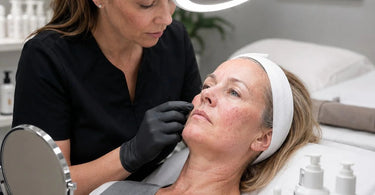
Elevate services with this smart buy... because nothing says "I went from hero to villain in five seconds" quite like slapping a standard glycolic peel on a client whose skin barrier is waving a white flag. If you are a Spa Professional who has ever looked at a client's flushed, stinging, or flaking complexion and thought, "Well, this is going to be interesting," then buckle up, buttercup. We are diving deep into the delicate art of performing a professional skin analysis on compromised barriers without making things worse, burning a bridge, or sending someone home looking like a tomato with regrets.
Let's be honest: a compromised skin barrier is the drama queen of the skincare world. It is reactive, sensitive, prone to tantrums, and will absolutely tell all its friends (pores) if you mess up. But here at Pure Spa Direct, we believe every skin type deserves a happy ending—just not the kind that involves calamine lotion and a paper bag. Whether your client has been overdoing it on retinol (we see you, Karen), battling winter windburn, or suffering from a chronic condition like rosacea or eczema, your ability to assess, adapt, and treat is what separates you from a botched bathroom experiment. So grab your Magnifying Lights, pour some tea, and let's turn that compromised mess into a masterclass of gentle, professional care.
Step 1: Stop, Look, and Listen (Literally, Because They Will Complain)
Before you even touch a single pore, you need to become a detective. A very compassionate, non-judgmental detective who doesn't gasp when a client admits they use a walnut scrub every single day. The cornerstone of any professional skin analysis on a compromised barrier is the intake form and consultation. This isn't just small talk; this is evidence gathering. Ask about their current routine, product reactions, medical history, and that burning question: "What the heck happened?" Look for key phrases like "stings when I apply moisturizer," "feels tight after washing," or "everything breaks me out." These are not just complaints; they are diagnostic clues pointing directly to a damaged stratum corneum.
Now, get up close and personal with your tools. This is where the magic happens. Under your Wood's Lamp or a bright Magnifying Lamp, you are looking for specific signs: diffuse redness (erythema), excessive dryness or flaking (desquamation), rough texture, and potentially visible capillaries. Compromised barriers often look dehydrated even if they are oily—a classic sign of transepidermal water loss (TEWL). Take note: is the skin shiny but still feels tight? That is your red flag waving furiously. Remember, we are not here to judge the skin; we are here to build a roadmap back to health. Acknowledge the issue with empathy: "I can see your skin is working really hard right now to protect you. Let's give it a break and some building blocks."
Step 2: The Gentle Touch Test (No Slapping, Pinching, or Aggressive Poking)
Once you have gathered your visual intel, it is time for the hands-on portion of our program. But put down the harsh magnifying loupe and step away from the aggressive Rotary Brush Exfoliator Machine. We are not trying to polish a floor; we are treating skin that has its defenses down. With impeccably clean gloves (because bacteria loves a vulnerable host), use the lightest touch imaginable. Gently palpate the skin to assess temperature. Is one area noticeably warmer? That indicates active inflammation. Run your finger (lightly!) across the cheek and forehead. Does it feel like sandpaper or, conversely, unnaturally smooth and papery? Both indicate barrier dysfunction.
This is also the perfect time to perform a very, very gentle test for reactivity. Apply a tiny amount of lukewarm water or a pH-balanced, non-foaming cleanser to a small area like the jawline. Observe closely: does it immediately flush? Does the client report stinging? If yes, congratulations, you have confirmed a severely compromised barrier. This is not the time for a High Frequency Machine or a Galvanic Machine. Put the heavy artillery away. This is a rescue mission. Document everything: heat levels, texture variations, and reactive zones. Your notes will save you later when the client asks, "Why can't we do the Microdermabrasion today?" Because, darling, we do not sandblast a sunburn.
Step 3: Know Your Enemies (And Your Allies) - The Barrier Breakdown Causes
To truly master how to perform a professional skin analysis on compromised barriers, you need to understand what broke the darn fence in the first place. This is where your inner nerd shines. The skin barrier (the acid mantle and the lipid bilayer) can be compromised by a rogue's gallery of culprits. Over-exfoliation is public enemy number one. We are looking at you, daily scrub users and at-home peel enthusiasts. Next up: aggressive surfactants (that squeaky-clean feeling is actually a crime scene), environmental assault (wind, cold, dry heat), medical conditions (rosacea, perioral dermatitis, eczema), and the granddaddy of them all—prescription retinoids used improperly.
Your analysis must differentiate between a temporarily irritated barrier (fixable in a week) and a chronic, genetically predisposed sensitive condition (a longer journey). Look for patterns. Is the redness centralized on the nose and cheeks (classic rosacea) or all over (general irritation)? Are there dry, scaly patches on the eyelids or around the mouth (possible contact dermatitis)? Asking about product history is crucial here. If a client says, "I started using a new premium skincare with active vitamin C and niacinamide and now my face feels like it's on fire," do not blame the ingredients—blame the broken barrier that cannot tolerate even beneficial actives. Your job is to be the translator between the client's frustration and the skin's biology. Write it all down. Be the Sherlock Holmes of the spa, minus the deerstalker cap (unless that's your brand, then rock on).
Step 4: The No-Go Zone - Treatments to Absolutely Avoid
Listen up, because this is where even seasoned pros can trip. Once you have identified a compromised barrier, you must have the courage to say "no" to services that will cause harm. I know, I know, the client booked a "total transformation" and wants to walk out looking like a glazed donut. But you are the professional, and your ethics matter more than a single up-sell. So, what goes on the banned list? Everything that exfoliates, heats up aggressively, or penetrates too deeply. That means no Microdermabrasion, no Hydrodermabrasion, no chemical peels (even mild ones), no Ultrasonic Skin Scrubbers on high settings, and definitely no Rotary Brush of any kind. Also, put down the Facial Steamer. Steam is heat, heat is inflammation, and inflammation is the enemy of a broken barrier. No Paraffin treatments on the face, no hot towels without a protective layer, and no aggressive extractions. You heard me. No digging. Pustules in compromised skin are often sterile inflammation, not clogged pores ready for eviction.
Waxing is also a major no-fly zone. ItalWax is amazing, but not on skin that is already raw. The same goes for Professional Stripless Hard Wax or Soft Strip Wax. Even Natural Sugaring Products can strip off microscopic layers of compromised tissue. Reschedule that brow wax for another day. And while we are at it, avoid aggressive massage techniques. Deep tissue on a flushed, reactive face is a recipe for post-treatment bruising and prolonged erythema. Your mantra for this appointment should be "calm, cool, and collected." If a treatment causes any redness beyond a slight flush, you stop. No questions asked. The client might be disappointed for five minutes, but they will be grateful for life that you didn't make their face feel like a jalapeno enema.
Step 5: The Gentle Protocol - Building a Soothing, Restorative Facial
Alright, you have analyzed, you have identified, and you have put away the dangerous toys. Now it is time for the fun part: actually helping. The goal of a facial on a compromised barrier is not to transform; it is to restore. Think hydration, occlusion, anti-inflammatory ingredients, and absolute gentleness. Start with a double cleanse using a lipid-free, non-foaming gentle cream cleanser or a micellar water. Remove with soft, tepid High-Quality Towels using patting motions—no wiping or scrubbing. Next, apply a calming, humectant-rich toner or essence that contains ingredients like centella asiatica, panthenol, or glycerin. Follow with a barrier repair serum loaded with niacinamide (in low concentration, 2-5%), ceramides, fatty acids, and cholesterol. This is the brick-and-mortar rebuilding crew.
Now, skip the traditional mask and go for a soak. Use Compressed Sponges or clean gauze soaked in a calming solution of cool green tea, saline, or a medical-grade hypochlorous acid spray. Lay these over the skin for 5-10 minutes. It reduces inflammation, soaks in hydration, and feels absolutely divine. While that is working, you can perform a very gentle, no-drag massage on the neck and shoulders using a small amount of unscented massage cream. Keep the hands off the face. After removing the sponges, apply a thick, occlusive barrier cream or balm. Look for ingredients like shea butter, squalane, and petrolatum (yes, it is safe and effective). Seal it all in. Finish with a physical-only mineral sunscreen if the appointment is during the day. The client should leave looking dewy, calm, and slightly plump—not red, not tight, not on fire. Send them home with a sample of a gentle cleanser and a barrier cream, not a retail shelf of actives. You are not selling products today; you are selling trust.
Step 6: Home Care Prescriptions - What to Send Them Home With
Your professional skin analysis is worthless if the client goes home and immediately slathers on that 10% glycolic acid toner they bought on a whim. Part of your job is to educate and prescribe a strict, boring, and effective home care routine. The mantra for home care on a compromised barrier is "cleanse, moisturize, protect." That is it. No toners with alcohol, no exfoliants, no vitamin C serums, no retinoids. They need a gentle, pH-balanced cream cleanser, a rich, ceramide-packed moisturizer, and a high-quality physical sunscreen. Recommend they wash only at night with lukewarm water and a soft cloth (no rubbing!). In the morning, just a splash of water. And for the love of all that is holy, tell them to stop touching their face.
Your retail recommendations should be targeted and simple. Point them toward brands we trust at Pure Spa Direct like Tuel Skincare for their soothing, science-backed formulations or Ayur-Medic for gentle, holistic options. Avoid selling them a 12-step routine. They need three products, max. Also, advise on lifestyle changes: use a humidifier at night, avoid long hot showers, drink water, and sleep on a silk pillowcase (less friction = less irritation). Give them a timeline: most acute barrier issues show significant improvement in 2-4 weeks, but full healing can take months. Manage their expectations with kindness, not clinical coldness. And absolutely tell them to pause all prescriptions until they consult their dermatologist. You are a team, not a replacement. If you sell Tuel Skincare Collection items like their Barrier Repair Balm, you are a hero. If you send them to the drugstore for Noxzema, you are a villain. Choose wisely.
Step 7: Follow-Up and Long-Term Strategy - Because Rome Wasn't Rebuilt in a Day
One appointment does not fix a broken barrier. Your relationship with this client should be a journey. Schedule a follow-up in one to two weeks to reassess. At that appointment, repeat your analysis. Is the redness down? Is the flaking gone? Does the skin feel bouncier? Only when the barrier is visibly and functionally intact—meaning no stinging upon product application, no persistent redness, and normal TEWL—can you even THINK about reintroducing active treatments. And even then, you start at the lowest possible dose. Maybe a short-contact low-percentage lactic acid on a non-reactive zone. Or a single pass of a Hydrodermabrasion device on the lowest suction, with a hydrating only serum. No actives. No heat. No aggressive anything. You are the gatekeeper of their skin health, and the password is "slow."
Long-term, you may be able to incorporate gentle, barrier-supporting technologies like LED Light Therapy (green or yellow for calming, red for repair—but start at half the time), Microcurrent Machines on very low settings (using a conductive gel, not a slip), or Cold Hammer Therapy to reduce residual inflammation. But never, ever rush. Keep detailed notes in their client file, and always ask, "How has your skin felt since the last treatment?" If they report any sensitivity, you pull back. This is not a race to the most aggressive treatment; it is a marathon to resilient, healthy, glowing skin. And when that client finally looks in the mirror and smiles without wincing, you will know you have mastered the art of performing a professional skin analysis on compromised barriers. Go forth, be gentle, and for goodness' sake, keep a calming mist and a sense of humor at your treatment station at all times.
)