
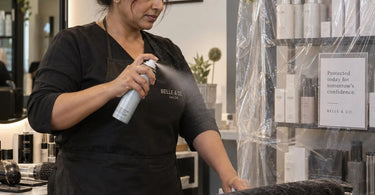
Let's get to work on your success, because nothing kills the vibe of a beautifully curated retail display quite like a fine, mysterious dusting of something that was supposed to land on a client, not your best-selling serum. You have spent hours arranging your Must-Have Spa Retail Products just so, creating a little shrine of self-care temptation that whispers "buy me" to every client who walks through the door. And then it happens. A stylist gets a little too enthusiastic with the hairspray, a spray tan technician forgets to check the booth seal, or someone pops open a bottle of nail polish remover too close to the shelves. Suddenly, your gorgeous display looks less like a boutique and more like a slightly sticky, slightly dusty crime scene. Overspray is the uninvited guest at every salon and spa party, and it has absolutely no manners. But fear not, my fellow beauty professional, because we are about to declare war on airborne product residue and reclaim your retail shelves. This is not just about keeping things pretty (though that is a lovely bonus). It is about protecting your investment, preserving product integrity, and making sure your clients are not taking home a bottle of lotion that has been quietly marinating in a cloud of hairspray for the past three weeks. So grab your favorite ItalWax Pre/Post spray or just a cup of coffee, and let's figure out how to keep your retail products exactly where they belong: on display, not in a fog.
First things first, we need to talk about the enemy. Overspray, in the simplest terms, is the fine mist of product that does not land on its intended target. It is the hairspray that floats past the updo, the spray tan solution that misses the leg and heads for the ceiling, the nail polish spray that was supposed to be an artistic accent but somehow ended up on your Premium Skincare Products display. This stuff is sneaky. It is airborne, it is often invisible until it accumulates, and it has a special talent for finding the exact surface you least want it to find. Understanding how overspray travels is the first step in stopping it. It is influenced by air currents, humidity, the pressure of your spray gun, and even the way you hold your arm. The good news? You do not need a degree in physics to outsmart it. You just need a plan.
Zone Defense: The Most Important Move You Will Ever Make
If you take nothing else away from this article, let it be this: zoning is your new best friend. Think of your salon or spa as a tiny, beautifully scented city, and every district needs clear boundaries. You would not put a Professional Wax Warmer in the middle of your reception desk, and you should not put your retail display in the line of fire of a spray tan booth or a hairspray-heavy styling station. Designate a specific "wet zone" for treatments that involve spraying, misting, or atomizing. This might be your spray tan area, your hair styling chair, or the corner where you do your Lash & Brow Enhancement Services. Keep your "dry zone" for retail, clean linens, and anything that does not appreciate a fine coating of someone else's product. Physical boundaries matter, even in a small space. A rolling cart, a folding screen, or even a strategically placed tall plant can act as a visual and physical barrier. The goal is simple: create distance. Overspray loses momentum over distance. Every foot between the spray source and your retail shelf is a foot where the mist can dissipate and lose its power to settle.
Check Your Equipment: The Spray Gun Is Not a Fire Hose
Now, let's talk about the tools themselves. If your spray tan gun is set to "hurricane" when it should be on "gentle spring breeze," you are going to have overspray whether you like it or not. The pressure setting on your spray gun is crucial. Turning it down a notch or two can dramatically reduce the amount of product that bounces back into the air [citation:2]. High Volume, Low Pressure (HVLP) machines are often preferred in professional settings because they produce a finer mist and less overspray [citation:2]. If you are still using an older machine that sprays like a garden hose, it might be time to upgrade. It will save you product, save your sanity, and save your retail display from a fate worse than dust. The same logic applies to hairspray. That aerosol can is powerful, and if you are spraying with wild abandon, the mist is going to travel. Investing in a Spray Shield can be a game-changer for hair services. It is a simple transparent tool that protects the client's face and makeup from spray mist, and it can also serve as a reminder to direct the spray where it is supposed to go. For nail technicians, especially those who do spray-on nail art or use aerosol drying sprays, being aware of your spray direction is key. Aim downward and away from your retail shelves. It sounds obvious, but in the heat of a busy appointment, it is easy to forget.
The Power of Extraction: Suck the Mist Out of the Air
Sometimes, no matter how careful you are, overspray is going to happen. That is where extraction comes in. An extractor fan is like a vacuum for airborne particles. Placed strategically between you and the mist, it can catch the spray before it has a chance to land on your shelves, your walls, or your High-Quality Towels [citation:2]. For spray tanning specifically, a dedicated spray tan booth with built-in extraction is the gold standard. These booths use fans and aerodynamic chambers to create a cyclone of airflow that pulls the overspray away from the client and out of the air entirely. If a full booth is not in the budget, a mobile extractor fan is a lightweight and affordable alternative that can be positioned wherever you need it [citation:2]. For hair salons, proper ventilation is just as important. If you are doing a lot of spraying, make sure your salon has good airflow and consider a ceiling-mounted air purifier. It is an investment in your health and your retail products.
Protect and Serve (Your Products, That Is)
Even with all the zoning and extraction in the world, there are times when overspray is just unavoidable. A busy Saturday, a rushed appointment, a client who moves unexpectedly at the wrong moment. In those moments, you need a physical barrier. This is where protective covers and sheeting come into play. You do not need to wrap every single bottle in plastic, but you can take simple steps to shield your display. A simple cloth or sheet draped over your retail table at the end of the night can protect products from ambient dust and any lingering mist in the air. For your display shelves themselves, consider using a clear acrylic or glass cover. It keeps the products visible and accessible while creating a physical shield against airborne particles. It also looks incredibly chic, like you are displaying precious jewels instead of Cuticle Oil. When you are actively spraying, keep a clean towel nearby. If you notice a fine mist heading toward your display, a quick wipe of the shelf surfaces can prevent it from settling and becoming sticky. The key is to catch it while it is still wet. Once overspray dries, it can be much more difficult to remove, especially from porous packaging or labels.
The Cleaning Ritual: End Every Day with a Little TLC
Here is the truth that nobody wants to admit: even the best-laid plans will not stop every single rogue particle. That is why a daily cleaning ritual is non-negotiable. At the end of every day, take five minutes to wipe down your retail shelves, the tops of your product bottles, and any display surfaces. A microfiber cloth and a gentle cleaner can do wonders. If you notice a sticky residue from overspray, a little bit of rubbing alcohol on a cotton pad can usually lift it without damaging most packaging. This is also a great time to do a quick inventory check. If you notice that a product has been sitting on the shelf for a suspiciously long time and has developed a little layer of mysterious dust, it might be time to rotate it out and replace it with something fresh. Your clients notice these things, even if they do not say anything. A clean, well-maintained display communicates that you care about your business and, by extension, about them. It builds trust. And trust is what turns a browser into a buyer.
A Note on Nail and Wax Overspray
While we often think of overspray in terms of aerosol sprays and spray tan guns, we cannot forget the more subtle forms of airborne product residue in the nail and waxing world. Nail polish overspray can happen with spray-on polishes or when using an aerosol drying spray. The fine mist can land on nearby surfaces, including your Nail Tables and Manicure Stations and any retail products you have displayed nearby. The same goes for waxing. While wax is not typically sprayed, the process of applying and removing wax can create tiny airborne particles of wax, especially if you are using a roll-on wax system or a spray wax. These particles can settle on your Waxing Supplies for Professionals and, yes, on your retail products if they are in the same room. The solution is the same: zoning, extraction, and protection. Keep your waxing station in a designated area, use a Professional Wax Warmer with a lid or cover when not in use, and clean up any wax residue immediately. For nail services, be mindful of your spray direction and consider using a Professional Gel Polish or traditional polish that does not require aerosol setting sprays. Your retail products will thank you.
Smart Display Choices: Work with Your Space, Not Against It
When you are setting up your retail display, think about the flow of your space. Where are the high-traffic spray zones? Where is the air conditioning vent blowing? Where is the door that opens and closes all day, creating drafts? These are all factors that can influence where overspray ends up. If you have a choice, place your retail display in a low-airflow area. A corner shelf, a wall-mounted display, or a spot behind a physical barrier like a Stylish Salon & Barber Furniture partition can all provide extra protection. If your retail area is unavoidably close to a spray zone, consider a closed display case. It does not have to be fancy. A simple glass-front cabinet keeps products visible while protecting them from the elements. You can also use risers and containers to create a bit of a buffer. A row of taller decorative items or plants in front of your product display can act as a mini windbreak, catching some of the airborne particles before they reach your precious bottles of Premium Skincare Products. It is all about being intentional with your layout. Your retail space should feel curated and inviting, not like an afterthought that is just waiting to get dusty.
The Retail Table: A Case Study in Overspray Management
Your seasonal retail table is a prime target for overspray. It is often front and center, it is beautifully styled, and it is begging to be the recipient of some unfortunate airborne product. When you are building your Must-Have Spa Retail Products display, keep overspray in mind. Avoid placing your table directly next to a styling station or a spray tan area. If you are using decorative elements like Body Brushes, Loofahs & Puffs or Compressed Sponges, make sure they are not so delicate that a little mist will ruin them. When you are not using the table, or during busy spray-heavy times, a simple cover can make all the difference. And remember, the best defense is a good offense. If you know you are going to be doing a lot of spraying on a particular day, maybe that is the day you swap out your open-air display for a more protected setup. It is not about sacrificing beauty for practicality. It is about finding the sweet spot where both can coexist. A well-protected display is still beautiful. It is just smart, too.
Your Retail, Your Rules: Setting Standards for Your Team
If you have a team, this is where communication becomes essential. Overspray prevention is not a one-person job. It is a team effort. Make sure everyone on your staff understands the zoning rules and the importance of proper spray technique. If you have a new stylist or esthetician, train them on the right way to use the spray tan gun or the hairspray. A few minutes of training can prevent a lot of sticky shelves. You can also create simple checklists for end-of-day cleaning and product maintenance. When everyone knows what is expected, it becomes part of the routine. And when it becomes part of the routine, it stops being a chore and starts being just the way things are done. Your team will appreciate the clarity, and your retail products will appreciate the protection. It is a win-win.
At the end of the day, preventing overspray from settling on your retail products is about respect. Respect for your investment, respect for your clients, and respect for the beautiful space you have created. It does not require a massive budget or a complete renovation. It requires awareness, a few smart strategies, and a little bit of consistency. Whether you are running a busy hair salon, a serene spa, a nail bar, or a waxing studio, the principles are the same. Zone your space. Check your equipment. Extract the air. Protect your display. Clean regularly. And maybe, just maybe, invest in a Professional Cleaners & Disinfectants that makes wiping down your shelves a little less of a drag. Your retail products will stay pristine, your display will stay gorgeous, and your clients will keep coming back for the beautiful, professional experience you provide. And that is the real bottom line.
)