
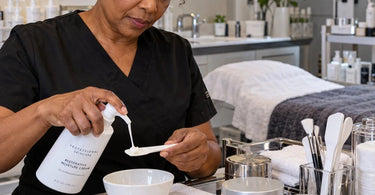
Clients demand excellence - deliver it... and preferably without giving your favorite professional products an accidental bath. In a busy spa or salon, water seems to find its way everywhere: around sinks, steamer stations, treatment bowls, pedicure areas, damp towels, freshly sanitized implements, and the hands of professionals moving from one task to the next. Keeping water out of professional product containers is a small operational detail with a surprisingly big impact on cleanliness, consistency, inventory control, and the polished experience clients expect.
Professional creams, masks, scrubs, lotions, massage products, powders, waxes, nail products, and other backbar formulas are designed to be used according to their manufacturers' directions. Randomly introducing water can alter the product environment, potentially dilute ingredients or preservatives, change texture, and create an unnecessary contamination pathway. That makes smart dispensing and storage habits just as important as having plenty of Professional Cleaners & Disinfectants for Salons and Spas on hand.
Why Water Inside a Professional Product Container Is a Problem
A little splash may look harmless, especially when you are flying through a fully booked Saturday and somebody has already asked where the clean towels are three times. But professional products are formulated and packaged as complete systems. Adding outside water is not part of that system unless the manufacturer specifically instructs you to do so at the time of use.
Water can enter a container directly through splashes or indirectly through wet hands, damp spatulas, dripping brushes, moist scoops, condensation, or containers placed on wet counters. Open jars are particularly vulnerable because their large openings make it easy for moisture to sneak inside during services.
The practical rule is wonderfully uncomplicated: keep the original supply clean, covered, dry, and protected, then dispense only what you need for the service. Your backbar does not need drama. Your clients provide enough of that when they show you the inspiration photo five minutes before closing.
Create Dry Zones Around Open Product
One of the easiest ways to prevent water from entering professional product containers is to separate product preparation from wet work. A counter beside a sink may seem convenient, but it is also prime real estate for splashes, droplets, and freshly washed hands.
Create a designated dry dispensing area whenever possible. Store open jars, pumps, bottles, powders, and treatment concentrates away from sink basins, wet towel bins, facial steamers, pedicure water sources, and other places where splashing or condensation is common.
This is especially helpful when organizing Premium Skincare Products for Spas and Salons, Spa Body Treatments, and Massage Oils, Lotions, and Creams for Therapists. A dedicated preparation surface gives your team a clear visual cue: this is where clean, dry product handling happens.
Close Containers Immediately After Dispensing
The lid cannot protect the product while it is sitting six inches away from the jar contemplating its life choices. Open the container, dispense the amount needed, and close it promptly.
Keeping containers tightly closed when they are not actively being used helps protect the contents from splashes, dust, debris, and routine environmental exposure. It also reduces the chance that someone places a wet tool into an unattended container.
Make this an automatic part of treatment setup. Dispense first, close second, perform the service third. That simple sequence is much easier to enforce than trying to remember which containers have been sitting open since the morning rush.
Never Dip With Wet Hands or Damp Implements
Even freshly washed hands should be thoroughly dried before handling product packaging or dispensing from open containers. The same principle applies to reusable implements.
If you use a scoop, brush, mixing tool, or other implement, follow applicable sanitation requirements and product directions, and make sure the implement is completely dry before it contacts the product supply. A tool can look dry at a glance while still carrying moisture around its handle, bristles, seams, or edges.
For products that need to be removed from jars, professional Applicators & Spatulas make controlled dispensing far easier. The goal is to transfer a clean portion out of the container without introducing service residue, water, or other contaminants back into the original supply.
Use Single-Service Portions Whenever Practical
Portioning professional product before beginning a service can dramatically simplify moisture control. Instead of repeatedly opening the main container while working around steam, water, damp towels, or client contact, dispense the expected amount into a clean, appropriate service container.
Mixing Bowls are useful for masks, body products, skincare preparations, and other treatments that are mixed or portioned immediately before application. For smaller amounts, suitable disposable or reusable service dishes can create the same separation between the main supply and the treatment area.
Most importantly, do not return unused dispensed product to the original container. Once product has been portioned for a service, keeping it separate protects the remaining inventory from whatever the working portion encountered.
Choose Pumps and Narrow Openings When Appropriate
Packaging design can do some of the work for you. Pump bottles, squeeze bottles, and containers with smaller dispensing openings generally expose less of the product supply to the surrounding environment than a wide-mouth jar.
If a manufacturer permits professional product to be transferred into another container, use clean, suitable Bottles & Jars and label them clearly. Follow the manufacturer's storage and handling instructions rather than automatically decanting every product on the shelf.
For frequently used backbar items, a smaller working container may also reduce how often the primary supply needs to be opened. That can be helpful for high-volume treatment rooms where the same category of product is used throughout the day.
Keep Wet Towels Far Away From Product Storage
Warm towels are fabulous for clients. Damp towels snuggled against your product inventory are decidedly less fabulous.
Separate clean dry inventory from used towels, damp linens, wet sponges, and freshly laundered items that have not fully dried. Organizing your High-Quality Towels and treatment products in distinct areas reduces accidental contact and makes backbar workflow easier for everyone.
Likewise, do not set product containers directly on counters that are visibly wet. Dry the work surface first. Water on the bottom of a bottle can migrate around the container, reach lids or threads, and eventually end up exactly where you did not want it.
Watch the Splash Zone Around Facial Steamers
Facial Steamers are a treatment-room staple, but moisture management matters around any equipment that produces steam or water droplets. Keep open professional products away from the steamer's direct path and from surfaces where condensation routinely collects.
Prepare masks, cleansers, serums, and other products before steaming whenever your service protocol allows. Once product is dispensed, close the bulk container and return it to the dry storage area.
The same thinking applies to hydrotherapy and water-based equipment. If your service area includes Vichy Showers, Hydrodermabrasion, or pedicure equipment, give professional product containers a home outside the immediate wet zone.
Be Extra Careful With Scrubs and Open Jars
Products such as Sugar Scrubs and Salt Scrubs are often packaged in jars and commonly used in environments where water is nearby. That combination makes disciplined dispensing especially useful.
Use a clean, dry spatula or scoop to remove the amount required for the treatment. Transfer it into a separate service vessel and close the original jar before the treatment begins. Avoid carrying the bulk jar to the wet side of a manicure, pedicure, body treatment, or rinse area simply because it feels convenient.
Convenience is wonderful until a dripping hand reaches over the jar. Then convenience becomes an inventory meeting.
Do Not Add Water to Restore Texture
If a professional cosmetic or treatment product seems thicker or drier than expected, resist the temptation to add water unless the manufacturer specifically instructs you to do so. Adding water can introduce microorganisms and may dilute the preservative system or change how the formula performs.
Instead, check the product label and manufacturer directions. Confirm that the product has been stored correctly and that the container has remained properly closed. If the product has developed an unusual odor, appearance, texture, or other unexpected change, remove it from service and follow the manufacturer's guidance rather than improvising a spa-room chemistry experiment.
Give Every Container a Clean, Dry Exterior
Product protection is not limited to what happens inside the jar. Keeping container exteriors clean and dry makes professional handling easier and prevents moisture from accumulating around caps, lids, pumps, and threads.
Include product containers in your end-of-day workstation routine according to applicable sanitation rules and manufacturer recommendations. Wipe appropriate exterior surfaces, organize products upright, and confirm that closures are secure before leaving the treatment room.
This pairs naturally with the rest of your Spa Essentials for Professionals routine. A neat backbar is not just pretty enough for the social media photo; it supports consistent service preparation the next morning.
Store Products Away From Damp Conditions
Professional products should be stored according to their individual label directions, which may include guidance about heat, sunlight, temperature, or humidity. In general, damp storage areas are not ideal places for products that need to remain clean and protected.
Avoid storing open or frequently used containers under sinks where plumbing leaks or condensation could become an issue. Shelving near towel warmers, steam sources, showers, and pedicure plumbing also deserves a second look if moisture regularly accumulates there.
If you are reorganizing the entire backbar, place frequently used products at comfortable working height and keep them separated from cleaning chemicals, used implements, wet linens, and waste. Your future self, reaching for a mask during a back-to-back facial schedule, will be deeply grateful.
Train the Whole Team on One Dispensing Routine
The best storage system will struggle if six professionals use six different dispensing methods. Establish a straightforward product-handling routine and make it part of onboarding, treatment protocols, and periodic sanitation refreshers.
A simple standard might include drying hands before product handling, dispensing only with approved clean and dry applicators, never double-dipping, closing bulk containers immediately, keeping products out of splash zones, and never returning dispensed product to the original container.
Keep the supplies needed to follow that routine within easy reach. Stock disposable applicators, clean service bowls, wipes, gloves when appropriate, and other Must-Have Supplies for Salon & Spa Business Success before the treatment room becomes busy. Good procedures become much easier to follow when the correct tools are sitting right there.
What If Water Actually Gets Into the Container?
If you know or strongly suspect that water entered a professional product container, do not simply stir it in and continue using the product. Remove the affected container from service while you evaluate what happened.
Check the manufacturer's instructions and contact the manufacturer when needed for product-specific guidance. The appropriate response can depend on the formulation, amount of water involved, packaging, intended use, and manufacturer recommendations. For a professional environment, replacing questionable product is generally a much better operational decision than experimenting with client-service inventory.
Document recurring incidents, too. If containers routinely get splashed in one treatment room, the problem may not be staff carelessness at all. The shelf, prep station, or workflow may simply be located in the wrong place.
A Five-Second Backbar Check Can Prevent a Lot of Trouble
Before opening a professional product container, take a five-second look around. Are your hands dry? Is the counter dry? Is your spatula dry? Is the service bowl ready? Is the container away from direct splashing?
That tiny pause can prevent a surprising number of product-handling mistakes without slowing down the service. In fact, organized preparation usually saves time because you are not hunting for applicators, moving wet towels, wiping sticky jars, or wondering why a lid mysteriously disappeared halfway through the facial.
Dry Product Handling Is Professional Product Handling
Preventing water from entering professional product containers does not require an elaborate new system. It requires a dry preparation zone, clean dispensing tools, prompt lid closure, smart portioning, sensible storage, and a consistent team routine.
Build those habits into every treatment room and service station, then make sure your team has the professional containers, applicators, sanitation supplies, and organizational essentials needed to follow the process without improvising. Explore Bottles & Jars, Applicators & Spatulas, Mixing Bowls, and other Spa Essentials for Professionals to keep your backbar organized, efficient, and ready for a busy schedule.
Because your professional products belong in the treatment protocol - not in an accidental synchronized swimming event.
