
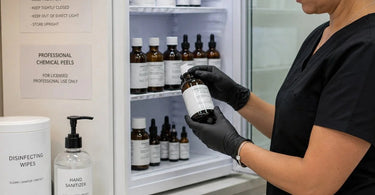
Maximize your potential with the right tools... and that means keeping your professional-grade Chemical Peels as potent as the day you bought them! Let's be real, ladies: discovering that a $100 bottle of professional-grade chemical peel has turned into a sad, useless puddle of expensive goo is just about as fun as finding a forgotten tuna sandwich in your massage bag. Spoiler alert: it's not fun at all. You work too hard, and your investment in top-tier Advanced Facial Treatment Products for Salons & Spas is too significant to let them die a slow, hot, humid death under a sink. So, grab your favorite Spa Essentials and a giant mug of ambition, because we're diving deep into the cool, dark, and delightfully dry world of proper chemical peel storage. After all, a happy peel makes for a glowing client, and a glowing client makes for a very happy bank account. Let's get science-y (but in a fun way, I promise!).
Improper storage is the #1 culprit behind weakened peels, unpredictable results, and potential irritation for your clients. Think of your Premium Skincare Products like tiny, finicky little geniuses. They need the right environment to work their magic. Stick with me, and by the end of this, your storage game will be so strong it could survive a zombie apocalypse (or at least a busy Tuesday at the spa).
Why Your Chemical Peels Are Secretly Judging Your Storage Habits
Alright, let's break it down. Professional-grade peels aren't just fancy water; they are highly active compounds – think Glycolic Acid, Salicylic Acid, Lactic Acid, and their powerful friends. These ingredients are designed to exfoliate, renew, and transform skin, but they are also notoriously sensitive to their surroundings. Heat, light, air, and even humidity are their arch-nemeses. Studies show that exposing these potent formulations to unfavorable conditions can cause them to degrade, losing up to 30% of their effectiveness in just a few weeks . That's like buying a sports car and filling it with watered-down apple juice.
When a Professional Chemical Peel degrades, it doesn't just become less effective; it can become unstable. The pH level can shift, turning a beautifully balanced exfoliant into an irritable beast that causes unnecessary redness or burns. Following Spa Masters and other leading brand instructions is not just a suggestion, it's a necessity for client safety. Many experts recommend using opened products within 90 days to six months for maximum safety and potency . And as any pro knows, a bad reaction is bad for business. So, let's keep those reactions positive, shall we?
The Goldilocks Zone: Finding the Perfect Peel Environment
Just like Goldilocks, your chemical peels don't want it too hot, too cold, or too bright. They want it just right. The sweet spot for storing most AHAs and BHAs is a consistent temperature between 59°F and 77°F (15°C–25°C) . This means that tossing them in your car during a Florida summer or leaving them right next to your Towel Steamers is a big, sweaty no-no.
Your bathroom might be convenient, but the constant temperature and humidity fluctuations from hot showers create a nightmare environment for your products. Instead, find a dedicated, climate-controlled space. A closet in your treatment room or a cabinet away from heat-generating Equipment & Furniture for Spas & Salons is ideal. Think cool, dry, and consistent. Some brands even suggest that refrigerating certain formulations can extend their life, but you absolutely must check the manufacturer's guidelines first . An oil-based peel might get thick and unhappy in the cold, while a water-based one might thrive.
Let There Be (No) Light: Shielding Your Potions
Sunlight and UV rays are like kryptonite for your active ingredients. They break down the molecular structure of everything from Vitamin C to Retinol and, you guessed it, your beloved acids. That's why so many professional products come in dark amber or cobalt blue bottles – that's not just for looks, it's built-in armor .
If your Bottles & Jars are clear, you need to be extra vigilant. Store them in a dark cupboard or cabinet immediately. Never, ever leave them on a sunny windowsill or under the bright lights of a Magnifying Lights station. Light exposure can cause discoloration (a peel turning yellow or brown is a bad sign) and significantly reduce potency. Treat your peels like vampires: keep them out of the sun at all costs.
Seal It Like You Mean It: Fighting the Air
Oxygen is the silent killer of chemical peels. The process of oxidation is what turns a sliced apple brown and what turns a potent peel into a dud. Each time you open that bottle, you're letting in fresh oxygen that immediately starts degrading the active ingredients . The best defense is a good offense: always, always, always seal the cap tightly the second you're done.
For products that you use frequently, consider decanting them into smaller, airless pump bottles. This minimizes the amount of air that gets into the main supply every time you open it. And for the love of all that is holy, do not double-dip! Never dip a used spatula, cotton round, or anything that has touched a client's skin back into the main jar. This introduces bacteria and oil, which can contaminate and degrade the entire batch. Use clean, disposable applicators every single time. Your clients' Professional Spa Apparel might be stylish, but the bacteria on it is not welcome in your peel jar.
Real Talk: Shelf Life and The Sniff Test
Let's talk expiration. Unopened, many professional peels can last 1 to 2 years if stored in perfect conditions . But once you crack that seal, the clock starts ticking. The general rule of thumb is 6 to 12 months, but always check the Period After Opening (PAO) symbol on the bottle. It looks like a little jar with a number (like 6M or 12M) that tells you how many months it's good for after opening .
But you are a savvy pro, and you have instincts. Use them! Before you slather anything on a client's precious face, give it a good look and a sniff. Here's your cheat sheet for a spoiled peel:
- Color Change: Is it darker, yellow, or separated? Fresh peels should generally look uniform. A significant color shift is a huge red flag.
- Funky Odor: Does it smell sharp, sour, or like something died? A good peel might have a distinct smell, but a foul or rancid odor means it's gone bad. Trust your nose.
- Texture Troubles: Is it clumpy, gritty, or overly thick? The texture should be smooth and consistent. Changes here indicate instability.
- Reduced Sensation: Does it barely tingle when you know it should? A loss of that expected mild tingling sensation often means the acid potency has nosedived .
When in doubt, throw it out. The cost of a new bottle of Prosana or Tuel Skincare Collection is far less than the cost of a client complaint, a damaged skin barrier, or a lost customer. Your business reputation is built on results and safety – never gamble with either.
So there you have it, you brilliant skincare boss! Mastering the art of storing your Professional Chemical Peels is a simple, budget-friendly way to ensure every treatment delivers the stellar results your clients rave about. Cool, dark, dry, and airtight – make that your storage mantra. Now, go forth, organize that cabinet, and show those peels who's boss. Your glowing, happy clients (and your profit margin) will thank you. And hey, while you're stocking up on all your storage essentials and top-tier products, remember we're always here for you at Pure Spa Direct. You've got this!
)