
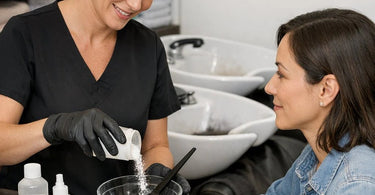
Why every pro needs this now... because there is nothing quite like the panic that sets in when you turn around from a flawless lash and brow tint service only to find your pristine porcelain backbar sink looks like a Smurf met a tragic end in it. You grab a scrubby sponge, you channel your inner rage, and two minutes later... the blue is still there. Mocking you. Professional tint is formulated to stain skin and hair for weeks, so of course it laughs in the face of your dish soap. But before you consider taking a jackhammer to your beautiful (and expensive) suite, take a deep breath. We have rescued thousands of professional salon sinks from the brink of tie-dye disaster, and we are about to spill all the tea—or rather, the stain-removing secrets. From gentle pantry items to heavy-duty professional spa disinfectants and cleaners, we are going to get that porcelain gleaming white again.
Let us be real for a minute. Running a busy spa, salon, or waxing center is hard enough without having to explain to your next client why your sink looks like it is part of a modern art installation. Porcelain is the gold standard for backbars because it is durable, non-porous (when the glaze is intact), and easy to wipe down between services. However, those same properties that make it hygienic also allow pigment to sit on the surface and dry out fast. If you use Intensive Tint, Refectocil, or Berrywell, you know the struggle is real. The good news? Almost every tint stain is reversible. The bad news? If you grab the wrong chemical, you will etch the sink or make it permanently porous, which just invites more stains later. So let us get scientific, a little bit scrappy, and very effective.
Why Tint Sticks to Porcelain (The Chemistry of Your Headache)
Professional lash and brow tints are essentially oxidative hair dyes. They work by opening the cuticle of the hair and depositing large pigment molecules. When that same formula splashes onto your porcelain sink, the water evaporates, leaving the pigment molecules clinging to the microscopic texture of the glaze. Because the primary ingredient in many stains is often a coal tar or plant-based dye, it bonds similarly to how it bonds with hair, just less permanently. Heat and time are the enemies here; if you rinse a spill immediately, you are fine. But if you let it sit for an hour while you check out your client and sweep the floor, you have a science experiment on your hands. Do not panic. We are going to tackle fresh spills and set-in stains using three different levels of intensity: Level 1 (The Pantry Hero), Level 2 (The Gentle Professional), and Level 3 (The Heavy Duty Solution).
Level 1: The Immediate Response (The 60-Second Rule)
Speed is your best friend. As soon as you see that drop of Brow Henna or blue tint hit the rim of your professional backbar station, grab a paper towel. Do not rub! Rubbing spreads the pigment and grinds it into the pores of the porcelain. Instead, blot firmly. Grab a clean, wet cloth with cold water (hot water can set the proteins in some dyes) and dab the area repeatedly. If the stain is fresh, this will lift 90% of it. For the remaining shadow, grab a spray bottle of 70% Isopropyl Alcohol. Spray it directly on the stain, let it sit for ten seconds, and wipe. Alcohol is a solvent that breaks down the dye structure before it hardens. This should be a standard part of your lash service cleanup kit.
Level 2: The Natural Remedy (Cream of Tartar & Vinegar)
Okay, so the stain dried. You missed it. It happens to the best of us. Before you reach for the industrial acids, try the method that professional house cleaners swear by and that is surprisingly effective on cosmetic pigments . Head to your breakroom pantry for Cream of Tartar. This mild acid is a miracle worker for porcelain equipment without scratching the glaze. Mix a paste of cream of tartar and white vinegar. You want the consistency of toothpaste, not soup. Using a soft sponge or a soft bristle brush, slather this paste onto the tint stain. Let it sit for 10 to 15 minutes. The acetic acid in the vinegar combined with the mild abrasion of the cream of tartar works to lift the pigment molecules out of the microscopic crevices of the sink . After it sits, scrub gently in a circular motion. Rinse with warm water. For most standard oxidative tints, you will see the stain lift almost immediately. If you are dealing with a particularly aggressive brow lamination tint or dye, you might need a second application. The beauty of this method is that it is non-toxic for your staff and safe for your plumbing.
Level 3: The Big Guns (Hydrogen Peroxide & Baking Soda)
Sometimes, the vinegar and cream of tartar just arent cutting it. Maybe the stain is a week old, or maybe you are using a high-oxide color like black or deep auburn. It is time to move up to the chemistry set. Grab a bottle of standard 3% Hydrogen Peroxide (keep it in your spa supply closet) and some baking soda. Mix them into a paste. Hydrogen peroxide is an oxidizing agent. While tint is an oxidative dye, hydrogen peroxide can sometimes break the bond of the color molecules already deposited on a non-porous surface like porcelain, effectively bleaching the stain out of the sink . Apply the paste and let it sit for up to 30 minutes. You will see it start to bubble and fizz. Scrub with a non-abrasive pad. Rinse thoroughly. Warning: Do not use this on colored porcelain or antique finishes, but for standard white spa furniture sinks, it is usually a lifesaver. This is also a fantastic method for removing stubborn sunless tanning residue, which behaves similarly to hair tint.
What NOT to Do (The Don\‘t List That Saves Your Sink)
Before you go wild, let us talk about the mistakes that make me want to cry when I see them in a beautiful salon suite. Do not use bleach. I know it is tempting, but bleach is caustic and can react unpredictably with cosmetic dyes, sometimes setting the stain permanently or turning your white sink yellow. Do not use magic erasers (melamine foam) aggressively. While they work, they are essentially super-fine sandpaper. Over time, they will dull the high-gloss finish of your porcelain, making it easier for stains to stick in the future. Do not use drain cleaner on the sink surface. That is just insane and dangerous. And please, do not use nail polish remover (acetone). It can eat through the protective glaze on your sink, ruining it forever. Stick to our three levels above, and your luxury spa equipment will last a decade.
Prevention: Saving Your Future Self
An ounce of prevention is worth a gallon of stain remover. If you are a high-volume lash and brow studio, you need a workflow that protects your porcelain. Keep a wet towel or a specific high-quality towel draped over the edge of the sink where you mix your tint. Use a silicone mat in the bottom of the sink bowl. When you mix your tint on a palette or a tile, wipe your spatulas immediately. Train your estheticians to rinse the sink fully between every single client, not just at the end of the day. Furthermore, consider using a disposable spatula for tint mixing so you are not dipping dirty tools into your fresh water rinse. Small changes in your daily supply checklist save huge headaches later. Also, check your UV sterilizers and tools; sometimes the residue from those can react with the dye, so make sure everything is thoroughly dried before service.
Professional Grade Solutions (For the Truly Stubborn)
Sometimes, despite your best efforts, that ring around the drain just will not budge. In that case, it is time to bring out the products specifically designed for professional salon equipment maintenance. Look for a non-abrasive cream cleaner specifically labeled for use on fiberglass or porcelain. We stock some heavy-duty professional disinfectants that are formulated to break down organic pigments without destroying the surface seal. If you are dealing with rust stains from hard water mixing with your tint chemicals, a stainless steel or porcelain-safe rust remover is essential . Remember, always spot test any new chemical in a discreet corner of your spa reception area or backroom before going to town on the main sink. When you are shopping for bulk supplies, pick up a few extra mixing bowls specifically for tint only, so residue never touches the sink directly.
Quick Fixes for Different Stain Colors
Different pigments require slightly different tactics. For blue and green tints (the usual suspects), the alcohol trick works best because those pigments are alcohol-soluble. For reds, purples, and browns (like Le Marque Henna), oil-based cleansers or micellar water sometimes help dissolve the stain before you go in with the cream of tartar. For blacks and dark browns, you need the oxidizing power of hydrogen peroxide. If you have a greasy residue leftover from a post-waxing oil that trapped the tint, degrease the sink first with a strong dish soap. Once the oil is gone, the tint particles have nothing to hide behind, and the stain removers will work much faster.
Keeping Your Equipment Pristine
Your backbar sink is one of the hardest working pieces of salon furniture you own. It sees acid washes, wax preps, hair color, and tanning solutions on top of the tint. At the end of every week, do a deep clean with a vacuum spray machine if you have one, or just a dedicated scrub brush to get the residue out of the drain flange. The buildup under the removable drain cover is usually where the worst smells and stains come from. Keep your protective gloves on when handling these chemicals, and always dry the sink with a microfiber cloth after cleaning. Water spots create a film that makes stains grab faster .
Conclusion: A Clean Sink is a Happy Sink
Tint stains are an inevitable part of a thriving brows and lashes business. They do not mean you are a messy professional; they mean you are a busy one. With the right tools from Pure Spa Direct—from our hygienic table paper to our industrial cleaners—you can keep your studio looking like a million bucks without spending a million hours scrubbing. Remember the order of operations: blot fresh spills, try natural pastes for dried stains, use peroxide for the tough guys, and never use bleach or abrasives. Your porcelain will stay glossy, your clients will stay impressed, and you will never have to panic-spray a sink right before your next VIP appointment again.
)