
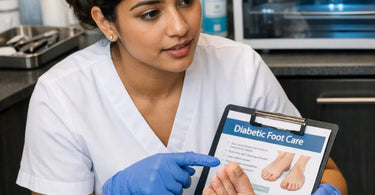
Your work deserves great tools, but your skill deserves applause, and handling a diabetic pedicure safely is the ultimate flex. Let's be real: our clients with Type 2 Diabetes trust us not just to make their toes look pretty, but to keep them out of the doctor's office. We aren't just filing nails; we are acting as the first line of defense. The stakes are higher because a tiny nick isn't just an oopsie; it can be a major health event. But don't panic! You are absolutely capable of offering a luxurious, relaxing, and totally safe service. It just requires swapping out a few bad habits for some rock-solid protocols.
As beauty professionals, we love a challenge, and nothing is more rewarding than a client who leaves feeling pampered and safe. The key is understanding the "why" behind the rules. Diabetes can lead to peripheral neuropathy (loss of feeling) and poor blood flow. This means your client might not feel a cut, and if they don't feel it, they won't treat it, and because blood flow is slow, it won't heal. That adds up to a bad time. But when you master the safe diabetic pedicure, you become a hero. You are the guardian of the feet, and honestly, that is way cooler than just being the person who picks the best red polish.
Why Your Technique Matters More Than Ever
We’ve all had that client who apologizes for their "rough" feet or is nervous about taking off their socks. For the diabetic client, that anxiety is real and valid. They might have been told horror stories by their podiatrist (rightfully so), or they are worried you might judge them. Your job is to meet that anxiety with confidence and knowledge. You don't need to be a doctor, but you do need to be a detective.
Before you even pull out the professional nail care kit, you need to do a visual assessment. Are there any open sores, blisters, redness, or ingrown nails? If you see an active infection or an open wound, your answer is a hard "no." You send them straight to their podiatrist. It’s not mean; it’s love. However, if the feet are healthy, dry, and just in need of some TLC, you are good to go. Remember, a pedicure chair is a place of relaxation, but for these clients, it is also a medical waiting room. Act accordingly.
The Great Soak Debate: To Water or Not to Water?
This is where we separate the amateurs from the pros. Traditional pedicures often start with a long, hot soak. For a diabetic client, especially those with neuropathy, prolonged soaking can actually break down the skin and make it more susceptible to infection. Plus, if the water is too hot and they can't feel it, you could accidentally cause a burn. Yikes!
Instead, opt for a quick cleanse or skip the soak entirely. Use a spray bottle with warm water and a gentle, antibacterial soap to spritz the feet, then wipe clean. If you absolutely must use a spa basin, ensure it is impeccably clean. Since you are a Pure Spa Direct pro, you know the drill. We love using disposable pedicure bowl liners to eliminate the risk of bacteria hiding in jets. If you are using a Continuum Pedicure system or a Pedicure Spa chair, run the disinfectant cycle. Don't just rinse. Scrub it like your license depends on it, because it sort of does.
Tools of the Trade: No Razors Allowed!
Let’s get loud for the people in the back: THROW AWAY YOUR RAZORS. Seriously. Any sharp instrument used to shave calluses is a massive no-no for everyone, but especially for Type 2 Diabetes clients. That callus is there because of pressure and friction. If you slice it off, you create a wound. A diabetic wound. Do you want that responsibility? No.
Stick to gentle abrasion. Use a high-quality foot file or a sugar scrub followed by a pumice stone. For tough buildup, look at professional chemical exfoliators designed for thick skin that don't require scraping. When it comes to nails, cut straight across. Do not dig into the corners to create that cute curve; that is how ingrown nails happen. Use a nail file to soften the edges, but leave the length. Shorter nails are less likely to jam into shoes and cause trauma.
Sanitation Station: This is Non-Negotiable
If you have been in this industry for more than five minutes, you know that hygiene is sexy. But for diabetic pedicures, sanitation is a life-saving measure. You cannot, and I mean cannot, double-dip. You need a UV Sterilizer or an autoclave for your metal implements.
Better yet, go disposable! We carry a huge range of single-use files, buffers, and wooden sticks. Using these ensures zero cross-contamination. Don't forget the hygienic table paper for your footrest and making sure your towels come out of the towel steamer fresh, not just warm. If a tool looks rusty or stained, toss it. We love Bleachsafe Towels because they look crisp and clinical, which reassures the client.
Moisturize, Don't Mascerate
Diabetic skin is often dry because the autonomic nerves that control sweating and oil production can be damaged. You need to hydrate, but you must be strategic. Apply a rich, diabetic-friendly lotion (look for urea or ceramides) to the tops and bottoms of the feet. However, avoid the space between the toes. Moisture in the toe webs is a breeding ground for fungus and bacteria. Keeping the skin supple prevents cracks (fissures), which are open doors for infection. A little cuticle oil rubbed into the nail bed is fine, but skip the heavy creams in the cracks.
The Client Consultation: Talk to Me!
Communication is your secret weapon. Start the service by asking, "Have you seen a podiatrist recently?" This opens the door. Ask if they have any numbness or tingling. Tell them exactly what you are doing before you do it. "I am going to use a soft file on this heel, just let me know if it feels too warm." Because they might not feel sharp pain, but they might feel a deep pressure or heat. You want them to be your co-pilot.
Also, ask about leg shaving. If they shaved their legs that morning, those microscopic nicks are vulnerable. When you soak or scrub, bacteria can enter. You might need to postpone the service or skip the heavy exfoliation. You are the expert, so guide them. Let them know that next time, they should avoid shaving 24-48 hours before their appointment. It is a small change that makes a huge difference.
Products We Love for Diabetic Care
At Pure Spa Direct, we stock the gear you need to make this happen safely. No need to hunt all over town. For gentle callus reduction, check out the files and buffers in our Pedicure Supplies collection. For sanitization, our Professional Cleaners section has hospital-grade solutions. And for the comfort of your clients, maybe throw a Massage Table Warmer under their legs (low setting!) to improve circulation without burning the skin.
Don't forget to stock your retail shelves. Selling diabetic-safe moisturizers and cotton socks is a great way to extend that care home. Brands like Flexitol are fantastic for this specific need. Let your client leave with the tools they need to stay safe until they see you again. It builds trust and loyalty.
When to Say No (And How to Say It Nicely)
You are a service provider, but you are also a human with a conscience. If a client comes in with active ulcers, blackened tissue, or severe fungal thickening that is crumbling, you have the right and the responsibility to decline the service. Don't whisper. Be professional.
Say something like, "Mrs. Jones, I love seeing you, but I am noticing some areas here that need a doctor's attention more than a file. I don't want to risk hurting you. Once your podiatrist gives you the all-clear, my chair is yours." They will respect you for it. It shows you care about them, not just their money. We have plenty of other services to offer them while they heal, like a seated upper body massage or a fabulous manicure.
Wrap Up and Aftercare
Once the service is done and the nail polish is dry (check out our OPI or CND ranges for long-lasting wear), you aren't finished. You need to do a final visual check. Look at the feet again under good light. Use a Magnifying Light if you need to. Make sure there are no accidental nicks.
Then, educate the client. Tell them to check their feet tonight before bed. Tell them to wear clean, soft socks. If they see any redness or swelling, to call their doctor. You are giving them permission to be proactive. That is the hallmark of a true professional. So, go forth, sanitize your stations, and offer that safe diabetic pedicure with pride. You have the skills, you have the products from Pure Spa Direct, and now you have the knowledge. Make those feet happy and healthy!
