
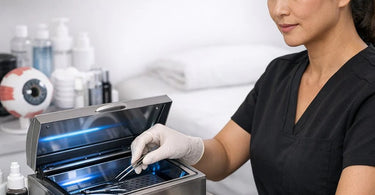
Pros rely on this for results, but when a client with a history of eye surgery sits in your chair, the usual playbook goes out the window. Let's be real: turning away a loyal client feels terrible, but risking their ocular health is not an option. Whether they've had LASIK, cataract removal, or corrective procedures, your number one job is to protect those peepers while still giving them the fluttery, defined lashes they crave. This guide is your go-to resource for navigating the tricky waters of lash and brow tint on clients with surgical histories. We will cover waiting periods, patch tests, application tweaks, and exactly what to say during your consultation. Because frankly, an eye infection is a terrible look for everyone involved.
First, let's acknowledge the elephant in the room: the internet is full of conflicting advice. Some sources say "never again," while others just shrug. At Pure Spa Direct, we believe in arming you with the facts so you can make a smart, safe judgment call. The key is understanding why eye surgeries change the game. Procedures like LASIK, PRK, or cataract surgery create a corneal flap or incision that takes serious time to heal fully . Even after the redness fades, the nerve endings and tear film stability can be altered for months. This means your client's eyes are likely more sensitive, drier, and prone to reacting to chemicals that previously wouldn't have bothered them. So, how do we safely deliver that gorgeous tint without a trip to the ER? It starts with a hard look at the waiting period.
The Golden Rule: How Long is Long Enough?
If a client asks for a tint six weeks after their LASIK, the answer should be a firm "not yet." Most medical professionals and advanced estheticians recommend a waiting period of at least six months before performing any service near the eyes, including lash and brow services . However, six months is the bare minimum for a standard LASIK. If your client had complications, a more invasive procedure, or is still using prescription drops, that window extends to a full year or more. During the consultation, ask specific questions: "Are you still using lubricating drops daily? Do your eyes feel dry or gritty? Have you been cleared by your ophthalmologist for cosmetic services?" Never rely on "I feel fine." You need medical clearance or a very long wait time. For procedures like cataract surgery or corneal transplants, err on the side of extreme caution—often 12 to 18 months is the safe zone.
The Consultation Deep Dive: Questions You Must Ask
Before you even reach for the tint, you need a rock-solid intake form. Many spas skip this for tinting because it seems "low risk," but post-surgery eyes are a different beast. Your form must specifically ask about: LASIK, LASEK, PRK, SMILE, Cataract surgery, Corneal transplant, Retinal surgery, and Blepharoplasty (eyelid surgery) . But don't stop at the checkboxes. Ask about current symptoms: "Do you experience chronic dry eye? Do you use prescription eye drops like Restasis or Xiidra? Do you have any sensitivity to light or fluorescent lighting?" If they answer yes to any of these, even if it has been two years post-op, refer them back to their doctor. Additionally, you need to check for active conditions. If they have conjunctivitis (pink eye), blepharitis, styes, keratitis, or any swelling/redness, the service is a hard no until fully resolved . Also, be aware of claustrophobia. Having to keep eyes closed tightly with tint on the lashes can trigger anxiety in a way that lying on a massage table does not .
Mandatory Patch Testing: Non-Negotiable for Safety
For a standard client, a patch test is a good idea. For a client with prior eye surgery, it is an absolute necessity. You should perform a standard patch test behind the ear or in the inner elbow 48 hours prior to the service. However, for this specific demographic, consider a more targeted approach. Because the eye area is so sensitive, some pros prefer a "lash line dot test." Using a clean microbrush, apply a tiny, tiny dot of the mixed lash tint to the outer corner of the lower lash line (just a few lashes). Leave it on for the standard processing time, then remove. Ask the client to monitor for itching, swelling, or redness over the next 24 hours. This is the only way to gauge how the surgical eye will react to the specific dye chemistry. If the client refuses a patch test, you must refuse the service. It's not worth the liability.
Product Selection: Go Gentle or Go Home
Not all tints are created equal. Harsh, PPD-heavy dyes that you might use on sturdy brows are a nightmare for fragile post-op eyes. You need to stock high-quality, gentle formulations designed for sensitive clients. Brands like Intensive Tint, Refectocil Original, and Intense Brow[n]s offer creams and gels that are less likely to drip into the eye and have lower potential for irritation. Avoid anything labeled "fast acting" or "high lift," as these usually pack a stronger chemical punch. Additionally, consider switching to a lash lift tint combination that uses a developer and cream, which tends to be thicker and stay in place better than watery dyes. Remember, we are aiming for "defined but safe," not "jet black at all costs."
Modifying Your Application Technique
When you finally get the green light, your technique needs to be flawless. Forget the sloppy application you might rush through on a Friday evening. For post-surgery clients, precision is everything. Start by asking the client to remove contact lenses prior to the treatment; they cannot be worn during the service . Use a gentle, oil-free eye makeup remover to clean the lashes, ensuring no residue remains . You will also want to avoid waterproof mascara for 48-72 hours prior, as it leaves a film that blocks tint absorption . When applying the protective under-eye pads or cream, make sure there is zero seepage. Use a smaller amount of tint than usual, focusing on the mid-lengths to tips rather than jamming it down to the root. Keep the processing time on the lower end of the manufacturer's recommendation. If the box says 5-10 minutes, do 5. We can always do a second application next month; we cannot undo a chemical burn. Use a lint-free applicator and a steady hand.
Aftercare Instructions: The Fine Print
Your job isn't done when the timer goes off. Post-surgery eyes are vulnerable to infection and irritation long after the tint is rinsed. Give your client verbal and written aftercare instructions. They must avoid water, steam, sweat, and oil-based products for a full 24 hours . This means no hot showers, no gym sessions, no saunas, and no swimming . Additionally, advise them to use a preservative-free lubricating eye drop if they feel dryness, as this will keep the eye healthy and prevent rubbing. Warn them not to rub their eyes—ever, but especially now. Finally, tell them to call you immediately if they experience unusual redness, pain, or discharge. It's likely just a sensitivity, but if it's an infection, they need a doctor, not Google. For standard post-care, we also recommend avoiding mascara, lash serums, and oil-based makeup removers for 24-48 hours to ensure the tint lasts its full 4-6 weeks .
Building Your Lash Tint Toolkit
To perform safe tints on any client, let alone those with surgical histories, you need the right gear. At Pure Spa Direct, we stock everything from the wax warmers you use for brows to the specific tints you need for lashes. Here are some essentials for your safety kit: Microbrushes and applicators for precision, Cotton rounds and lint-free wipes, Mixing bottles and rings, and Nitrile gloves. Being prepared shows your client you take their safety seriously, which builds trust and loyalty.
Ultimately, tinting lashes for clients with prior eye surgeries is about informed consent and impeccable technique. It requires more paperwork, a longer consultation, and a gentler touch. But the payoff is huge: a loyal client who knows you value their health over a quick buck. So, update your intake forms, buy some high-quality gentle tint, and always—always—prioritize safety over speed. Now go make those lashes look amazing (safely).
