
Your business needs this technique in your arsenal. Let's be honest, clients love being blonde, but they absolutely hate the high-maintenance calendar of constant touch-ups. The dreaded "halo" of dark regrowth is the number one complaint that sends them running back to your chair (or worse, searching for a quick fix elsewhere). The root smudge, also charmingly known as a shadow root or root melt, is your secret weapon against this. It's the genius, low-commitment technique that transforms high-maintenance color into a lived-in, seamless masterpiece that grows out gracefully for months. It's the difference between a client who texts you in a panic at week six and one who casually books her next appointment three months later because her hair still looks intentionally fabulous. Mastering this skill isn't just about color theory; it's about client retention, premium service pricing, and becoming the hero who gives them their time and confidence back.
Think of it as the artistic bridge between a full highlight and a grow-out. It's that perfect, smudgy graduation of color that makes it impossible to tell where the natural root ends and the lightness begins. For your clients with balayage, baby lights, or any lightened base, this technique is a game-changer. It adds depth, dimension, and a touch of cool-girl effortlessness that screams modern hair. Ready to stop fighting regrowth and start celebrating it? Let's dive into the safe, professional way to use lighteners and color to create the perfect, profit-boosting root smudge.
Root Smudge vs. Shadow Root vs. Root Melt: Decoding the Lingo
Before we mix a single drop of color, let's clear up the terminology. You'll hear these terms used interchangeably, but subtle differences can help you communicate precisely with your clients.
- Root Smudge: This is our core technique. It involves applying a darker color (usually close to the client's natural shade) directly at the root and then physically "smudging" it down about an inch onto the pre-lightened hair. The goal is to blur and camouflage that stark line of demarcation.
- Shadow Root: Often used synonymously with root smudge, a shadow root can sometimes imply a slightly more diffused effect that extends a bit further down the hair shaft, creating a softer, more shadowy transition.
- Root Melt: This takes the concept a step further for ultimate softness. A root melt typically uses a color even closer to the mid-lengths and ends, creating a ultra-gradual, melted effect that seamlessly blends from root to tip without a noticeable line. It's perfect for the client who wants zero contrast but all the dimension.
For the purpose of this guide, we're focusing on the foundational root smudge technique. Once you've got that down, expanding into shadows and melts is a natural (and billable) progression.
The Golden Rule: Choosing the RIGHT Color for a Safe Smudge
This is where the magic—or the mayhem—happens. Using the wrong type of color can create a band that's a nightmare to lift later, leading to corrective services. Your primary goal is deposit without unwanted lift.
Demi-Permanent Color: The Professional's Go-To
For most smudge applications, a demi-permanent color is your best friend. Why? It deposits pure color without lifting the natural pigment of the hair. This means you won't expose underlying warmth at the root, which could create a brassy band. When it fades, it fades gracefully back toward the natural color underneath. It provides excellent longevity (much better than semi-permanent) without the commitment or potential damage of permanent color. This is ideal for clients who want a low-maintenance look for several months.
Semi-Permanent Color: The Safe & Fade-Friendly Option
Consider a semi-permanent color or a color-depositing conditioner in these scenarios:
- The "I'm Not Sure" Client: If a client is hesitant about darkness or you're experimenting with a new formula, semi-permanent fades completely, making it a zero-risk option.
- Future Lightening Plans: If you know the client will want to lift through this area again soon (with high-lift color, for example), semi-permanent won't hinder the lightening process like a demi might.
- Super Fragile Hair: It provides the gentlest deposit of color.
Remember, you'll need to educate clients that semi-permanent will require more frequent refreshment.
The Big No-No: Avoid Permanent Color!
Just don't do it. Permanent color is a recipe for future problems. It opens the cuticle and can lift the natural pigment, exposing warm undertones that will reveal themselves as the color fades. More critically, it creates a permanent band of color. When the client returns in six months to go bright again, you'll be faced with three distinct bands: natural root, permanent color band, and old blonde. Lightening through that permanent band is unpredictable and often results in a stubborn, brassy stripe. Save yourself the headache and stick with demi or semi.
The Critical Step: Developer Volume is Non-Negotiable
Here's a pro tip that cannot be overstated: Never use a developer higher than 6 volume (also called "zero-lift" or "demi-permanent developer") for a root smudge. Using 10, 20, or 30 volume will blow the cuticle open, potentially cause unwanted lifting of the natural pigment, and completely defeat the purpose of a gentle deposit. A 5 or 6 volume developer simply pushes the color molecules into the hair without causing lift, ensuring a clean, predictable, and safe result that won't complicate future services. Always check the manufacturer's instructions, but this is a nearly universal rule for this technique.
Your Step-by-Step Guide to a Flawless Application
Follow this process for consistent, salon-perfect results every time.
Step 1: The Pre-Lightened Canvas
A root smudge is applied after lightening. Whether you've done traditional foils, balayage, or babylights, ensure the hair is lightened, rinsed, and towel-dried. The smudge is the final, unifying step.
Step 2: The Art of Formulation
This is more art than science, but here's a reliable framework:
- Find the Natural Level: Accurately assess the client's natural level at the root. Pro tip: Look at the roots in black and white (use your phone camera) to eliminate the distraction of underlying warmth or ash, which can trick the eye.
- Go One Level Darker: For better coverage and longevity, formulate your smudge color one level darker than the natural root. Because you're applying it over porous, pre-lightened hair, it will grab darker and appear richer. Applying it on damp hair (see below) will slightly dilute it, bringing it back to a perfect match.
- Choose the Right Tone: This is crucial for avoiding muddy or greenish results. For most clients with natural ash undertones, a beige series (blue/violet base) is safer than a straight ash (green base), which can cast a green hue over blonde hair. For warmer natural bases, a natural/neutral mixed with a touch of gold might be perfect. When in doubt, consult your color swatch and consider doing a test strand.
Step 3: Wet vs. Dry Application: The Final Blend
For the signature soft, diffused look, apply your formulated color to towel-dried, damp hair. The water helps dilute the color slightly, making it more translucent, which is ideal for blending. It also allows you to easily massage and "marry" the color down into the lighter sections with your fingers or a brush for that seamless, lived-in effect. Applying on dry hair will give more opaque, solid coverage with sharper lines—save that for a more dramatic shadow root if that's the specific request.
Step 4: Processing & The Smudge Motion
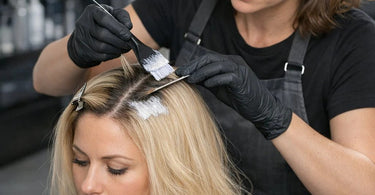
Mix your demi-permanent color with 5-6 volume developer. Using a tint brush, apply the color generously to the root area (about the first half-inch to inch of new growth). Then, using the tail of your comb or your gloved fingers, gently drag and smudge the color down another inch or so onto the lightened hair. Don't be neat! The messier the application, the better the blend. Process according to the manufacturer's time (usually 20 minutes). No heat is needed.
Step 5: The Rinse & Reveal
Rinse thoroughly with lukewarm water until it runs clear. Follow with a color-safe conditioner. When you blow-dry, you'll reveal a gorgeous, soft root that melts perfectly into the blonde, with no harsh lines in sight.
Pro-Tips for Perfecting the Technique
- Consultation is Key: Show photos! Manage expectations. A root smudge creates a softer, darker root area—make sure the client wants that depth.
- Customize for Face-Framing: You can apply the smudge more heavily around the hairline and part for a "lived-in" effect, and lighter in the back for a sun-kissed feel.
- Pair with Toning: After rinsing the smudge, you may need to tone the mid-lengths and ends to ensure the blonde perfectly complements the new root color. A purple shampoo or toner can help maintain this balance at home.
- Educate on Home Care: Recommend sulfate-free shampoos and conditioners. For cool blondes, suggest a purple shampoo to combat brassiness in the blonde sections. For warmer, beige-y blondes, a blue shampoo might be better to neutralize orange tones.
Stock Your Station for Smudge Success
Ready to offer this in-demand service? Pure Spa Direct has everything you need to execute it flawlessly and profitably.
- The Color Itself: Build your palette with professional-grade demi-permanent colors. A reliable beige, natural, and neutral series is a great start.
- The Essential Developer: Never run out of 5 or 6 volume developer. It's the backbone of the technique.
- Application Tools: Fine-tipped tint brushes and applicator bottles allow for precise placement.
- Client Comfort: Keep them cozy during processing with plush salon towels and a secure cape.
- Maintenance Retail: Lock in the look and boost your retail sales with recommended color-safe shampoo, toning shampoo, and deep conditioning treatments.
Conclusion: Embrace the Effortless Blend
Mastering the root smudge is more than a technical skill; it's a business strategy. It allows you to offer a premium, time-extending service that clients adore. It reduces their salon visits while increasing your service value. It turns you from a color technician into a strategic style architect. By using the right materials—demi-permanent color and low-volume developer—you ensure the result is not only beautiful today but also safe for their hair's future. So, mix up that beige demi, grab your brush, and start smudging your way to happier clients, fuller books, and a reputation as the go-to expert for effortless, modern color.
