
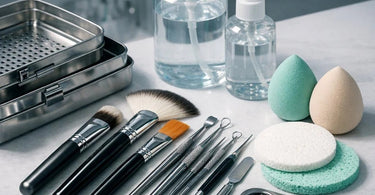
Better work starts with better tools, but better business starts with impeccably clean ones. Let’s be real for a second: you didn’t get into this industry because you have a burning passion for scrubbing tiny bristles or memorizing local health codes. You got into it because you love the glow on a client’s face after a phenomenal facial, the relaxation that washes over them during a massage, or the confidence they feel after the perfect brow wax. However, the less glamorous side of our profession—the meticulous sanitation of our beloved tools—is the very thing that makes those magical moments possible (and keeps your business license safe from any scary health inspector visits!). We’re diving deep into how to sanitize facial brushes and tools, creating a compliant workflow that fits into your busy day without making you want to pull your hair out.
We know, we know. The word “compliance” sounds about as fun as a ingrown hair after a wax. But think of it this way: a solid sanitation routine is like a really good massage oil—it just makes everything run smoother. It protects your clients from the ickies (like bacteria, fungi, and viruses that love to party on damp surfaces), protects your reputation, and ensures that your expensive spa tools and implements last for years to come. So, grab a fresh high-quality towel, and let’s build a workflow that’s as effective as it is effortless.
Why Your Current ‘Spray and Wipe’ Habit is a Total Hot Mess
We’ve all been there. It’s been a long day, you have a client in five minutes, and you quickly spray your rotary brush exfoliator machine handle with some alcohol and call it a day. While a quick spritz of 70% isopropyl alcohol is a fantastic disinfectant for non-porous surfaces between clients , it’s not the end-all-beat-all of sanitation, especially for porous items like brush heads. Think of your facial brushes like a tiny, luxurious shag carpet for dead skin cells, oil, and old product. If you don’t deep clean them regularly, you’re essentially just moving that grime around on the next face that comes along. And nobody wants a side of yesterday’s foundation with their advanced facial treatment.
The 3-Step Workflow: Disinfect, Clean, Sterilize (It’s Easier Than It Sounds)
Just like a perfect skincare routine, proper tool sanitation has steps. Skipping one is like forgetting moisturizer—everything gets dry and sad. The golden standard for professional tool treatment involves three key stages: disinfection, cleaning, and sterilization . Let’s break it down so it’s not scary.
Step 1: The Pre-Clean (aka The ‘Gross Stuff’ Removal)
Before you can truly sanitize, you have to clean. This means physically removing any visible debris, product buildup, and oil from your tools. For brushes, this means running them under lukewarm water (never hot! it can melt the glue) with a gentle brush cleanser or a mild soap. Work the suds through the bristles, rinse, and repeat until the water runs clear. For metal tools like comedone extractors or cuticle pushers, this initial step involves washing them with warm, soapy water and a brush to remove any biological material. If you send a tool into the next step with gunk on it, you’re just baking that gunk on. And that’s just... yuck.
Step 2: Disinfection (Saying Bye-Bye to the Bad Guys)
Now that your tools are physically clean, it’s time to get them hygienically clean. This is where you introduce a proper EPA-registered disinfectant. For non-porous tools like tweezers, lash curlers, and the handles of your machines, a soak in a high-level disinfectant like CS20 or a 1:49 bleach-to-water solution is incredibly effective . You’ll want to follow the manufacturer’s instructions for contact time—usually, it’s more than just a quick dunk. For your facial brushes, this step is a little different. After your initial wash, you can spritz them thoroughly with a 70-90% alcohol solution to ensure any remaining bacteria are zapped . Just let them air dry completely on a clean, flat surface with the bristles hanging off the edge so they dry faster and maintain their shape .
Tackling the Tricky Stuff: Porous vs. Non-Porous
This is where a lot of spa pros get tripped up. Your professional wax warmers? Non-porous, easy to wipe down. Your favorite professional hair brushes and combs? If they’re plastic or metal, great! If they have natural bristles and a wooden handle, you have a porous item that’s harder to fully sterilize. The same goes for facial brush heads, especially those made of natural fibers. They can harbor bacteria deep down in the base of the bristles. This is why many estheticians are switching to compressed sponges or single-use applicators for certain treatments, or investing in multiple brush heads so they can rotate through a deep-cleaned set. For porous items that can’t handle a liquid soak, dry heat sterilization in a specialized unit can be a game-changer .
Meet Your New Best Friend: The UV Sterilizer
If you want to feel like a secret agent while also being super hygienic, you need a UV sterilizer in your life. These nifty cabinets use ultraviolet light to destroy the DNA of bacteria and viruses, providing an extra layer of protection for your tools after they’ve been cleaned and disinfected. They’re perfect for storing your lash and brow enhancement services tools like tweezers and brushes, keeping them dust-free and sanitized until their next use. Plus, they just look cool sitting on your counter, silently whispering to your clients, “Yes, she takes this very seriously.”
Don’t Forget the Rest of the Room!
Sanitizing your tools is only half the battle. Your whole environment needs some love too! Think about your salon and spa bedding—those cozy sheets and blankets should be swapped out for every single client. Your hygienic table paper is a lifesaver for quick turnover between soft strip wax services. And what about your towel steamers? They keep towels toasty and sanitary, but they need to be wiped down regularly too. The point is, a clean tool in a dirty room is like a diamond in a dumpster—it doesn’t inspire much confidence.
Creating a Workflow That Doesn’t Suck
Okay, so how do we make this all doable when you’re juggling back-to-back professional stripless hard wax appointments and a client who just asked about your brow henna services? The secret is integration. Don’t treat sanitation as a separate chore. Make it part of the service. While your client is relaxing under a facial steamer, you can be wiping down your nail brushes and tools from the last client. While their mask is setting, you can be spraying down your professional wax spatulas and applicators (the reusable ones, of course—spatulas that touch skin should be single-use!).
Set up a designated dirty tool bin at your station. Once a tool is used, it goes in the bin, not back in your drawer. At the end of the day, you have one batch to process. Stock up on supplies from professional cleaners and disinfectants for salons and spas so you never run out. Keep a spray bottle of alcohol at every station for quick wipe-downs of hard surfaces like your nail tables and manicure stations.
And remember the golden rule of product contamination: never, ever double-dip! . Use a clean applicator and spatula to scoop out creams, masks, and scrubs from their jars. Decant what you need onto a mixing bowl or a palette. That way, you’re not introducing bacteria into the whole container, and you can feel good about using that expensive Tuel Skincare product to its fullest without worry.
The Payoff: Glowing Skin and Zero Guilt
At the end of the day, creating a compliant sanitation workflow is one of the most loving things you can do for your clients and your business. It shows you care about their health as much as their appearance. It elevates your professional status from someone who just does facials to a true skin health expert. Plus, sleeping soundly knowing you passed your last surprise inspection with flying colors? Priceless. So, embrace the process, find the rhythm that works for you, and keep those tools as clean as your clients’ faces. You’ve got this! Now, go wash your brushes. We mean it!
)