
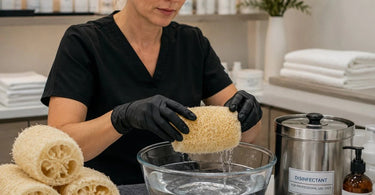
Your next profit boost starts here...
Look, we need to have a chat about something that's been hiding in plain sight in your treatment rooms. That natural loofah you've been using for your luxurious body scrubs? The one that feels like a cloud but costs way less than a fancy exfoliating machine? It's probably harboring a tiny bacterial metropolis that would make a petri dish jealous. We're talking billions of uninvited guests setting up shop in those cozy plant fibers. And trust me, they're not paying rent. Before you panic and swear off natural exfoliation forever, take a deep breath. We're going to tackle this head-on with an exciting guide on how to sanitize natural loofahs without compromising texture, so you can keep your loofahs fluffy, your clients happy, and your business squeaky clean.
At Pure Spa Direct, we know you're juggling a million things. You're mixing custom sugar scrubs, mastering the perfect ItalWax technique, and trying to keep your pedicure chairs looking brand new. The last thing you need is a bacteria-laden exfoliator sabotaging your reputation or causing a client to break out. The good news? Keeping your natural body brushes, loofahs, and puffs in pristine condition is easier than getting a politician to stick to a script. We're going to show you how to banish bacteria and keep that perfect exfoliating texture, so you never have to choose between a thorough cleaning and a happy client.
Let's be honest, a natural loofah is like a high-maintenance friend. It's fantastic to have around, it makes everything feel better, but it needs a little extra TLC to keep it from turning into a hot mess. It comes from a cucumber-like plant, which makes it wonderfully eco-friendly and biodegradable, but that also means it's a perfect breeding ground for moisture-loving bacteria. That's why knowing how to sanitize natural loofahs without compromising texture is not just good practice – it's an essential part of protecting your clients and your professional reputation. You wouldn't use a dirty facial tool on a client, so why treat your exfoliators any differently? Let's dive into the science of keeping these fibrous wonders safe.
The Dirty Truth About Your Loofah (and How to Fix It)
Okay, let's get real for a second. That damp, dark corner of your shower or spa treatment room is basically Club Med for bacteria. According to the experts at EGEXO, who have been growing loofahs for over 25 years, a single loofah can become a home for over 10 billion bacteria after just one week of improper care . That's right, billion with a B. We're talking about the kind of bacteria that can cause skin infections, particularly if a client has any tiny nicks or cuts from shaving or previous treatments. It's a scary thought, but it's also a powerful reminder of why proper sanitation is non-negotiable for any professional.
The issue lies in the loofah's very nature. The intricate network of plant fibers that makes it so great at sloughing away dead skin also provides millions of tiny microscopic crevices for bacteria, yeast, and mold to thrive . When these fibers are consistently damp, and they're full of nourishing dead skin cells for bacteria to feast on, you've got a recipe for a microbiome disaster. But don't throw out your loofah supply just yet. The solution is simple, and it's all about consistency.
Your New Best Friend: Daily Care for a Healthier Loofah
The best way to ensure how to sanitize natural loofahs without compromising texture is to stop bacteria from gaining a foothold in the first place. Think of it like preventative medicine for your exfoliation tools. Just like you disinfect your nail tables and towel steamers after every use, your loofahs need a quick post-service routine. This daily care is the golden rule for extending their life and keeping your spa treatments hygienic. A quick rinse isn't enough; you need to be a bit more committed.
After you've used a loofah on a client for a luxurious body scrub, the first step is a thorough rinse under clean, running hot water for at least 30 seconds . You want to flush out all the soap, body wash, and loose dead skin cells that the bacteria are so fond of. While you're rinsing, give it a good squeeze, and repeat the process a few times to make sure water is getting into those deeper fibers . This simple action dramatically reduces the 'food' available for new bacteria to grow.
Next comes the most critical part: drying. Once the loofah is rinsed, you need to squeeze out as much excess water as humanly possible. Give it a good shake to dislodge those stubborn water droplets hiding deep within . Then, you absolutely must hang it in a well-ventilated area to dry completely . That means moving it away from the moisture of the shower and the steamy bathroom air. A hook near a window or an open, airy space is ideal. A damp loofah is a bacteria's best friend; a dry one is its worst nightmare.
The Deep Clean: Weekly Sanitization Methods Compared
Even with a perfect daily routine, bacteria are stubborn little things. That's why, to truly understand how to sanitize natural loofahs without compromising texture, you need a weekly deep-cleaning ritual. You don't have to do all of these methods, but pick one and stick to it like it's your favorite wax warmer. Here are the most effective ways to give your loofahs a thorough detox, keeping them safe for your clients and preserving that essential scrubby feel.
The Gentle Giant: Vinegar Soak
White vinegar is an incredible natural disinfectant . It's non-toxic, eco-friendly, and surprisingly effective at killing a wide range of bacteria and mold. This method is also one of the best for ensuring how to sanitize natural loofahs without compromising texture, as it doesn't degrade the plant fibers. Simply mix one part white vinegar with two parts lukewarm water and soak your loofah for about 5 to 10 minutes . After its bath, rinse it thoroughly with hot water and allow it to air dry completely. This is a fantastic, gentle option for spas that prioritize natural products.
The Power Wash: Boiling Water
For the ultimate bacteria annihilation, boiling is your go-to method. This technique is excellent for your professional spa loofahs and offers a reliable 99% bacterial reduction . Bring a pot of water to a rolling boil and drop the loofah in for 3 to 5 minutes . Make sure the loofah is fully submerged. After the timer goes off, remove the pot from the heat and let the water cool down before you even think about touching the loofah. Once it's safe to handle, squeeze out the water and hang it to dry. This is a superb, chemical-free option for busy spas, but a quick note: do not do this with synthetic loofahs or ones with plastic handles, as the heat will melt them !
The Commercial Standard: Diluted Bleach
For spas and salons that need the highest level of sanitation, a diluted bleach solution is the undisputed champion. It offers a whopping 99.9% bacterial kill rate . This is the method often recommended for commercial settings and is incredibly effective for figuring out how to sanitize natural loofahs without compromising texture because it works so quickly. Prepare a solution of one tablespoon of household bleach to one gallon of water . Soak the loofahs for no more than 5 minutes . Then comes the most vital step: rinse, rinse, and rinse again under clean, running water for at least two minutes to ensure no harmful residue is left behind. This is crucial to prevent irritating your clients' skin.
Replacement: Knowing When to Say Goodbye
Even with the most diligent care, a natural loofah is not a lifelong companion. The fibers will eventually break down, creating more and more areas for bacteria to hide and making proper cleaning harder and harder. It's a fact of life (or rather, a fact of plant fiber). For professional settings, it's often recommended to replace natural loofahs every three to four weeks . This is a small price to pay for the peace of mind of knowing your clients are using a fresh, effective, and hygienic tool.
How do you know when it's time to toss one in the compost? Look for these tell-tale signs. If the loofah develops a persistent musty or mildewy odor that even your deep-clean methods can't get rid of, it's time to say goodbye . Any visible signs of mold or dark spots are an immediate red flag. If the fibers feel slimy, even when dry, a biofilm has likely taken root, and it's time to replace it. Finally, if the texture is breaking down, with bits and pieces falling off, it's no longer providing that effective exfoliation. In a professional environment, replacing them is more than just about hygiene—it's about providing a consistent, premium experience.
How to Sanitize Natural Loofahs Without Compromising Texture: Quick Reference Guide
To make your life easier, here is a quick recap. Share this with your staff, pin it up in the break room, and turn it into a routine. This is your cheat sheet for how to sanitize natural loofahs without compromising texture.
- Daily Care: Rinse with hot water, squeeze well, hang to dry in a well-ventilated area.
- Deep Clean (Choose One):
- Vinegar: Soak for 5-10 minutes in a 1:2 vinegar-to-water solution. Rinse thoroughly.
- Boiling: Boil for 3-5 minutes. Let cool completely before handling. Rinse and dry.
- Bleach: Soak for 5 minutes in a 1 tablespoon:1 gallon bleach-to-water solution. Rinse extremely thoroughly for 2 minutes.
- Replace: Every 3-4 weeks, or at the first sign of odor, mold, slime, or fiber breakdown.
Mastering how to sanitize natural loofahs without compromising texture might seem like a small detail, but in the beauty industry, it's these small details that separate the good from the truly exceptional. Your clients may not always notice the fluffy towel, but they will definitely notice when their skin feels incredible and reacts positively to a treatment. By following these simple steps, you're not just cleaning a loofah; you're elevating your entire standard of care, which means more happy clients, better reviews, and a thriving spa retail section.
So go on, give your loofahs the love they deserve, and watch your business bloom. After all, a clean spa is a profitable spa. And if you need to stock up on high-quality loofahs and accessories, you know exactly where to find them. We've got all the professional cotton products, spa-grade disinfectants, and everything else you need to keep your sanctuary safe, clean, and undeniably luxurious.
