
Proven to delight clients every visit... when you master the art of the squeaky-clean cape. Let's be real—no one wants to snuggle up in a professional grade plastic combing cape that smells like the last person's perfume and has a weird sticky patch on the shoulder. It gives off major "I forgot to do laundry" vibes, and frankly, your reputation is too fabulous for that. We know you're busy juggling back-to-back hair services, waxing, and barber services, but sanitation isn't just a suggestion—it's the invisible uniform of a true pro.
If you think a quick wipe with a dry towel counts as sanitizing your plastic capes, we need to have a gentle, yet firm, sister-to-sister talk. Professional grade plastic combing capes are the unsung heroes of the salon, spa, and barber world. They protect your clients' expensive threads from color, water, and clippings, but they also become a breeding ground for bacteria, yeast, and—if you let it go too long—probably a new life form. Gross. But don't worry, babe. We're going to turn you into a cape-cleaning ninja. By the end of this, your plastic capes will be so clean they'll practically glow. And your clients? They'll notice, even if they don't say it. Because nothing says "I trust you with my look" like a cape that smells like professional-grade cleanliness.
Why Sanitizing Plastic Capes is The Hill You Should Die On (Spoiler: It's The Law)
Listen, we get it. You became a stylist or esthetician because you love making people look and feel amazing, not because you dream of scrubbing plastic. But here is the tea: skipping the deep clean on your professional grade plastic combing capes is a one-way ticket to Skin-City-Infection. According to state board regulations (yes, the scary people who show up for inspections), capes and linens shall be used once on a client and shall not be reused until properly laundered . If that cape touches their skin, it is considered soiled. End of story.
But let's go beyond just compliance. Think about the physical ick. Hair clippings get staticky and stick to the plastic. Color drops stain the edges. Face oils and wax residue build up around the neckline. Ew. Ew. Ew. Proper sanitization breaks down that bio-burden (fancy talk for "the nasty stuff") so you aren't transferring last client's bacteria to the next client's fresh blowout. Plus, a clean cape lasts longer. It doesn't get that cloudy, sticky film that makes it look like it belongs in a dumpster. When you invest in a solid routine, you protect your clients, your business, and your sanity. So, grab your rubber gloves. We've got capes to save.
The Ultimate Playlist for Cleaning Plastic Combing Capes
Alright, gather round, my little sanitation superstars. We are going to break this down into three distinct phases. Think of it like a workout: Warm Up (gross removal), The Sweat Session (disinfection), and The Cool Down (drying). Ready? Let's pop on our favorite playlist and get this bread.
Phase 1: The Hair-Pocalypse (Removing Solid Debris)
You can't disinfect something that is covered in hair and dust. It's physics, honey. First, take that used combing cape and shake it out—preferably over a trash can or into a corner you're about to sweep. Give it a few good flaps. Next, use a hard bristle brush or a lint roller to pick up the stubborn strands that are clinging to the plastic via static electricity. Don't let those little guys party in the washing solution. Once it's visually free of hair, we move to phase two.
Phase 2: The Suds & Suds (The Wet Wash)
Plastic capes are generally non-porous, which is a blessing. It means they can't absorb bacteria deep inside, but it also means we have to physically remove the biofilm on the surface. Fill a basin or your utility sink with warm (not scalding hot) water and add a gentle, anti-bacterial dish soap or a professional salon disinfectant cleaner. Pro tip: Don't use super hot water! It can warp the plastic or break down the waterproofing over time. Submerge the capes and use a soft sponge or cloth to wipe down every inch—the inside, the outside, the neckline, the seams. Pay special attention to the snap or velcro closure at the neck, because that little crevice is where makeup and dead skin cells love to hide. Rinse thoroughly with clean water until the water runs totally clear.
Phase 3: The Kill Shot (True Disinfection)
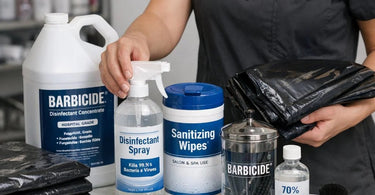
Washing is cleaning. Sanitizing is killing. It is a different step, friends. After you've rinsed the soap off, you need to soak that cape in an EPA-registered disinfectant that is bactericidal, virucidal, and fungicidal . This is not optional. You can buy quat-based sprays or concentrates from a beauty supply wholesaler—like us! Mix the solution exactly as the bottle says (don't guess, or you'll either hurt the plastic or not kill the germs). Submerge the cape completely. Check the label for the "dwell time." Usually, it is 2 to 10 minutes . Walk away. Stretch your back. Check your towel steamer. Don't rinse it off too early! You must respect the dwell time.
Once the timer dings, remove the cape. Rinse it again if the disinfectant requires it (some do, some don't—read the bottle!). Then, hang it up to air dry completely. Do not stack wet capes on top of each other. That traps moisture and defeats the purpose. Let them breathe.
Are You Making These 5 Rookie Cape Cleaning Mistakes?
We've all been there. You're tired. It's 7 PM on a Saturday. You just want to go home. But don't cut corners here. Let's look at the biggest oopsies we see in the wild.
Mistake #1: Using Bleach. I know it smells clean, but bleach degrades plastic. It turns your $20 professional cape into a sticky, cracked, yellow mess. Just don't. Stick to quaternary ammonium compounds (quats).
Mistake #2: The "Wipe Down" Illusion. Spraying the cape with alcohol and wiping it with a paper towel is not sanitizing. It's just moving the dirt around. You need immersion to get the edges and folds.
Mistake #3: Ignoring the Neck Strip. Are you using a disposable neck strip? If not, you are grinding bacteria into the cape's neckline every single time. Use a strip! It saves you so much work .
Mistake #4: Drying with a Towel. Towels (even clean ones) have lint and can re-contaminate the surface. Air drying is king. If you must speed it up, use a blow dryer on cool.
Mistake #5: Letting Capes Touch the Floor. Once that cape hits the floor—even a "clean" floor—it is done. It is now a mop. Put it in the soiled hamper immediately.
Quick Tips for Specific Scenarios (Barbers, Colorists, Esties)
Not all capes are created equal, and not all services leave the same mess. Here is how to tailor your routine.
For my Barbers: That fine hair gets everywhere. Invest in a static brush specifically for your capes. Also, clipper spray disinfectant can sometimes leave residue on plastic. Keep your capes away from the dust cloud of your clippers.
For my Colorists: Those beautiful vivid colors are a nightmare on white plastic capes. Pre-treat stains immediately. If a drop of blue dye lands on the cape, wipe it off right then. Waiting until the end of the day lets it bond. For stubborn stains, a little rubbing alcohol on a cotton ball (followed by a rinse) usually does the trick, but test it on a small area first.
For my Estheticians: You deal with wax, oils, and serums. Soap alone might not cut the grease. Use a degreasing detergent in your wash phase. Also, watch out for hard wax drips—let them harden, then flex the plastic to pop them off.
Finishing Up: Storage & Rotation
Congratulations, you have a stack of sparkling clean professional grade plastic combing capes. Now, how do you keep them that way? Store them in a clean, dry, closed cabinet or a covered bin . Open air storage catches dust. Also, implement a rotation. Have three sets of capes: One in use, one dirty, and one clean/dry. This creates a smooth salon workflow. You'll never be caught without one again.
Remember, your wholesale beauty supplies are an investment. Whether you use Berodin for waxing, Boca Terry for towels, or stock up on premium hair care products, the way you treat your tools separates the pros from the amateurs. So go ahead. Sniff that cape. It should smell like nothing but victory. Or lavender disinfectant. Either works. Now get out there and sanitize like the boss you are!
)