
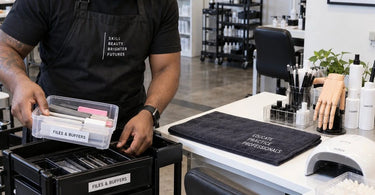
Stand out with superior results, gorgeous. But can we talk about the slightly less glamorous side of being a beauty educator or salon owner who trains new talent? You know the one. The corner of your back room that looks like a manikin graveyard. The tangled pile of practice lash trays. The portable table that has somehow become a permanent resident of your hallway. If your training equipment storage situation makes you want to close the door and pretend you did not see it, welcome to the club. We are about to fix that.
Let us be real for a second. You have invested good money in your Training Manikins & Mannequins and other professional training tools. They are not just clutter; they are the foundation of your students' education and your reputation as a serious training program. Storing them properly is not just about tidiness (though, yes, that is a lovely bonus). It is about protecting your investment, keeping your workspace professional, and yes, keeping your sanity intact when a new class starts on Monday morning.
Why Your Training Equipment Deserves Better Than the Back of a Closet
Manikins are not cheap, and treating them like last season's impulse buys is a fast track to replacing them way sooner than you should. Human hair manikins, in particular, can dry out, tangle, and lose their luster if they are shoved into a dusty corner without a second thought. Lash practice manikins need protection for their delicate lash layers. Portable massage tables are built for mobility, but they still need a safe home base when class is not in session.
Beyond the equipment itself, there is the professional factor. When a prospective student or a visiting educator walks into your space, what does your storage situation say about your program? A clean, organized training area signals that you take your craft seriously. A chaotic pile of manikin heads and tangled cords screams "we are barely holding it together." Guess which one inspires confidence?
Manikin Head Storage: Treat Them Like the VIPs They Are
Your hair manikins, lash heads, and other practice heads are the workhorses of your training program. They deserve a storage solution that keeps them clean, protected, and ready for action. For manikin heads with human or synthetic hair, the biggest enemies are dust, tangling, and moisture. The solution is simple but effective.
Invest in dedicated storage bags or cases designed for manikin heads. If you do not have those, a clean, dry cabinet works wonders. The key is to keep them off the floor and away from direct sunlight, which can fade hair color and dry out the fibers. For manikins with long hair, a loose braid or a hairnet before storage prevents tangling that can waste precious class time untangling.
If you are working with training manikins and mannequins that come with tripods or holders, keep those components together. A labeled bin for each station's manikin plus its holder eliminates the morning scramble of "who has the tripod that actually stands up straight?" Trust us, your future self will thank you.
For lash practice manikins, the tri-layered options that mimic real lash density are incredible tools, but they need protection. Store them flat in a clean, dust-free container. Avoid stacking anything on top of them, because crushed lash layers mean your students are practicing on a sad, flattened surface that does not resemble a real client. If you want to explore professional practice heads that are built to last, check out the Lash & Brow Service Supplies collection for options that stand up to repeated use.
Portable Massage Tables: The Fold-and-Store Champs
If you are running massage training or mobile spa courses, your Portable Massage Tables are probably the biggest pieces of equipment in your training arsenal. The good news? They are literally designed to fold up and disappear when not in use. The bad news? They are not going to store themselves, and leaving them set up in your training room between classes eats up space you could use for something else.
First, always use the carrying case that came with your table. If you do not have one, get one. A good case protects the table from dust, scratches, and the random spills that happen in every salon or training environment. When storing, lean the table upright against a wall in a dry area, or lay it flat in a designated storage closet. Avoid storing it in damp basements or anywhere with extreme temperature fluctuations, because that can damage the vinyl upholstery and the internal foam padding.
For training programs that use multiple tables, a wall-mounted rack or a designated storage corner with clear labeling keeps everything organized. Each table should have its own spot, and students should know exactly where to return it when class is over. That way, your training room resets quickly and you are not spending your precious prep time playing "find the table."
The UV Sterilizer Question: Your Secret Weapon for Storage and Sanitation
Here is where things get really smart. If you are not already using a UV Sterilizer for your smaller training implements, you are missing out on a tool that does double duty. These compact cabinets are not just for sanitizing tools between clients or students. They are also an excellent storage solution for implements that need to stay clean and ready.
Think about it. Your students practice with tweezers, spatulas, cuticle pushers, and other small tools. After each practice session, those tools need to be cleaned and disinfected anyway. Instead of tossing them into a drawer where they sit vulnerable to dust and contamination, a UV sterilizer cabinet becomes their permanent home. They stay sanitized, organized, and ready for the next session.
For training programs that emphasize sanitation protocols (and let us hope that is every program), having a dedicated UV Sterilizer in the training room reinforces good habits. Students see the process in action, they learn where tools belong, and they internalize the importance of proper storage as part of professional practice. It is education by example, and it works.
Small Tools and Implements: The Drawer of Doom No More
Every training program has one. The drawer or bin where all the small stuff goes to die. Tweezers of questionable origin, half-used packets of lash adhesive, cuticle pushers that have seen better days. It is chaos, and it makes every class start with a scavenger hunt.
Here is the fix. Get small, stackable bins or drawer organizers with dividers. Label each section by category: tweezers, brushes, spatulas, adhesives, and so on. For items that need to stay sterile or clean, use individual pouches or small covered containers within the drawer. The goal is not perfection; the goal is "a student can find what they need in under thirty seconds without dumping the whole drawer onto the floor."
For reusable items like Nail Files & Buffers or Applicators & Spatulas, consider a client-per-student storage system if your program allows it. Each student gets a labeled pouch or bag for their personal practice tools, which they are responsible for cleaning and storing. This teaches personal accountability and cuts down on the communal chaos.
Larger Equipment and Appliances: Give Them a Designated Home
If your training program includes services like facials, you probably have a Facial Steamer or two in rotation. These appliances are wonderful teaching tools, but they are not designed to live on the training floor when not in use. After each use, the water tank should be emptied and dried completely, and the unit should be stored in a dry, dust-free area. A dedicated cabinet or shelf for your esthetic training equipment keeps everything accessible without creating visual clutter.
The same goes for electrical tools like High Frequency Machines or Microdermabrasion units if your program covers advanced esthetics. Keep cords wrapped and secured (never wrapped tightly around the unit itself, which can damage the internal wiring), and store each device in its own space. A labeled shelf or a rolling cart with dedicated spots for each machine makes setup and breakdown a breeze.
Linens and Towels: The Unseen Storage Challenge
You cannot run a training program without linens. Towels, sheets, and blankets for massage tables, facial beds, and waxing stations pile up fast. The storage solution here is twofold: separate clean from dirty, and keep clean linens truly clean.
Soiled linens should go into a ventilated, covered hamper immediately after use. Clean linens should be stored in a closed cabinet or a covered container that keeps out dust and moisture. If your state board or regulatory requirements specify storage standards for linens (and many do), follow them to the letter. A clean, dry, covered container is the baseline, and it is easy to achieve with a simple storage cabinet.
For High-Quality Towels that you use for training, consider a separate storage area from your client-facing linens if possible. That way, training towels that might get a little more abuse stay out of the rotation for paying clients.
Creating a Storage System That Actually Works for Your Space
Every training space is different. Maybe you have a dedicated room with wall-to-wall cabinets. Maybe you are working out of a corner of the salon and every inch counts. The principles are the same regardless of your square footage.
First, assess what you actually have. Take inventory of every manikin, table, appliance, and small tool. You might be surprised by how much you have accumulated (and how much you have that you do not actually need anymore). Declutter ruthlessly. If a manikin is damaged beyond use or a tool is broken, let it go. The Professional Cleaners & Disinfectants collection can help you sanitize items you are keeping, but broken items are not worth the storage space.
Second, match your storage to your usage. Items used every single class should be the most accessible. Items used once a semester can live on a higher shelf or in a less convenient spot. This is basic efficiency, but it is amazing how often it gets ignored.
Third, label everything. Labeled bins, labeled shelves, labeled cabinets. Not only does this make it easy for you to find things, but it makes it easy for students and staff to put things back where they belong. A system only works if everyone can follow it.
Final Thoughts: Storage Is Self-Care for Your Business
Look, we know that storage is not the sexy part of running a training program. Nobody goes to beauty school dreaming of the day they get to organize manikin heads into labeled bins. But here is the thing. When your equipment is organized and protected, you spend less time searching and replacing, and more time actually teaching. Your students learn better when their workspace is functional. Your equipment lasts longer when it is stored properly. And you, gorgeous, get to walk into your training room without that little spike of anxiety about the chaos waiting for you.
That is worth the effort. So grab some bins, label a few shelves, and give your training equipment the home it deserves. Your manikins will thank you. Your students will thank you. And honestly, your future self will thank you most of all.
