
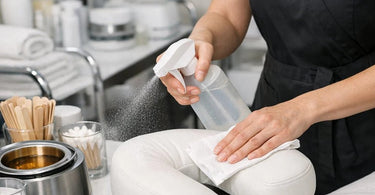
Let's get to work on your success... because nothing says "luxury spa experience" quite like a client trying to breathe through a face hole that's shifted two inches to the left while their esthetician performs acrobatics to reach their chin. We've all been there, right? The awkward dance around the Facial Bed, the subtle "scootch up a little" that actually means "I desperately need your nose to line up with this cushion," and the quiet prayer that your client doesn't open their eyes to see you contorted like a pretzel. Proper facial bed positioning isn't just about comfort—it's about professionalism, treatment efficacy, and saving your staff from developing chiropractic problems that would make a contortionist wince. When your team masters the art of the adjustable bed, magic happens: clients relax deeper, treatments flow smoother, and your therapists actually enjoy their work instead of planning their next massage appointment for their own aching backs. Let's transform your staff from bed-baffled beginners to positioning pros who can adjust, adapt, and amaze faster than you can say "is the headrest comfortable?"
Before we dive into the nitty-gritty of angles and elevations, let's acknowledge the elephant in the treatment room: most spa professionals learn facial bed positioning through osmosis, whispered tips from senior staff, or—heaven help us—trial and error with actual paying clients on the table. This haphazard approach leads to inconsistent service quality, uncomfortable clients who don't return, and therapists who spend their lunch breaks Googling "why does my lower back hurt after every shift?" The solution isn't complicated, but it does require intentional training, a solid understanding of how different treatments demand different positions, and the humility to admit that maybe—just maybe—you've been doing the "lash extension lean" wrong for three years. Let's fix that.
Why Your Staff's Chiropractor Loves (or Hates) Your Current Positioning Habits
Here's a truth bomb that might sting: improper facial bed positioning doesn't just annoy clients—it physically damages your team. When an Earthlite or Oakworks bed sits at the wrong height, your esthetician's shoulders creep up toward their ears, their lower back arches into a question mark, and their wrists bend at angles that would make a yoga instructor weep. Over an eight-hour shift of performing Hydrodermabrasion or Microdermabrasion treatments, those small ergonomic sins compound into career-ending injuries. We're talking carpal tunnel, chronic lower back pain, neck strain that requires actual medical intervention, and the kind of shoulder tension that makes hugging your own grandmother feel like a chore. The average esthetician spends 30-40 hours per week leaning over clients, and every single one of those hours either builds up their body or breaks it down.
But wait—there's more! (I've always wanted to say that like an infomercial host.) When your staff struggles with bed positioning, treatment quality suffers. A client receiving Advanced Facial Treatment Products needs consistent, comfortable access to their skin. If your therapist can't reach properly because the bed's too low or the headrest is wonky, they'll rush through extractions, miss spots during masking, or apply serums with the enthusiasm of someone who just wants to go home. Your clients notice this. They might not say, "I felt like your Facial Steamer positioning was suboptimal," but they absolutely think, "That wasn't as relaxing as last time" or "I'm not sure I saw results." And then they don't rebook. Ouch.
The Adjustable Anatomy Lesson: Getting Intimate with Your Facial Bed
Before your team can master positioning, they need to understand their equipment like a mechanic knows their tools. Modern Top-Quality Equipment & Furniture for Spas & Salons comes with more moving parts than a Swiss Army knife, and each adjustment serves a specific purpose. Let's break down the anatomy of a proper Luxury Spa Furniture facial bed and what each lever, button, or crank actually does.
The Height Adjustment (Your Back's Best Friend): Whether your bed uses hydraulics, electricity, or a manual pump, height adjustment isn't a suggestion—it's a necessity. The correct height places the client's face at elbow level when your therapist stands with relaxed shoulders and a neutral spine. For most estheticians, this means the bed sits somewhere between their mid-thigh and waist when standing. Too low, and they'll hunch like Quasimodo examining a flower. Too high, and they'll work with their arms elevated, leading to shoulder fatigue that feels like you've been holding a hairdryer above your head for three hours. Professional Salon Equipment with electric height adjustment makes this effortless, but manual systems work fine if your team actually uses them between every single client.
The Backrest Recline (More Important Than You Think): Flat isn't always best, my friends. The backrest angle changes everything from blood flow to product application. A completely flat position (180 degrees) works beautifully for classic facials, Massage Oils, Lotions, and Creams application, and any treatment where you want the client completely relaxed. But raise that backrest to 30-45 degrees, and suddenly you've created the perfect angle for Lash & Brow Enhancement Services, Brow Lamination Supplies work, or Professional Lash and Brow Tint applications. A 60-80 degree recline works beautifully for consultations, makeup applications, or any service where the client needs to see themselves or chat comfortably. Your team should know exactly how to achieve each angle without fiddling around like they're trying to tune a radio station.
The Headrest and Face Cradle (Where the Magic Happens): Oh, the humble headrest—so small, so mighty, so frequently adjusted incorrectly. A proper Facial Bed with Face Hole or face cradle allows clients to breathe freely during prone treatments without feeling like they're smothering in a pillow. The headrest should support the forehead and cheekbones while leaving the nose and mouth completely unobstructed. For supine treatments (face-up), the headrest should cradle the occipital region (the back of the skull) without pushing the chin toward the chest or hyperextending the neck. Your staff needs to adjust this for every single client based on their height, neck length, and personal comfort preferences. Yes, every single client. No exceptions.
Armrests and Leg Rests (The Unsung Heroes): Massage Bolsters, armrests, and leg rests might seem like accessories, but they're critical for client comfort during longer treatments. Armrests should support the client's arms at a neutral angle—not so high that their shoulders shrug, not so low that they feel unsupported. Leg rests (on beds that have them) should support the natural curve of the legs, typically with a slight bend at the knee to prevent lower back strain. For treatments lasting longer than 60 minutes, these seemingly minor adjustments separate the "that was nice" experience from the "I felt like I was floating on a cloud" experience that generates five-star reviews and enthusiastic referrals.
Treatment-Specific Positioning: A Handy Cheat Sheet for Your Team
Now for the practical stuff—the actual positions your staff needs for different services. Post this in your break room, laminate it, make everyone memorize it, and watch your treatment quality soar.
Classic European Facial (60-90 minutes): Flat position (180 degrees), bed height at therapist's elbow level, headrest neutral with slight cervical support. Client should feel completely horizontal with knees slightly bent (use a bolster under the knees). This position allows for proper drainage during cleansing, comfortable extractions, and relaxing massage techniques. Armrests down, legs supported, face cradle removed for supine positioning.
Lash Extensions and Lifting (60-120 minutes of precision work): Backrest raised to 30-40 degrees, bed height slightly lower than usual so the therapist can work seated with elbows supported. Headrest adjusted so the client's chin lifts slightly, opening the eyes without straining the neck. This is critical—lash artists who skip this adjustment develop neck problems that would make a construction worker wince. Premium Lash Extensions & Supplies for Pros deserve a properly positioned client. Armrests up and padded, leg rest slightly elevated to prevent sliding.
Brow Lamination and Shaping (30-45 minutes): Backrest at 45 degrees, bed height at seated working level (therapist's elbows at 90 degrees when working). Headrest adjusted for slight neck extension, allowing the therapist to access the brow area without hovering directly over the client's face. Brow Henna and tinting work beautifully at this angle, and clients appreciate not feeling like they're lying completely flat while you poke around their eyebrows.
Chemical Peels and Intensive Treatments (30-60 minutes): Flat position (180 degrees) but with the headrest slightly elevated (15-20 degrees) to prevent product runoff into the eyes or respiratory irritation. Bed height at therapist's waist level for precise application control. This position also helps clients who feel claustrophobic or anxious about stronger treatments—the slight elevation feels less vulnerable than completely flat.
Dermaplaning and Microdermabrasion (30-60 minutes): Flat position, bed height slightly higher than usual (therapist's wrists straight, not bent). Headrest fully supporting the occipital region with the chin slightly lifted. This positioning allows the therapist to maintain proper angles for bladework or suction without straining their wrists. Dermaplaning requires precision, and precision requires proper ergonomics.
LED Light Therapy (20-30 minutes): Flat position with the bed height at whatever makes the client most comfortable, since the therapist isn't actively working during the treatment. However, many therapists use this time to perform hand or scalp massage, so position accordingly if you're offering add-on services. Pro tip: use the LED treatment time to adjust your room, document notes, or simply breathe for a moment—you've earned it.
Waxing Services (15-45 minutes, depending on area): Here's where things get interesting. For facial waxing (brows, lip, chin), position the client at 45-60 degrees recline with the bed height at seated working level. This angle allows the wax to be applied and removed without running into the client's hair or eyes. For body waxing involving the bed, adjust to completely flat with the bed height at the therapist's waist level for proper leverage. ItalWax - Wax and Starpil Wax both perform better when the client is positioned correctly for the specific area being treated.
Microcurrent and Radiofrequency Treatments (45-60 minutes): Flat position with the headrest adjusted for complete neutrality—no chin tucking, no hyperextension. Bed height at therapist's waist level for controlled wand movements. These technologies require consistent contact and pressure, which becomes nearly impossible if the therapist is reaching or straining. Microcurrent Machines and Radio Frequency (RF) Machines demand precision positioning for optimal results.
High Frequency and Galvanic Treatments (20-30 minutes): Flat or slightly reclined (15-20 degrees) with bed height at therapist's chest level for comfortable electrode manipulation. These treatments involve moving the device across the client's face, and proper bed height prevents the therapist from hovering or reaching. High Frequency Machines are wonderful tools, but they're only as effective as the therapist's ability to use them comfortably.
Oxygen Facial and Spray Treatments (30-45 minutes): Reclined to 30 degrees, bed height slightly lower than usual to accommodate the upward angle of spray devices. Headrest adjusted to prevent the client from inhaling product mist directly. Oxygen Facial Machines create a fine mist that should envelop the client's face, not blast directly into their nostrils—positioning matters!
The 5-Step Training Protocol That Actually Works
Knowing the theory is one thing; training your staff to execute it consistently is entirely another. Here's a five-step protocol that transforms theoretical knowledge into muscle memory.
Step 1: The Anatomy Lesson (30 minutes): Before anyone touches a bed, they need to understand every adjustment point. Gather your team around a Top Quality Massage Tables Chairs for Relaxation & Wellness and have each person identify and demonstrate every adjustment mechanism. Where's the height control? How does the backrest lock? What's the proper way to adjust the headrest without pinching fingers? Can they remove and replace the face cradle cushion? This sounds basic, but you'd be shocked how many experienced estheticians have never actually read their equipment manual.
Step 2: The Self-Test (15 minutes per person): Each staff member lies on the bed while a partner adjusts it for different treatments. The partner calls out a treatment ("lash extensions," "chemical peel," "brow wax"), makes the adjustments, and then the person on the bed evaluates whether the positioning feels correct. Then they switch. This builds empathy—your staff will never forget to adjust the headrest again after experiencing what "wrong" feels like for 10 minutes.
Step 3: The Speed Drill (10 minutes daily for one week): Set up a station where staff practice transitioning between three different treatment positions in under 60 seconds. Start with flat (classic facial), move to 40-degree recline (lash lift), then to 60-degree (consultation position). Time them. Create friendly competition. The goal isn't rushing—it's developing smooth, efficient movements that don't look panicked or haphazard. Your clients shouldn't feel like they're on a carnival ride while you adjust the bed.
Step 4: The Client Communication Script (20 minutes): Train your team to explain positioning adjustments to clients in a way that sounds professional, not apologetic. Instead of "Um, I need to move this thing here, sorry," teach them to say, "I'm going to raise the headrest slightly so you can breathe more comfortably during your treatment." Instead of "This might feel weird," try "I'm adjusting the bed height so I can give you the most precise service possible." Clients perceive confidence as competence, and confident positioning adjustments build trust.
Step 5: The Real-World Assessment (ongoing): For two weeks following initial training, have senior staff or management observe five minutes of each team member's setup process with real clients. No hovering—just peek in during the initial adjustment phase and note whether they're checking height, confirming headrest comfort, and making adjustments before products are applied. Provide feedback privately and specifically. Celebrate improvements publicly. Create accountability without shame, and watch your standards rise.
Common Positioning Mistakes (And How to Fix Them Fast)
Even well-trained staff develop bad habits over time. Here are the most common positioning errors we see in spas across the country, along with quick fixes that don't require a full re-training.
The Frozen Bed Syndrome: Therapist sets the bed at the beginning of the day and never touches the adjustments again, regardless of client height or treatment type. Fix: Put a small sign on every bed that says "Adjusted for this client?" Create a checklist that includes bed positioning in room setup protocols. Make it a non-negotiable part of your service standards.
The Over-Reacher: Bed height is wrong, so the therapist leans, stretches, and strains instead of taking three seconds to adjust. Fix: Remind your team that every minute spent reaching is a minute of unnecessary fatigue. Time how long it actually takes to adjust bed height (spoiler: about 4 seconds). Frame it as self-care, not an inconvenience.
The Nose-Presser: Face cradle positioned so the client's nose is mashed against the opening, making breathing difficult and leaving red marks. Fix: Teach the "two-finger test"—after positioning, slip two fingers between the client's nose and the cradle edge. If you can't, adjust immediately. Also, invest in quality Quality Wax Strips & Rolls for Effective Hair Removal and other disposables, but never skimp on face cradle cushions—your clients' noses will thank you.
The Armrest Abandoner: Therapist never deploys armrests, leaving clients to awkwardly hold their own arms or tuck them uncomfortably at their sides. Fix: Make armrest adjustment part of the room setup script. "Let me just bring these armrests up for your comfort" takes three seconds and adds tremendous perceived value.
The One-Position Wonder: Therapist uses the same positioning for every single service, from Hydrodermabrasion to Brow Henna to Waxing Supplies for Professionals applications. Fix: Post the treatment-specific positioning guide in each treatment room. Laminate it. Refer to it during morning huddles. Quiz staff randomly on positioning for different services.
Equipment That Makes Positioning Easier (And Why Investment Matters)
Let's talk honestly about equipment for a moment. Your staff can be the most trained positioning experts in the industry, but if you're asking them to work on a Top-Quality Equipment & Furniture for Spas & Salons bed that's older than their youngest client, with adjustments that stick, squeak, or slip, you're fighting a losing battle. Quality equipment isn't an expense—it's an investment in your staff's longevity and your clients' experience.
Earthlite Massage Tables and Oakworks beds feature smooth hydraulic systems, intuitive adjustment mechanisms, and durable upholstery that withstands constant cleaning. Living Earth Crafts offers electric options that adjust at the touch of a button—perfect for busy spas where therapists perform 6-8 treatments daily. Equipro and Silhouet-Tone provide professional-grade equipment designed specifically for estheticians who demand precision positioning for advanced treatments.
If you're currently using beds that require WD-40 and a prayer to adjust, do your team a favor and upgrade. Your staff retention rates will improve when therapists aren't fighting their equipment every single day. And your clients will notice the difference between a bed that glides smoothly into position versus one that clunks and jerks like a broken carnival ride.
Creating a Culture of Positioning Excellence
Training isn't a one-time event—it's an ongoing commitment to excellence. Here's how to embed proper positioning into your spa's culture so it becomes automatic rather than an afterthought.
Morning Huddle Rituals: Start each day with a 2-minute positioning refresher. Monday is height adjustment day. Tuesday focuses on headrest positioning. Wednesday covers armrests and leg rests. Thursday reviews treatment-specific angles. Friday celebrates wins and addresses challenges. Keep it quick, keep it consistent, and watch your standards rise.
Peer Observation Programs: Pair up staff members to observe each other's setup process once per month. The observer notes one thing done well and one suggestion for improvement. This isn't about criticism—it's about learning from each other and maintaining standards without management hovering constantly.
Positioning Champions: Designate one staff member per shift as the "positioning champion" who double-checks room setups between clients and offers quick tips when someone seems to be struggling. Rotate this role monthly so everyone develops leadership and coaching skills.
Client Feedback Integration: Add a subtle question to your post-service feedback forms: "Did your therapist ensure you were comfortable and properly positioned throughout your service?" Track this metric alongside other satisfaction indicators. When clients consistently report comfort, you'll know your training is working.
The Bottom Line: Positioning Pays
Here's what every spa owner needs to understand: investing time in positioning training delivers measurable returns. Therapists who work ergonomically stay in the industry longer, reducing your recruitment and training costs. Clients who feel comfortable during services rebook more frequently and spend more on retail products. Treatments performed with proper access and angles produce better results, generating better reviews and more referrals. And your team members who feel supported—physically and professionally—bring more energy and enthusiasm to every single client interaction.
So gather your team around that Luxury Spa Furniture facial bed, review the adjustments, practice the positions, and commit to excellence. Your staff's backs will thank you. Your clients' experience will improve. And your business will reap the rewards of a team that truly understands how to create comfort from the ground up. Now go forth and position properly—your spa's success depends on it.
