
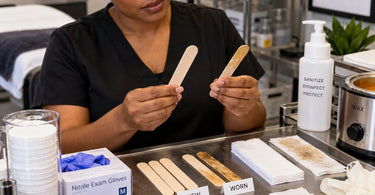
Build better results today... by teaching your team to spot disposable supplies that should never make it to the treatment tray. In a busy spa, salon, waxing studio, nail bar, massage practice, or barber shop, small items can become background noise, which is exactly why a quick visual standard matters. A fresh Professional Cotton, Sponges, and Wipes for Salons & Spas setup, intact gloves, clean applicators, crisp table paper, and service-ready disposables help your team start each appointment with confidence instead of playing the glamorous game of "Is this still okay?"
Disposable does not mean indestructible until the moment of use. Packaging can tear, paper products can absorb moisture, gloves can develop punctures, applicators can become bent or splintered, and items stored loosely can pick up dust, product residue, or handling damage. The goal of training is not to make employees suspicious of every cotton round in the building. It is to give everyone the same fast, practical definition of service-ready.
Why Worn Disposable Supplies Are a Training Issue
Most teams already know that obviously used single-use items belong in the trash. The harder calls happen before a service begins: a glove box has been crushed in storage, a wax strip is creased and fraying, a disposable headband has stretched elastic, or a paper barrier has a damp edge. One employee may toss the item immediately while another may think, "It is probably fine." That inconsistency is the real problem.
A simple standard protects the flow of the service. It also reduces awkward moments in front of clients, where a technician discovers a torn glove after putting it on or realizes that an applicator has a rough edge after the tray is already set. Training teams to identify worn supplies at setup time turns quality control into a routine habit rather than an emergency scavenger hunt.
Teach the Five-Second Inspection
The easiest system is a five-second inspection before a disposable item enters the active service area. Ask the team to check five things: packaging, cleanliness, dryness, shape, and function. If the item fails one of those checks, replace it.
Packaging: Is the wrapper, pouch, box opening, or protective seal intact where integrity matters? If an individually wrapped item has a torn, open, wet, or questionable package, the safest operational choice is to set it aside and follow the manufacturer instructions and your facility protocol.
Cleanliness: Does the item look free of dust, hair, product residue, discoloration, or fingerprints from unnecessary handling? An item intended to touch a client should look fresh before it ever reaches the tray.
Dryness: Has paper, cotton, gauze, table covering, or another absorbent disposable picked up moisture? Damp storage can compromise presentation and may make a product unsuitable for its intended use.
Shape: Is the item crushed, warped, bent, frayed, cracked, stretched, or otherwise physically degraded? A disposable should perform the way it was designed to perform, not merely exist in one piece.
Function: Will it do its job without extra fuss? A glove should provide an intact barrier. A strip should have the structure needed for the service. A disposable applicator should be smooth and usable. A face cradle cover or table barrier should fit and stay in place.
Use Real Examples From Your Own Service Menu
Generic training gets forgotten. Specific examples stick. Walk through the disposable supplies your team actually uses and show one good example next to one reject example. Five minutes of side-by-side comparison can be more memorable than a page of rules.
For waxing teams, inspect Quality Wax Strips & Rolls for Effective Hair Removal, Professional Wax Spatulas and Applicators for Salons & Spas, gloves, table paper, and any single-use pre-service items. Show staff what fraying, bending, contamination, moisture exposure, and damaged packaging look like before a client is on the table.
For esthetics, focus on cotton rounds, gauze, wipes, disposable headbands, compressed sponges, applicators, and facial table barriers. A useful training bin can include deliberately retired examples labeled "wrinkled but usable," "damaged," "contaminated," and "do not use." The labels force the team to discuss borderline cases and agree on a standard.
For nail services, review files, buffers, toe separators, lint-free wipes, gloves, and other items designated for single use. Your Manicure Essentials and Pedicure Supplies should enter the service looking intentional, not like they survived a wrestling match in the bottom drawer.
Make Gloves a Non-Negotiable Example
Disposable gloves are one of the clearest ways to teach the difference between "technically present" and "ready to protect." If a single-use glove is torn, punctured, contaminated, or otherwise unable to function as a barrier, replace it. Do not wash disposable gloves for reuse. Keep multiple sizes of Protective Gloves & Masks for Salon and Spa Professionals accessible so staff are not tempted to stretch the wrong size into submission.
Teach staff to notice warning signs while donning gloves: unusual sticking, thinning, visible holes, split cuffs, or material that tears too easily. If a glove fails during a service, remove it according to your hygiene protocol, perform the required hand hygiene, and put on a fresh pair. The lesson is simple: when the barrier is compromised, the glove has finished its career.
Create a Clear Reject Bin
One of the most useful training tools is a small, clearly labeled reject bin in each prep area. This is not the regular trash can. It is a temporary quality-control container for unused items that look damaged, questionable, or incorrectly stored. A manager can review those items later to identify patterns.
If the reject bin keeps filling with crushed cotton boxes, you may have a shelving problem. If table paper edges are repeatedly damp, investigate storage location. If applicators arrive splintered or broken, document the issue and review the batch. If gloves are tearing frequently, check sizing, storage conditions, and product selection. Worn disposables can reveal a process problem before they become a client-facing problem.
Separate Single-Use From Reusable Without Guessing
Teams also need to know which items are truly disposable and which are designed for cleaning and reuse. Never let appearance alone decide. Follow the product labeling, manufacturer instructions, applicable state requirements, and your written sanitation procedures.
Create storage zones that make the distinction obvious. One drawer might hold Applicators & Spatulas designated for single use. Another area might hold reusable implements awaiting cleaning and disinfection. Clear separation prevents the dangerous little thought that starts with, "Maybe we can use this one again."
Protect Disposables Before They Become Worn
Good training should not stop at inspection. Teach the team how to prevent damage in the first place. Store supplies in clean, dry areas away from splash zones. Keep boxes off surfaces where water, wax, chemicals, hair, or service debris can reach them. Rotate stock so older inventory is used first when appropriate. Avoid overstuffed drawers that bend applicators, crush masks, or wrinkle paper products.
Keep frequently used Hygienic Table Paper for Waxing, Spa & Massage Tables protected from moisture and unnecessary handling. Store cotton, wipes, and sponges in a way that keeps unused stock clean. If you transfer loose disposables into a dispenser, clean the dispenser on a defined schedule and avoid topping off questionable older stock with fresh inventory.
Build Recognition Into Opening and Closing Duties
Quality control is easiest when it has a home on the schedule. Add a two-minute disposable-supply scan to opening duties. Staff can check treatment-room stock, refill stations, discard obviously damaged items, and flag low inventory. At closing, they can inspect storage areas for spills, moisture, open packages, crushed boxes, and products left in active treatment spaces.
This also pairs naturally with inventory management. A damaged item is not only a sanitation or presentation concern; it is inventory that cannot produce a service. Track repeated waste so ordering and storage decisions improve over time. Your Must-Have Supplies for Salon & Spa Business Success should be stocked in quantities that support real service volume without creating so much overflow that products are damaged before anyone uses them.
Use a Simple Team Language
Give employees short phrases they can use with each other. Try "fresh, damaged, or questionable" as the three categories. Fresh goes to the treatment room. Damaged gets discarded or handled according to policy. Questionable gets pulled from service until a supervisor can decide.
This language removes embarrassment. A newer team member does not need to defend why a wipe, strip, glove, or applicator looks wrong. They can simply say, "This one is questionable," and replace it. That is a much better culture than training people to squeeze every last penny out of a disposable item at the expense of confidence and consistency.
Train With Photos and Mini Quizzes
Take your own photos of acceptable and unacceptable examples from the supplies you use. Add them to your onboarding guide or team chat. Every few months, run a five-minute mini quiz: show ten photos and ask whether each item is fresh, damaged, or questionable.
You can make it funny without making it frivolous. A bent wax stick can be "retired from active duty." A glove with a mystery puncture can be "promoted directly to trash." A damp stack of table paper can be "on an unauthorized spa day." Humor helps people remember, but the standard stays serious: single-use supplies should be intact, clean, properly stored, and fit for their intended purpose.
Do Not Let Cost Pressure Rewrite the Standard
Every business watches supply costs, but the answer to waste is better purchasing and storage, not lower standards at the treatment table. If your team is throwing away too many unused disposables, find the cause. Order a more suitable pack size, reorganize storage, choose sturdier packaging, adjust par levels, or improve how staff set up trays.
Pure Spa Direct is a distributor, not a manufacturer, so product-specific storage, shelf-life, and use instructions should always come from the manufacturer labeling for the item you purchase. When you need to refresh the basics, shop categories such as Professional Cotton, Sponges, and Wipes for Salons & Spas, Protective Gloves & Masks for Salon and Spa Professionals, Applicators & Spatulas, and other Spa Essentials for Professionals that match your services.
The Best Standard Is the One Everyone Can Apply
A perfect policy hidden in a binder is less useful than a clear standard your team can apply in five seconds. Teach employees to inspect packaging, cleanliness, dryness, shape, and function. Give them real examples. Make replacement easy. Track recurring damage. Keep storage clean and organized.
When the whole team recognizes worn disposable supplies the same way, setup becomes faster, service rooms look more polished, and fewer questionable items make it anywhere near a client. That is not glamorous inventory work, but it is exactly the kind of behind-the-scenes discipline that makes a professional spa or salon feel effortlessly put together.
