
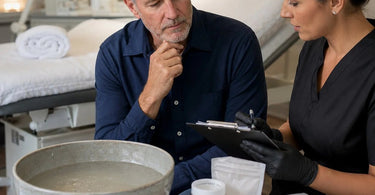
Clients adore this secret weapon for eliminating toxins and fatigue, but what happens when your miracle-working Pedicure Detox Soaks suddenly stop delivering that "floating on a cloud" feeling? You mix the perfect solution of Epsom salts, botanical extracts, and purifying ingredients, only to watch it turn into a murky, unappealing mess that leaves feet feeling filmy rather than fabulous. We see you nodding your head over there, and we have a confession: the culprit is likely hiding in plain sight—and it comes out of your tap.
We are talking about hard water, the mineral-packed nemesis of every spa professional who has ever struggled with lackluster results. You might notice that your luxurious Pedicure Supplies are working overtime, but the final result just is not hitting the mark. Before you blame the product batch, take a look at the H2O. When calcium and magnesium crash the party in your Pedicure Chairs/Spas, they do not just come quietly; they wreck the vibe, neutralize your active ingredients, and leave a residue that feels like a science experiment gone wrong .
The Chemistry of a Letdown: What Hard Water Does to Your Soaks
Let us get just a tiny bit nerdy for a moment, because knowledge is power (and profit). Hard water is essentially water that contains high levels of dissolved minerals, specifically calcium and magnesium . In your home, this shows up as crusty limescale on faucets. In your pedicure basin, it becomes a silent saboteur. When you add a Detox Soak, these mineral ions immediately latch onto the active ingredients. Instead of the bentonite clay or Epsom salts drawing impurities out of the client's skin, the minerals neutralize the ionic charge that makes detox work. Essentially, your expensive soak ends up "detoxing" the calcium out of your pipes rather than the fatigue out of your client.
Have you ever seen those weird, chunky white flakes floating around during a service? That is not "product activation." That is soap scum's evil twin. The fatty acids in many natural soaks bind with hard water minerals to form an insoluble curd . Not only does this look gross, but it also leaves a sticky, irritating film on the client's skin. This clogs up your plumbing and can lead to bacterial biofilm in the jets of your pedicure equipment if you are not using proper Professional Cleaners & Disinfectants for Salons and Spas. Using a standard cleanser just will not cut it when you are battling mineral buildup.
The 3 Ugly Truths: Dry Skin, Bad Results, and Broken Gear
We know that as a professional, your reputation lives and dies by results. Hard water does not just make your job harder; it actively works against the health of your clients' skin. You see, healthy skin likes to maintain a slightly acidic pH. Most hard water leans alkaline. When you soak feet in hard water, it strips away the natural acid mantle, leaving the skin barrier compromised. For clients with conditions like eczema or even just sensitive feet, this can cause immediate irritation. Instead of feeling silky smooth, their heels may feel drier and rougher post-treatment than when they arrived because the hard water interacts with the natural lipids in the skin, breaking them down .
You are also throwing money down the drain. Literally. If you are using premium brands like Voesh or Tuel Skincare, you want the full potency of those botanical blends. Hard water reduces the solubility of soaps and diminishes the lather or fizz of your soak, meaning you have to use more product to get the same effect. That hits your bottom line. Finally, the equipment suffers. Scale buildup inside your Pedicure Chairs/Spas, pumps, and plumbing restricts water flow and creates perfect little caves for bacteria to hide from your disinfectants. A $500 repair bill because of hard water is a total buzzkill.
Real Talk: How to Win the Battle Against the Minerals
Okay, enough doom and gloom. You cannot move your spa to a mountain spring, but you can fight back with a three-step strategy: Filter, Treat, and Maintain. The first line of defense is the water source. The single best investment you can make for your Top-Quality Equipment & Furniture for Spas & Salons is a water softening system. These systems use ion exchange to swap out the calcium and magnesium for sodium, giving you that slippery, luxurious soft water feel . If a whole-building system is not in the budget right now, look into portable deionization (DI) filters that can attach directly to the fill line of your pedicure chair. This is a game-changer for ensuring your Pedicure Supplies perform as advertised.
Next, choose your weapon wisely. If a full softening system is a few paychecks away, you need to adjust your product usage. You can cheat the system slightly by adding a chelating agent to the water before you add the soak. A teaspoon of citric acid or a specialized spa water conditioner binds to the minerals first, neutralizing them so they cannot attack your detox soak. Furthermore, take a hard look at your removal process. Hard water is sticky. After you drain the basin, you need a heavy-duty cleaner specifically designed to break down mineral salts. Do not just wipe it down. Use a calcium and lime remover on the bowl and run it through the jets weekly to ensure that yesterday's residue does not ruin today's pedicure.
Spotlight on Success: Pairing Tools with Techniques
While we are fixing the water, let us talk about maximizing that pedicure. A detox soak is step one, but the removal of dead tissue is where the magic happens. Hard water can actually harden calluses, making them tougher to remove. However, once you have softened the water (and the skin), you need the right equipment to finish the job. Pair your revived detox soak with a high-performance Callus Remover for the feet. For those professional treatments where you need industrial strength but gentle results, using the correct bits is vital. Consider updating your Nail Files & Buffers to ensure you are not cross-contaminating or causing friction burns.
Furthermore, if you offer add-on services, the quality of your tools matters just as much as the water. A detox soak draws out impurities, opening the pores. This is the perfect time to apply a Sugar Scrubs or Salt Scrubs to slough away the loosened dead cells. And for the love of all that is holy, do not forget the Cuticle Oil. If your water is hard, the client's cuticles are likely dry and brittle. A little hydration goes a long way.
Don't Let the Tap Ruin Your Reputation
At the end of the day, a pedicure is an escape. It is the 45 minutes where a busy professional finally puts their phone down and breathes. If the water looks cloudy, smells metallic, or leaves their skin feeling itchy, you have lost them. They might not know the word "chelating agent," but they know they are never booking with you again. Investing in your water quality is investing in your retention rate. It ensures that the Spa Body Treatments and foot care you provide are as high-end as the furniture they are sitting on.
Pure Spa Direct is your partner in this. We supply the gear, the goods, and the know-how. Whether you need to browse our selection of Professional Massage & Wellness Products or specifically want to upgrade your water filtration game, we have got your back. Do not let a little calcium get between you and a five-star review. You work too hard to let the tap water win. Go ahead, take a look at your Pedicure Chairs/Spas and give it a deep clean, then test that H2O. Your clients' feet will thank you.
)