
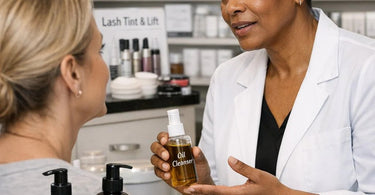
Your next big seller is here...and it might just be the conversation you are having with your lash clients. You know the one. You spend precious time perfectly mixing that gorgeous tint, applying it with surgical precision, and sending your client out into the world with eyes that could stop traffic. Then, a week later, they are back. Not for a fill, but for a complaint. 'It faded so fast!' they whisper, clutching their expensive organic face wash. You smile, nod, and internally sigh. We have all been there, darling. The culprit is almost always lurking right there in their chic bathroom cabinet: an innocent-looking bottle of oil-based cleanser.
Let’s get real for a second. The beauty industry has drilled it into our heads that oil is the ultimate skin savior. It dissolves makeup, balances the skin barrier, and makes you feel like you are at a high-end spa just by washing your face. And for the skin? Fantastic. For a fresh Professional Lash and Brow Tint? It is basically kryptonite. But do not panic, and do not throw away all your cleansing oils just yet. Here at Pure Spa Direct, we are all about education over frustration. Today, we are diving deep into the chemistry, the chaos, and the hilarious misunderstandings surrounding oil and lash tints. Grab a coffee (or a wine, we do not judge), and let us save your retention rates.
The Sticky Science: Why Oil Is The Tint Terminator
Let us put on our lab coats for a minute (they are probably cuter than actual lab coats, right?). When you apply a lash tint, you are essentially depositing color into the hair shaft. Most professional tints are formulated to bond with the keratin in the lashes. It is a chemical hug that is supposed to last through a few showers, some tears during a rom-com, and maybe a sweaty yoga session. However, oil is the ultimate party crasher. Because the tint sits on and slightly within the hair cuticle, oil molecules are smaller than you think. They sneak right in there and dissolve the bond between the tint and the hair. It is like using dish soap on a permanent marker—the color just slides right off.
We see it happen all the time. A client buys a gorgeous Professional Lash and Brow Tint service, pays top dollar, and then goes home to douse her eyes in coconut oil because she read it is good for lash growth. Spoiler alert: it is great for lash growth, terrible for lash color. This is where our job shifts from 'makeup artist' to 'myth buster'. We have to educate without scaring them. Because while we love selling Premium Skincare Products retail, we need to make sure they are using the right ones around those gorgeous new lashes.
The Usual Suspects: Top 5 Oil-Based Products To Watch Out For
So, what exactly are we looking for when we grill our clients about their nightly routine? It is not just the bottle labeled 'Cleansing Oil' (though that is enemy number one). Oil hides in plain sight, wearing adorable packaging and promising eternal youth. You need to warn your clients about these five sneaky offenders:
1. Micellar Water (The Deceptive One): Wait, isnt micellar water supposed to be gentle? Yes, but read the label. Many micellar waters use micelles (tiny oil molecules) suspended in soft water to grab dirt. Look for the word 'oil' in the ingredients. We recommend switching them to a strictly water-based cleanser for the eye area.
2. Makeup Removing Balms: These solid-to-oil textures are wildly popular, and they feel amazing on dry skin. However, they are pure, concentrated oil. If your client is rubbing a balm near their lash line, that tint is toast. It is fantastic for removing waterproof mascara, but fatal for that fresh Lash & Brow Enhancement Services.
3. Natural Creams (Coconut, Jojoba, Argan): 'But it is natural!' clients will cry. So is poison ivy, honey. Natural oils are still oils. We love Massage Oils for the back, but keep them away from the eyelids. If they use a pure oil as a moisturizer, they need to be religious about avoiding the orbital bone area.
4. Heavy Eye Creams: Not all eye creams are guilty, but many 'intensive' or 'repair' creams for dry skin contain mineral oil, petrolatum, or various seed oils. These sit on the skin and slowly migrate (and dissolve) into the lash line overnight.
5. Sunscreen (The Daily Driver): Chemical sunscreens often rely on oils to disperse the active ingredients. If your client wears liquid sunscreen on her face and it drips into her eyes, or she uses an oil-based makeup remover to take it off, double trouble. We stock plenty of Professional Cleaners for your tools, but the client needs cleaners for their face that are lash-safe!
Real Talk: How Long *Should* A Lash Tint Last?
Before we all start blaming the client, let us set realistic expectations. You can have the steadiest hand in the business and use the highest quality Intensive Tint on the market, but you are still painting hair that naturally sheds. The average lash life cycle is 30 to 45 days. A tint will look perfect for about 5 to 7 days. It will look 'pretty good' for about 2 weeks. After 3 weeks, the natural turnover of lashes means the tinted ones are falling out, and baby, brand-new, untinted lashes are growing in. It is not fading; it is getting replaced!
However, if a client comes to you after 4 days looking like a panda bear with no color left, we have an oil problem. It is not the shed cycle; it is the solvent. That is the conversation you need to have. Use humor! 'Girl, what are you washing your face with, cooking spray?' Lighthearted teasing makes the hard talk easier. And then, you offer the solution: a gentle, oil-free facial cleanser that wont strip their skin but will preserve your art.
How To Fix It: The Professional Protocol For Lash Services
Okay, so we know the enemy. Now what? We cannot ban oil from the entire world, nor should we. Oil has a purpose (hello, Massage Oils, Lotions, and Creams for Therapists are essential for a reason). But for the eye area, we need to lay down the law with a smile. Here is your new five-step protocol for every lash service:
Step 1: The Pre-Tint Cleanse (Do Not Skip This!)
Before you even open that tube of tint, you must remove every trace of oil from the lashes. You cannot just wipe them with a tissue. You need a strong, lash-specific cleanser to break down the natural sebum and residual skincare. Use a lash shampoo or a medical-grade, oil-free foaming cleanser. Dry the lashes thoroughly with a microfiber brush or a mini fan. Tint applied over oil is tint wasted.
Step 2: The Blot Test
After you dry the lashes, take a clean, dry spoolie and brush them. Look at the roots. If you see any clumping or resistance, there is still oil there. Go back to step one. Patience saves your reputation.
Step 3: The Application
Mix your tint according to the manufacturer's instructions. For the best results, we love brands like Refectocil Original or Berrywell Cream Dye. These are workhorses designed to bond deeply. Apply a thick, even layer. Do not let the client close their eyes too tight—that traps moisture and sweat (salt) under the tint, which can also cause fading.
Step 4: The Aftercare Card (The Funny Version)
Stop handing them a boring legal disclaimer. Give them a cute, funny card. Write something like: 'Avoid oil on these babies for 48 hours. That means no crying at rom-coms (we know you do), no cooking bacon with your face, and definitely NO coconut oil. Use this gentle cleanser instead.' Humor works. It also helps you sell the retail product.
Step 5: The Retail Save
Keep a lash-safe, oil-free cleanser at your checkout counter. When they pay for the tint, show them the cleanser. 'This will double the life of your service.' That is a $15 upsell that saves them a $50 early re-do. Everyone wins.
But What About The Eyebrows? (Because We Know You Are Wondering)
Everything we just said applies ten times over for Brow Lamination and Brow Henna. The skin on the brow bone is often oilier than the eyelid. Plus, people put serums, moisturizers, and foundation all over their brows without thinking. If you are doing a brow tint or henna, you must, must, MUST exfoliate and deep clean that area first. Any residual oil acts as a barrier. We have seen brow tints slide right off because a client came in wearing heavy moisturizer. It looks unprofessional, but it is actually just a chemistry fail. Save yourself the embarrassment by keeping Hygienic Table Paper and a solid Professional Cotton supply handy for the prep work.
Building Your Retail Arsenal: What To Sell Instead
You cannot just tell a client 'no oil' and send them into the void. They will get confused and buy the wrong thing at the drugstore. You need to be the hero with the solution. Stock your shelves (or your back bar) with water-based gel cleansers specifically formulated for lash extensions and tints. These are usually sulfate-free, alcohol-free, and oil-free. They gently foam up to remove eye makeup without breaking the tint bond.
Also, consider selling Compressed Sponges or reusable bamboo rounds in a cute package. Tell them to use these exclusively with the oil-free cleanser and to avoid using their gritty sugar scrubs anywhere near their eyes. You have a whole world of Must-Have Spa Retail Products at your disposal. Use the fear of faded lashes to move some serious retail inventory! It is not sneaky; it is smart business. You are solving a problem they did not even know they had.
The Lazy Girl's Guide To Lash Tint Longevity (For Your Clients)
Let us be honest. Some clients are not going to follow the rules. They are going to fall asleep in their makeup and use a baby wipe to remove their mascara. We love them anyway, but we need a backup plan. For the 'lazy but loyal' client, recommend a weekly 'tint refresh' routine. Have them buy a small bottle of the same tint you used (if regulations allow) or a lash tinting mascara. Once a week, they apply it like mascara, let it sit for 3 minutes, and wash it off. It keeps the color vibrant without a full service appointment.
Of course, you would rather they come in for a professional Lash Lift & Perm and tint combo every 6 weeks, but we live in the real world. In the real world, we stock up on High-Quality Towels to wipe off the tears when they realize their favorite $50 cleansing oil is the villain. We keep Protective Gloves & Masks on hand for the messy mixing. And we keep our sense of humor.
Conclusion: Save The Tints, Ditch The Oils (Near The Eyes)
Look, we are not here to shame the oil-based cleanser industry. We use them on our bodies, our scalps, and our cuticles (speaking of which, check out our Cuticle Oil—fantastic stuff for nails, terrible for lashes). The message is simple: location, location, location. Teach your clients to draw a line at the brow bone. Everything above that line? Water-based cleanser only. Everything below? Have at it with the oils, the balms, and the scrubs.
By mastering this science and sharing it with a smile (and maybe a little eye-roll at the ridiculousness of modern skincare), you position yourself as the expert. You are not just a Beauty Wholesale distributor; you are a problem solver. And when you solve the problem of 'my tint faded in two days', you earn a client for life. So go forth, educate the masses, sell some oil-free cleanser, and keep those lashes looking dark and dramatic. Your next big seller was the knowledge all along. Now, go use it.
)