
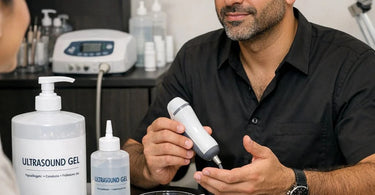
Success is built step by step, and in the world of professional skincare, every single layer counts. We often get so focused on the high-tech gadgets—the lasers, the microcurrent wands, and the hydrodermabrasion machines—that we forget the unsung hero sitting right next to the High Frequency Machines and the Ultrasonic Skin Scrubber. Yes, I am talking about ultrasound gel. It is not just a sticky goo to wipe off at the end of a service; it is the actual conduit for your magic. If you are using the wrong formula or ignoring best practices, you are essentially trying to text with a dead phone battery. It looks like it should work, but nothing is happening. Today, we are diving deep into the sticky, slippery science of ultrasound gels to make sure your services are as clear, effective, and profitable as they can possibly be.
Let us be real for a minute. We have all been there. You have a brand new Ultrasonic Facial Machine that cost more than a used car, but halfway through a Hydrodermabrasion session, the client flinches because the probe feels like it is dragging on their skin. Or worse, you finish the treatment and the results are... meh. Nine times out of ten, it is not the machine. It is the gel. As distributors for the industry's best brands, we at Pure Spa Direct have seen that the difference between a good esthetician and a great one often comes down to the boring stuff. So, grab a spatula, and let us geek out over viscosity, conductivity, and why your clients will thank you for reading this.
Why Your Ultrasound Gel Matters More Than You Think
Look, I know buying Spa Masters ultrasound gel is not as fun as shopping for a new Pedicure Chair or a sparkly Nail Art Rhinestones kit. But here is the truth: Ultrasound technology relies on sound waves. Sound waves travel incredibly fast through skin, but they hate air. Air is the enemy. Even a tiny pocket of air between the metal probe and the client's skin will bounce those sound waves right back at the machine, ruining the cavitation effect or the conductivity you are paying for.
Professional ultrasound gels are designed to be an aqueous coupling agent. Their job is to push that air aside and create a seamless bridge. When you Maximize The Effectiveness Of Professional Ultrasound Gels, you maximize the energy transfer. That means deeper product penetration, better lymphatic drainage, and happier clients who actually see a difference in their skin laxity and tone. It is the cheapest equipment upgrade you will ever buy.
Decoding Viscosity: The Thick vs. Thin Debate
If you have ever tried to pour a bottle of gel and it came out looking like a glacial eruption, or maybe it splashed everywhere like water, you understand viscosity. Viscosity is just a fancy word for thickness. But which one is right for your spa or salon? It depends entirely on what you are doing.
High Viscosity Gels (The Thick Stuff): These are your heavy lifters. High viscosity gels, like those found in the Ultrasonic Facial Machines section, are great for diagnostic imaging and long therapeutic sessions. For the esthetician, thick gel stays put. If you are working on a specific area like crow's feet or a double chin, you do not want the gel dripping down the client's neck. It provides excellent acoustic impedance (fancy talk for great sound wave delivery) and tends to last longer without drying out. The downside? It can be harder to wipe off if you use too much.
Low to Medium Viscosity Gels (The Runny Stuff): These spread like a dream. If you are doing a full-face Microdermabrasion or using an Ultrasonic Skin Scrubber over large surfaces, a lower viscosity gel is your best friend. It glides easily, reduces drag, and is super comfortable for the client. However, they can dry out faster, so you might need to keep a spray bottle handy to reactivate the slip if you are taking your sweet time massaging that Premium Skincare in.
The Magic of "Non-Drying" Gels: Efficiency is Everything
Have you ever noticed that sometimes you have to keep reapplying gel halfway through a service? It is annoying, it wastes product, and it interrupts the flow of the treatment. That is because standard gels often lack sufficient humectants (ingredients that hold onto water). According to recent research, gels with specific moisturizing formulas can actually increase the treatment area by up to 25% before drying out. That is a huge saving!
Newer formulations on the market use high-grade carbomers and glycerin to lock in moisture. I am talking about gels that stay wet and slippery for the entire duration of a 30-minute lift. These non-drying options can reduce the need for reapplication by as much as 50%. That means less reaching for the bottle and more time focusing on the contour of the jawline. Plus, your clients are not shivering because you just dripped cold goo on them for the third time. Win-win.
Ingredients Matter: Hypoallergenic and Paraben-Free
Gone are the days when ultrasound gel was just industrial sludge in a bottle. Our clients are savvy. They read labels. And if you are using a gel full of alcohol, parabens, or irritating dyes, you are going to light up a sensitive client's face like a Christmas tree. Always look for gels that are hypoallergenic, fragrance-free, and paraben-free.
Many modern professional gels now include soothing ingredients like Aloe Vera. Not only does the aloe provide a fantastic acoustic window for the sound waves, but it also leaves the skin feeling hydrated and calm rather than sticky and tight. Some gels are even formulated to double as a light massage lotion, allowing you to transition from the ultrasound device to manual massage without having to wipe the client down and start over. This is particularly great if you are working with Bon Vital or Biotone products.
Application Techniques for Maximum Conductivity
Okay, you have bought the expensive gel and the fancy machine. Do not ruin it with lazy application. Technique is everything. First, never turn the machine on while the probe is sitting on the skin without gel. That is a recipe for hot spots and discomfort. Apply a generous, pearl-sized dollop to the treatment area and spread it in a thin, even layer using your finger or a spatula.
Here is a pro tip: Keep the gel warm. A room-temperature bottle on a 70-degree day is fine, but if your spa is chilly, that gel is a shock to the system. Invest in a small Towel Steamer or a bottle warmer to keep your gels at a toasty temperature. Your clients will instantly relax the second that warm probe touches their skin. Also, remember to clean your probes. Using professional disinfectants ensures you are not spreading bacteria, and it keeps the transducer head in perfect condition so it works optimally with the gel.
The Retail Opportunity: Send Them Home with Conductive Therapy
If you own an Oxygen Facial Machine or an Microcurrent Machine, you know that results are cumulative. While I am not suggesting your clients buy a $2,000 machine for home, you can sell them the gel. Many professional brands offer smaller retail sizes of their ultrasound gels. Educate your client: "To maintain that lift we just achieved, I recommend using this conductive gel at home with your facial roller or Gua Sha tool." Even without a machine, the glycerin and botanicals in the gel act as a fantastic slippy layer for facial massage.
Create a retail display. Put a basket of Compressed Sponges next to the gels to make cleanup easy for them. Retail is not just about products; it is about selling the lifestyle and the maintenance. If you are in a Barco Uniform, you look like a pro. Make sure your retail shelf looks like a pro setup too.
Troubleshooting Common Gel Gripes
The "Pilling" Problem: This happens when the gel balls up and rolls off the skin. Usually, it means there is an oil or silicone residue on the face. Make sure you have thoroughly cleansed the skin with a professional cleanser before applying your gel. If the client came in wearing makeup, double cleanse.
The "Sticky Finish": Some gels just leave a tacky residue. Look for a "non-greasy, non-staining" formula. Often, these are water-soluble and will wipe away clean with a warm, damp towel or a spritz of toner. If you are using a Hygienic Table Paper, make sure you are not just smearing the gel around; actually remove it.
The "Tingle" Factor: If a client complains of burning or tingling, stop immediately. They might have an allergy to Carbomer or a preservative. Always keep a hypoallergenic, preservative-free option in your cabinet for those sensitive snowflakes.
Stocking Your Shelves with Pure Spa Direct
We know that running a waxing salon or a massage therapy center means you need options. You need bulk bottles for the back bar and elegant packaging for the retail front. We carry a huge selection of conductivity gels that pair perfectly with our Radio Frequency Machines and Cold and Hot Hammer Machines. Do not forget to stock up on the essentials like gloves and masks to keep the application sanitary. And for the love of all things holy, make sure you have plenty of High-Quality Towels to wipe away the excess because that is how you end a service on a high note.
