
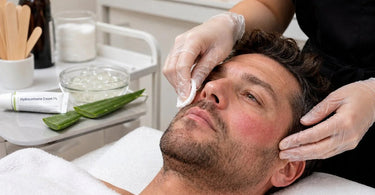
Quality drives success - stock this now because we all know that one client who looks like a tomato after a wax. You know the one. They leave your pristine, zen-like waxing suite looking less like a glowing goddess and more like they just ran a marathon in a snowsuit. Redness happens. It is a totally normal physiological response to ripping hair out by the root (shocking, right?). But just because it's normal doesn't mean your clients have to suffer through it. As a pro, you have a toolkit full of options to calm that fire-engine flush. The two biggest heavyweights in the ring are the medical marvel Hydrocortisone cream and Mother Nature's darling, Aloe Vera. But which one actually reigns supreme? And more importantly, which one should you be stocking in your treatment room and retail shelves to save your clients from the dreaded 'lobster leg' look?
Let's get real for a second. We have all seen the frantic text come through twenty minutes after a Brazilian. 'Help! I look like I got in a fight with a beehive!' Your reputation is on the line. If you send them home with a red, angry mess, they might not come back. But if you hand them a miracle worker? They are a client for life. Today, we are diving deep into the trenches of post-waxing products. We are pitting the steroid against the succulent. We are looking at the science, the anecdotes, and the hilarious reality of what actually makes skin shut up and calm down. Grab your spatulas, folks. This is about to get scientific (but fun, I promise).
The Redness Riddle: Why Your Clients Look Like a Strawberry
First, a quick biology lesson (don't worry, there won't be a quiz, but your clients will test you). When you apply that warm hard wax or soft wax and yank it off, you aren't just removing hair. You are causing a microscopic trauma to the hair follicle. The body sees this as an injury. It immediately rushes blood to the area to start the healing process. This is called erythema. It is inflammation. It is also the reason your client is fanning their armpits in the waiting room. The goal of any good post-wax product is to tell the skin, 'Chill out, buddy. We've got this.' That is where our two contenders enter the arena.
Contender Number One: Hydrocortisone - The Heavy Hitter
Hydrocortisone is like the bouncer at a nightclub. It sees inflammation causing trouble and immediately kicks it to the curb. It is a mild corticosteroid that works by suppressing the immune response in the skin. When you apply a 1% hydrocortisone cream, you are essentially putting a wet blanket on a fire. It works fast. In clinical studies involving skin irritation, hydrocortisone has consistently shown a significant decrease in skin erythema, often working overnight to bring down the redness and swelling . It is the gold standard for a reason.
However, you know that friend who is great in small doses but exhausting if they stay too long? That's hydrocortisone. Overuse of steroids can thin the skin over time. This is why, in the professional ItalWax and Starpil world, we use it as a spot treatment. Did you go a little too hard on the upper lip? Slap on a dab of hydrocortisone. Is the bikini line looking angry? A tiny dot will do the trick. It is not necessarily for full-body slathering, but for those high-sensitivity zones, it is an absolute lifesaver. Research indicates that while it reduces redness, it may not restore the skin's natural 'acid mantle' (the protective barrier) as quickly as other natural remedies . So, it puts out the fire, but it doesn't necessarily rebuild the house.
Contender Number Two: Aloe Vera - The Soothing Succulent
On the other side of the ring, we have Aloe Vera. This is the client favorite. It is the green gel that smells like a tropical vacation. But don't let its gentle vibe fool you; Aloe Vera has some serious scientific street cred. While Hydrocortisone suppresses the immune response, Aloe Vera works by hydrating and cooling the skin, providing an immediate sensory relief. It also contains compounds like glycoproteins that help reduce pain and inflammation and polysaccharides that stimulate skin repair and growth.
Here is the kicker, though. Research shows that while Aloe is incredible, its anti-inflammatory effect takes a little longer to kick in. One study noted that the anti-erythema effect of Aloe vera gel was 'time dependent,' meaning it takes a bit of patience . But, when it finally gets going, it is a powerhouse. Unlike hydrocortisone, Aloe actually helps restore the skin's pH balance and 'acid mantle' significantly better than the steroid . It doesn't just shut up the inflammation; it heals the underlying damage. Plus, it feels fantastic. A cold post-wax spritz of an Aloe-based spray is pure heaven on freshly done legs. However, a word to the wise: if the skin is raw or torn (oops, we have all been there), straight-up Aloe gel can sometimes sting because of the preservatives or the pH of the raw plant. In those cases, you need the heavy cream or a specialized medical gel .
The Verdict: Who Wins the Battle?
So, do you stock up on Hydrocortisone or Aloe? The answer is both. Shocking twist, right? You wouldn't bring a spoon to a sword fight, and you shouldn't treat all redness the same. If a client has a histamine reaction (those little white bumps that appear immediately), or if they have a known sensitivity that flares up red and hot, Hydrocortisone is your emergency brake. It stops the reaction in its tracks. For daily maintenance, all-over soothing, and retailing to clients for the 24-48 hours post-wax, Aloe Vera is the queen. It hydrates, it heals, and it prevents the dryness that leads to ingrown hairs later.
Think of it this way: Hydrocortisone is the fire extinguisher. Aloe Vera is the smoke detector and sprinkler system that keeps everything chill. You need the extinguisher for the big blazes, but the sprinkler system is what keeps your house (the client's skin) safe and sound every single day.
Building the Ultimate Post-Wax Kit (Retail Gold!)
This is where we turn crisis management into profit margins, people. You are a beauty pro. You fix things. But you also sell solutions. By offering a two-step post-wax system, you boost your ticket sales and ensure better results for your clients. Here is how you win.
Step 1: The Immediate Calm
Right after the service, apply a cooling, alcohol-free lotion. Look for brands like ItalWax or Gigi that offer post-wax cooling gels. These usually contain Aloe and botanical extracts. They remove wax residue without oil and drop the skin temperature instantly. If you see severe inflammation, dab a tiny bit of hydrocortisone cream specifically on the angry follicles (this is for professional use/advisement only; always check your state board regulations regarding dispensing).
Step 2: The Home Care Kit ($$$)
Send your client home with a bag of goodies. This is pure gold. Explain the difference to them. Give them a small vial of Aloe-based gel (like a spa body treatment) and instruct them to keep it in the fridge. 'Apply this twice a day,' you tell them. 'It will cool you down and fix your barrier.' Then, for the first night only, if they have extreme sensitivity, recommend a dab of hydrocortisone cream before bed to kill the redness while they sleep. You have just positioned yourself as a healer, not just a hair-remover. Stock up on ingrown hair products and waxing accessories to complete the retail bundle!
What About the Wax Itself?
Sometimes, the redness isn't your post-care routine; it is the wax formulation itself. If you are using low-quality soft strip wax that adheres to the skin instead of just the hair, you are going to have a bad time (and so will your client). Investing in premium brands like Cirepil, Lycon, or Starpil makes a world of difference. Hard waxes are generally gentler on sensitive skin because they shrink-wrap the hair and don't pull on live skin cells. If you see a client turning red before you even pull the strip, switch to a stripless hard wax immediately. Pair that with a top-tier professional wax warmer to ensure the temperature is perfect (too hot = burns + redness). Too cold = sticky mess + redness).
The 'Oops' Protocol: When Things Go Wrong
Alright, let's laugh so we don't cry. We have all lifted a strip and seen a little (or a lot) of skin come with it. Or maybe the wax was a smidge too hot. It happens. The ego bruises, but the skin doesn't have to stay bruised. If the skin is broken, DO NOT USE HYDROCORTISONE on an open wound without a doctor's okay. It can delay healing. Instead, wash gently with a medical cleanser. Apply a thick, healing ointment (think Aquaphor or a medical-grade Aloe ointment) and tell the client to keep it covered and dry . Use a towel steamer to apply a cold, damp cloth immediately to stop the burning sensation. For the love of all that is holy, do not put a numbing spray with alcohol on it. That client will jump off the table. Be honest, be professional, and send them home with the right sterile supplies to heal. They will forgive a mistake if you fix it like a superhero.
Conclusion: Stock the Shelves, Save the Skin
At the end of the day, Reducing Redness is an art form. Hydrocortisone is your tactical strike for immediate, acute inflammation. Natural Aloe is your long-term, nurturing best friend for barrier repair and hydration. You need both in your salon supply arsenal. Don't let your clients leave looking like a tomato. Educate them. Sell them the cooling gel. Recommend the overnight repair cream. You are not just waxing; you are performing a service that requires expertise. And that expertise includes knowing exactly which potion to grab when the skin starts screaming. Now go forth, wax smoothly, and keep those complexions as cool as a cucumber (or, you know, an aloe leaf).
Ready to upgrade your waxing supplies and post-wax products? Pure Spa Direct has the hookup on all the brands you love, from ItalWax to Cirepil, and everything in between. Stock your shelves, soothe those souls, and watch your retail numbers climb. You got this.
