
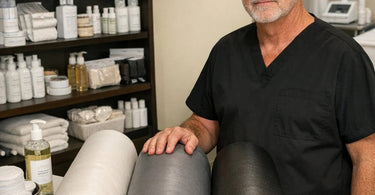
Because every moment counts... especially when your client is on the road to recovery after surgery. And let's be real, if you've ever tried to prop up a post-op client with a stack of wobbly pillows that look like a game of Jenga gone wrong, you know the struggle is real. That's where the humble, the heroic, the unsung champion of the treatment room comes in: the Massage Bolster. But not all bolsters are created equal, my friend. When it comes to post-surgical lymphatic drainage massage, choosing the right bolster density isn't just a nice-to-have; it's a make-or-break detail for client comfort, safety, and treatment efficacy. Too soft, and you offer zero support, letting swelling run amok. Too hard, and it feels like cuddling with a brick—and trust me, no one pays for that experience. So, let's dive into the squishy (and not-so-squishy) world of bolster densities and find your perfect match.
First things first, why do we even care about a bolster for Lymphatic Drainage? Picture this: a client fresh from a laser tattoo removal procedure or, more commonly in our world, post-liposuction or a tummy tuck. Their lymphatic system is working overtime to reduce swelling and clear out all that post-surgical gunk. Gravity, however, is not their friend. Elevating specific body parts allows lymph fluid to flow more easily towards drainage points. A bolster under the knees takes pressure off the lower back and helps with abdominal drainage. Under the ankles? Heavenly for lower leg work. Behind the neck? That's just smart ergonomics. But it's not just about elevation; it's about supported elevation. If the bolster compresses completely under the weight of a limb, you've defeated the purpose. You need a bolster that provides consistent, gentle lift without creating pressure points that could impede the very flow you're trying to encourage.
The Density Spectrum: From Marshmallow to Concrete (Okay, Maybe Not That Extreme)
Think of bolster density as a sliding scale of firmness. At one end, you have the ultra-soft, cloud-like bolsters perfect for a gentle aromatherapy facial where the goal is just to tilt the head back for a Facial Steamer session. At the other end, you have high-density foam that barely moves when you lean on it, which is great for structural support in deep tissue work. For post-surgical lymphatic drainage, we're aiming for the Goldilocks zone: not too soft, not too hard, but just right. A medium-firm to firm density is typically your winner. Why? Because post-surgical areas are tender, swollen, and hypersensitive. A super-soft bolster will bottom out, offering no real elevation and potentially putting pressure right on the incision site if it collapses unevenly. A rock-hard bolster will create a distinct pressure line that can not only be painful but can also act as a dam, blocking lymph flow right where you need it most.
So, how do you know which density to grab? It's a beautiful blend of anatomy, procedure type, and client feedback. For example, a client recovering from a breast augmentation or reduction will need a very specific setup: a semi-firm bolster placed lengthwise along the spine or under the ribcage to open the chest and elevate the upper body without compressing the new girls. Too soft, and they sink into the table, putting pressure on their incisions. Too firm, and you risk bruising on the spine. For lower body work, like after a Brazilian butt lift (BBL) or thigh lipo, you need Body Cushions and bolsters that are dense enough to keep hips and knees elevated without squishing. Your Portable Massage Tables might be top-notch, but without the right bolster, the whole setup fails.
Breaking Down The Specifics: Density By Body Area
Let's get granular. When we talk about Massage Bolsters for post-surgical work, we need to consider three main densities: soft, medium, and firm. Soft bolsters (think low-density polyfoam) are great for relaxation, but they are a hard pass for active post-surgical drainage. They just don't cut it. Medium density is your workhorse. This is usually high-resilience foam that compresses about 25-30% under body weight. It's ideal for knee support, ankle support, and under the neck for supine (face-up) work. It offers enough give to feel like a hug, but enough structure to maintain an airway and proper elevation. Firm density, which compresses less than 10%, is for specific, targeted use. This is what you want for elevating an arm after lymphatic surgery related to mastectomies (lymphedema management) or for supporting the thoracic spine during chest-opening work. It doesn't budge, ensuring absolute positioning for delicate manual drainage techniques.
Now, here is where the magic of being a pro comes in. You can't just buy one bolster and call it a day. You need a toolkit. I always recommend having a small, medium, and large bolster in both medium and firm densities. Pair those with your Hygienic Table Paper and a cozy Massage Table Warmer under a clean sheet, and you are a recovery rockstar. For example, using a firm, flat wedge under the knees is a game-changer for lower back relief, but a medium-density round bolster behind the cervical spine allows for better drainage of the face and neck after a Dermaplaning or deep Hydrodermabrasion treatment, which often causes temporary facial swelling. It's the same principle applied to different zones.
The 'Squish Test' And Client Communication
How do you explain this to your client without boring them to tears or sounding like a foam engineer? Use the 'Squish Test.' Show them the bolster. Squish it with your hand. Say, "This one is a little softer, great for the first few minutes of relaxation, but for your specific swelling today, I'm going to use this firmer one. It's going to give you that perfect lift without poking you anywhere. Think of it as a supportive cloud instead of a fluffy one." Humor disarms anxiety. Clients are usually nervous post-surgery. They are worried about pain, about looking swollen, about the results. If you can make them laugh about the "brick pillow" you aren't going to use, you've built trust instantly.
Also, don't be afraid to talk about the material. High-quality bolsters from reputable distributors like Spa Masters or Prosana use hypoallergenic, antimicrobial, and high-density foams that hold up to the heavy disinfectants we have to use (thank you, Professional Cleaners & Disinfectants). A cheap bolster will absorb sweat and oil and start to stink or crumble. A good one has a vinyl or wipeable cover, or you can wrap it in a clean towel (which you can get from our High-Quality Towels collection). Remember, we aren't just slapping a pillow on a table; we are engineering a healing environment.
Shopping For Your Bolster Arsenal At Pure Spa Direct
Okay, so you know you need a medium for everyday and a firm for the heavy lifting. Where do you get them without breaking the bank? Right here. When you're browsing our Top-Quality Equipment & Furniture, filter down to Massage Bolsters. Look for descriptions that say "high-density" or "post-surgical support." Don't just grab the cheapest one; check the dimensions. A 24-inch bolster is great for knees. A 14-inch is perfect for ankles or the neck. A wedge (which is just a triangle-shaped bolster) is excellent for elevating the entire upper body or legs. Pair your shopping with some Bottles & Jars for your post-surgical arnica gel or Professional Cotton rolls for cleaning incisions, and you've got a full protocol ready to go.
Let's talk brands for a second because we carry some heavy hitters. If you love Earthlite tables, their bolsters are specifically engineered to fit their table widths and feature incredibly durable foam. Oakworks also makes a beautiful line of medium-density bolsters that are a favorite among Cupping therapists because they hold up to the leaning pressure. And for the budget-conscious startup looking to add Complete Waxing Kits and massage gear, our store brand offers excellent entry-level firm bolsters that wipe clean easily. Remember, you don't need 50 bolsters. You need 4 to 6 quality ones. One set for your room, one set in the wash (because we know you use Protective Gloves & Masks and wash linens after every single client, right?), and one set for emergencies.
Real-World Scenarios: When Density Saved The Day
I had a client come in three weeks post-liposuction on her flanks and inner thighs. She was miserable. Her previous massage therapist had used a soft foam roll under her knees, and she said it felt like her legs were just squishing into the table, making her back ache. She almost gave up on massage entirely. I pulled out a firm, contoured leg rest (a specialized type of Massage Bolster) and placed it under her calves. The density was high enough to keep her knees slightly bent and her lower back flat on the table without any compression on her healing thighs. She literally sighed with relief. "Oh my god," she said, "it's not fighting me." That is the power of the right density. It disappears into the background, allowing the work to happen. Whether you're doing manual Pressotherapy or gentle EMS to encourage muscle contraction post-surgery, the bolster sets the stage.
Another scenario: post-mastectomy lymphatic drainage for lymphedema. This client needed her affected arm elevated on a firm, flat surface that was also slightly padded. A medium-density bolster would have compressed too much under the weight of her arm and a weighted rice pack (used to relax muscles). A firm, short bolster placed under the axilla (armpit) region allowed her arm to rest at a 30-degree angle, opening the lymphatic pathways in the chest and arm. That specific density prevented the "pinching" that happens when a bolster is too soft and allows the arm to roll inward. It's details like this that separate the good therapists from the great ones. And guess where great therapists shop? They shop at Pure Spa Direct because we carry the Must-Have Supplies for Salon & Spa Business Success, including these niche support tools.
The Final Checklist: Caring For Your Bolsters
Once you've invested in your medium and firm density bolsters, take care of them. Between clients, spray them down with a Professional Cleaner & Disinfectant. Let them air dry. If they have removable covers (which I highly recommend because Barco Uniforms aren't the only things that need washing), wash those covers on hot. Never put a wet cover back on a foam core—hello, mold! And store them flat, not stacked under heavy Salon & Spa Bedding, or they will lose their shape. A misshapen bolster is a worthless bolster.
So, to wrap up this squishy science lesson: Selecting the right bolster density for post-surgical lymphatic drainage is about matching the foam's resistance to the client's weight and the specific body area. Medium density is your everyday hero for knees and necks. Firm density is your specialist for targeted structural support and heavier limbs. Always do the squish test, communicate with your client, and buy quality from a trusted distributor. Now go forth, prop up your clients like the royalty they are, and watch their recovery times shrink while their loyalty to you grows. Because happy, healing clients come back for more, and they bring their friends. And don't forget to check out our ALL our Brands page to see who makes your favorite bolsters. Now, get to work—your bolster army awaits!
