
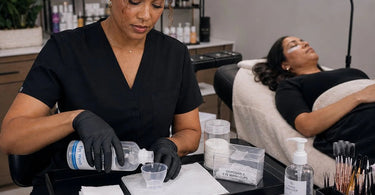
Efficiency meets luxury in the world of professional lash rooms, but let's be real for a second: nothing kills the vibe faster than a chemical mishap and no plan to fix it. You've got your Lash Extension Supplies laid out perfectly, your Lash & Brow Enhancement Services are booked solid, and you're feeling like a beauty boss. Then, a rogue drop of adhesive decides to take a field trip straight into your client's eye. Or worse, yours. Suddenly, that gorgeous Professional Lash and Brow Tint isn't looking so glamorous. This is where your hero—the humble eye wash station—needs to step into the spotlight. But not all stations are created equal, honey. We're about to dive deep into selecting the right eye wash station for professional lash rooms so you can stay compliant, confident, and comically prepared for the sticky situations.
Let me paint you a picture. It's a busy Saturday. You're three espresso shots deep and your hands are steady as a surgeon. You're applying a flawless set of volume fans when your client sneezes. Just a tiny, adorable sneeze. But that little 'achoo' was enough to make you jump, and now your tweezers are doing the cha-cha. You've got adhesive vapors making your eyes water like you just watched the ending of Titanic. This isn't just annoying; it's a workplace hazard. The Occupational Safety and Health Administration (OSHA) has some pretty clear feelings about eye injuries, and spoiler alert: they think you should have a plan. An eye wash station isn't just a box you check to avoid a fine; it's the thing that turns a potential ER visit into a 15-minute 'oops, let's fix that' moment.
Now, you might be thinking, 'Beth-Ann, I have a sink. Can't I just splash some water in there?' Absolutely not, and please don't. Sink water pressure is like getting blasted by a fire hose, and the angle is all wrong. You need a gentle, controlled flow that actually flushes the eye without damaging it further. Plus, if you're using Spa Masters equipment, you know quality matters. An eye wash station is specifically designed to flow at a velocity that doesn't hurt, covering both eyes simultaneously. It's like a spa day for your eyeballs, but only on the worst day of your career. Trust me, your future self (and your insurance premiums) will thank you.
The Gravity vs. Plumbed Debate: Which Eye Wash Station Won't Leave You Hanging?
When you start shopping for these bad boys, you'll run into two main types: plumbed and gravity-fed. This is the 'tastes great vs. less filling' of the safety world. A plumbed eye wash station connects directly to your water lines. It's permanent, it's powerful, and it's there 24/7. The downside? It needs plumbing. If your lash room is in a converted closet (no judgment, we've all been there), running new pipes might be a nightmare. You also have to worry about water stagnation. If you don't flush that line weekly, you're basically offering your clients a bacteria smoothie for their corneas. Not a good look for your Luxury Spa Furniture aesthetic.
On the flip side, we have the gravity-fed (or portable) eye wash station. This is the MVP for most lash artists. It doesn't need pipes. It just needs you to fill it with distilled water and maybe a preservative solution. These units are often sealed, which means no dust, no bugs, and no mystery goo growing in the lines. They are perfect for Stylish Salon & Barber Furniture setups where space is a premium. You can hang it on the wall, tuck it into a corner, or keep it under your Nail Tables and Manicure Stations if you also do brows. The trade-off? You have to remember to change the water and check the expiration date. A gravity-fed unit with three-year-old water is just a heavy paperweight with false hope.
For the average lash room, I'm going to bat for the gravity-fed portable station. It's mobile. If you move your setup, it moves with you. It doesn't require a plumber's license to install. And frankly, for flushing out ItalWax adhesive or tint, 15 minutes of flushing is all you need. Most portable units hold enough fluid to handle that emergency and then some. Just make sure you buy a unit with a shelf life indicator and change that cartridge like you change your Massage Table Warmers sheets—religiously.
Size, Space, and Silliness: Fitting Safety Into Your Sanctuary
Lash rooms are tiny. I know this. You know this. You've probably played a game of 'musical chairs' trying to fit a Pedicure Chairs/Spas in a broom closet before. So when you're selecting the right eye wash station for professional lash rooms, the footprint matters. You don't want a behemoth industrial unit that looks like it belongs in a chemical plant next to your rose gold tweezer holder. They make stylish, compact units that look more like a fancy water dispenser than emergency equipment. Look for wall-mounted brackets that save floor space. If you have a Professional Salon Equipment layout, you can often hide these units behind a decorative screen or inside a cabinet that is clearly marked. Just don't hide it so well that you can't find it when your eyes are slammed shut.
Placement is everything. OSHA guidelines generally say the station has to be within 10 seconds of reach (about 55 feet) from the hazard. Since the hazard is literally on your client's face or in your hands, put the station within arm's length. Mount it at an accessible height. If you're working on a Portable Massage Tables that is low to the ground, you don't want to have to stand up, climb a ladder, and solve a puzzle box to get the water flowing. Accessibility means you can do it blind. Because you might literally be blind if you don't have it.
Also, consider the 'splash zone.' If you have Professional Cotton, Sponges, and Wipes everywhere, keep them away from the station's activation handle. You need a clear path. Practice your emergency drill. It feels silly running to the wall and pretending to wash your eyes out, but muscle memory saves careers. I promise you, the first time you actually need it, you won't be thinking clearly. You'll be panicking. So make the path boring and easy.
Fluid Facts: What's Actually Going In Your Eyes?
Let's talk about the juice. Tap water is a no-go. It has chlorine, minerals, and sometimes bacteria that love to infect a freshly irritated eye. Distilled water is the standard, but many commercial stations use a buffered saline solution or a sterile preserved water. If you buy a sealed cartridge system (which I highly recommend), you don't have to think about this. You just swap the cartridge. However, if you buy a refillable unit, you absolutely must use the correct solution. Plain water can go stagnant and grow 'pink slime' (serratia marcescens). Imagine explaining that to a client. 'Yes, I'm putting slime water in your eye because I was too cheap to buy the saline.' No thank you.
You should also check the flow rate. An eye wash needs to deliver at least 0.4 gallons per minute for 15 minutes. That's a lot of water. When you're shopping at Pure Spa Direct, look for units that meet ANSI Z358.1 standards. That's the gold standard. It means they've been tested to actually wash eyes properly. It also means the spray pattern is gentle. You don't want a jet stream that pushes debris deeper into the eye. You want a soft cascade that flushes from the inside corner out. It's a very specific engineering feat, and the good brands (like Prosana) have nailed it.
And please, for the love of all that is holy, label the station. You know where it is. But if you hire an assistant or have a guest artist, they need to know. A bright green or red sign that says 'Eye Wash Station' is not ruining your Serenity Essentials theme. A lawsuit will ruin it much faster. Make the sign cute if you have to, but make it visible.
Maintenance: Because 'Set It and Forget It' Doesn't Work Here
Okay, let's talk about the boring part: cleaning. If you have a plumbed unit, you are legally required (yes, legally) to flush it weekly to remove sediment and bacteria. This usually involves running water for a few minutes. If you don't do it, and someone gets an infection, that's a negligence claim faster than you can say 'liability insurance.' For gravity-fed units, you check the seal, the fluid level, and the expiration date monthly. If the fluid is cloudy? Change it. If the seal is cracked? Replace the whole cartridge. Don't try to DIY a fix with duct tape. This is not Pinterest. This is eye safety.
You also need to think about temperature. Scalding water is not therapeutic for an eye injury. Tepid water is the rule. In Florida (where Pure Spa Direct is based), your cold water tap might be 85 degrees, which is fine. But if you're in a place where winter exists, you might need a tempering valve on a plumbed unit. Portable units usually live at room temperature, which is perfect. Just don't store your eye wash station next to your Towel Steamers. Heat can degrade the plastic and the fluid.
I also recommend keeping a backup. Yes, a backup eye wash station. They are not that expensive compared to an ER visit. Keep one sealed unit in the back. If you use the primary one on a client (or yourself), you can immediately replace it so you're never without coverage. It's like having a spare Professional Wax Warmers for Salons & Spas on hand for when one dies mid-bikini wax. You just need the redundancy to keep business moving.
The Emotional Factor: Why Buying One Makes You Look Like a Pro
Let's be honest. Clients notice details. They notice if your High-Quality Towels smell like bleach. They notice if your Spa Essentials are dusty. And they definitely notice a giant eye wash station on the wall. But here's the secret: they love it. When a client sees an eye wash station, they think, 'Wow, this person takes safety seriously. They know what they are doing.' It builds trust. It tells them that you have thought about every possible 'what if.' It separates you from the girl working out of her living room who tells clients to 'just blink it out.'
During a consultation, you can even mention it. 'Don't worry, I have Lash & Brow Service Supplies and a certified eye wash station right there, just in case.' They will be impressed. They will relax. A relaxed client is a client who tips 25% and brings you Starbucks. Safety pays for itself, people. Plus, when you inevitably have a small reaction to a Professional Lash and Brow Tint, you won't be that poor artist running to the bathroom with a paper towel. You'll be the cool cucumber calmly walking to the wall, tilting your head, and flushing like a boss.
And don't forget about combo units. Some stations come with a drench hose. That's a little handheld sprayer that attaches to the unit. If you're also doing Ingrown Hair Products or chemical peels on the side, a drench hose is great for spot-flushing a small area on the face or body. It gives you versatility without having to buy two separate units. Just make sure the hose is long enough to reach your Stylish and Functional Nail Salon Furniture Essentials if you do lash lifts there too.
Final Checklist Before You Click 'Add to Cart'
Alright, let's wrap this up with a shopping list. You are looking for an Eye Wash Station that is ANSI compliant. You want a gravity-fed portable unit unless you have plumbing dreams and a budget to match. You need a wall-mount bracket to save space. You need sealed fluid cartridges with an expiration date. You need a weekly visual inspection habit. And you need to tell your team (even if your team is just you and your cat) where it is and how to use it. Practice the 'blind walk.' Close your eyes and try to find the station. Can you do it? If not, move it.
Also, check the temperature range. If your lash room gets hot, make sure the plastic is UV stabilized so it doesn't turn yellow and brittle. If it gets cold, make sure the fluid won't freeze. These are the little details that ItalWax masters know, and now you know them too. Don't be the salon that buys the cheap $40 unit that leaks all over your Professional Spa Apparel. Spend the money on a solid brand like Graham Beauty or Bon Vital if they offer safety gear, or look for the industrial safety brands we trust.
Finally, celebrate your purchase. Seriously. You just did something really mature and responsible. Go buy a new Nail Art Rhinestones kit or a Sugar Scrubs set to reward yourself. Because while selecting the right eye wash station for professional lash rooms isn't sexy, it is the ultimate power move. It says you're here to stay, you care about your clients, and you're too smart to let a little adhesive ruin your empire. Now go forth, lash safely, and keep your eyes on the prize (and away from the glue).
)