
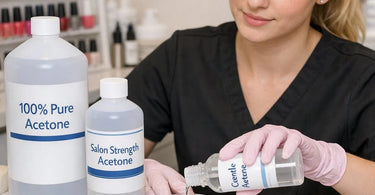
Make every moment count in your treatment room, because let's be honest, a client with irritated, angry cuticles is not a happy camper. We have all seen it happen: you do a flawless gel removal, but the client walks out wincing because the product was just a little too aggressive for their skin type. Selecting the right strength of acetone isn't just about removing glitter polish; it is an art form that separates the amateur techs from the true skin whisperers. As distributors of thousands of professional products, we know that one size definitely does not fit all when it comes to solvents. Today, we are going to save your clients' skin (and your reputation) by diving deep into the science and strategy of acetone strengths for sensitive skin.
If you have been in the beauty wholesale game for a while, you know the struggle. You reach for the heavy-duty remover to blast through that rock-hard builder gel, but your client winces the second the cotton touches their nail bed. Maybe you have tried the gentle route, using a mild remover, but you spent twenty minutes scrubbing and the polish barely budged. Fear not, fearless Nail Tables and Manicure Stations warriors! There is a perfect middle ground, and it involves understanding the formulation rather than just grabbing the cheapest bottle on the shelf.
Understanding the Burn: Why Standard Acetone Hates Sensitive Skin
Let's get nerdy for a second, but I promise to keep it fun. Pure acetone is a powerful solvent. It works fast, breaks down polymers like a boss, and is essential for services like acrylic fills and hard gel removal. However, it is also a degreaser that strips the natural oils from the skin . For the general population, a little post-removal lotion fixes this right up. But for our sensitive skin clients? Standard strength can cause immediate stinging, prolonged dryness, cracking, and even contact dermatitis. This is because sensitive skin types often have a compromised moisture barrier. When you strip away those oils, you are essentially removing the skin's security blanket. It takes longer to recover, leading to unhappy reviews and clients who swear off gels forever.
The Science of Gentleness: What to Look for on the Label
Here is where the magic happens. To accommodate sensitive skin, manufacturers have developed formulations that either dilute the acetone or buffer it with moisturizing ingredients. The key is to look for “Gentle Acetone” or “Non-Drying” formulas. These usually contain added oils like Cuticle Oil ingredients (such as Vitamin E, Olive Oil, or Sweet Almond Oil). According to ingredient databases, while acetone itself can be a high irritant, formulations that include Olea Europaea (Olive) Fruit Oil and Prunus Amygdalus Dulcis (Sweet Almond) Oil help counteract that harshness, leaving the skin conditioned rather than stripped . These ingredients create a barrier on the skin while the acetone does its job on the polish. We live in a glorious time for Professional Nail Care Collections where you don't have to sacrifice speed for safety.
Option A: The Heavy Hitter (Standard 100% Acetone)
Don't throw this bottle out just yet! There is a time and a place for high strength. Use this when your client does not have a history of eczema, psoriasis, or extreme sensitivity. It is perfect for quick soak-offs for non-sensitive clients, cleaning Acrylic Nail Supplies brushes, and removing tough glitter. However, if you are using this on a sensitive client, time yourself. Keep the contact time under 5-7 minutes, and wash it off immediately with soap and water. Do not let it sit. Pair it with a heavy-duty moisturizing mask afterwards. But honestly? If they are truly sensitive, just put this bottle away.
Option B: The Skin Savior (Formulated/Strengthened Acetone)
This is your bread and butter for the clients who say, “My nails are paper thin,” or “Polish always burns.” These removers are usually 60-80% acetone mixed with water, glycerin, and oils. Brands like TGB (The Gel Bottle Inc.) have released formulas specifically labeled as having a “gentle formula” suitable for sensitive skin types, free from parabens and mineral oil . These are game-changers. They take slightly longer to remove hard gels (maybe 2-3 extra minutes), but the client feels nothing but the warmth of the wrap. For busy spas using Dipping Powder Systems for Salons, these gentle removers prevent the powder from causing excessive dehydration to the nail bed during the soak-off process.
Option C: The Eco-Warrior (Non-Acetone Solutions)
Yes, we are talking about the non-acetone crowd. While technically not “acetone strength,” these are vital for the ultra-sensitive crowd or those wearing Longwear Nail Polish (standard lacquer). Non-acetone removers use ethyl acetate or methyl acetate. They will not take off hard gel or dip powder efficiently—please don't try, you will just anger the client. But for natural nails and sensitive cuticles, they are the safest bet . They are less drying and often smell like fruit instead of a chemical factory.
How to Administer the Service: The Technique Triangle
Buying the right liquid is step one. Step two is your technique. You can mess up even the gentlest remover if you handle it poorly. Here is the Pure Spa Direct protocol for sensitive skin:
- Prep the Skin: Before you even open the acetone, apply a barrier cream or a thick oil to the surrounding skin. This is a pro-tip for Pre & Post-Waxing Products that works just as well for nails! If it protects skin from hot wax, it protects skin from solvent burn.
- Saturate, Don't Drown: Use high-quality cotton or Compressed Sponges. You want the remover on the nail plate, not dripping down the finger.
- Heat is Your Friend: Warm removers work faster. If you have a Towel Steamers handy, warm a dry towel to wrap over the foil or clips. Heat speeds up the chemical reaction, meaning less time the solvent touches the skin.
- Don't Scrape: If the gel isn't sliding off, do not scrape it off. Re-wrap. Scraping on sensitive nails leads to Ingrown Hair Products level of irritation (okay, different body part, same concept of trauma).
Product Picks: What We Love at Pure Spa Direct
You don't need to play guessing games with mystery liquids. We have curated specific brands that understand the sensitive skin demographic. Look for brands that put the oils right in the bottle. A fantastic example is formulations similar to Exo Salon Strength, which mixes acetone with Olive and Sweet Almond oils to mitigate the harshness while maintaining efficacy . We recommend checking out our supplier brands like CND and OPI, who offer specialized removers for their respective systems. Additionally, stocking up on Professional Gel Polish lines often means you need the matching remover, as they are calibrated to work together without nuking the skin.
Don't Forget the Post-Care!
Selecting the right remover is only half the battle. The real retention (pun intended) happens after the service. When the acetone touches the skin, even the gentle stuff, it disrupts the pH. Immediately following the removal, wash the hands with a moisturizing soap. Then, apply a heavy layer of Cuticle Oil. I mean drench them. Then follow up with a rich hand cream. For clients who are truly reactive, send them home with a small retail size of a paraffin-based hand mask or a tube of Premium Hair Care Products (just kidding, hair products don't go on hands, but you get the idea—send them home with hydration!). You want them to associate your chair with healing, not hurting.
Training Your Staff to Spot the Signs
As a B2B buyer, you aren't just buying liquid; you are buying liability. Train your staff on the “Two-Minute Check.” Two minutes after applying the remover, ask the client: “How does that feel? Any heat or stinging?” If they say yes, remove it immediately and switch to a non-acetone or a milk bath soak. Never power through the pain. Also, ensure your Pedicure Chairs/Spas station has a bottle of generic, neutral oil nearby to dilute any spills on the skin instantly. Keeping Massage Oils, Lotions, and Creams for Therapists at the nail station isn't just for hand massages; it is a first-aid kit for dryness!
Furthermore, consider your ventilation. Harsh acetone fumes can irritate the respiratory system of sensitive clients (and you!). Look into UV Sterilizers or air purification systems if you find the smell is turning clients off. Sometimes a “sensitivity” is just a reaction to the vapor. Swapping to a low-odor, acetone-based remover can sometimes solve a “sensitive” client's issue without changing the efficacy.
Mixing Your Own: Is It Worth the Risk?
I see some of you looking at your bottle of 100% acetone and your bottle of Cuticle Oil thinking, “I can just mix them!” Technically, you can. But unless you have a chemistry degree and a sterile lab, I suggest you don't. Professional manufacturers like ItalWax or Gigi (for wax, but they have analogous standards) spend millions on stabilization. Home-mixed acetone and oil separates. You end up applying pure acetone anyway, or an oily mess that leaves residue on the nail plate causing Professional Gel Polish to pop off the next day. Stick to the professional formulations.
The Bottom Line for Your Business
At the end of the day, selecting the right strength of acetone for sensitive skin clients comes down to observation and inventory management. Keep at least three types of remover in your cabinet: a heavy-duty pure acetone for non-sensitive removals and cleaning, a gentle acetone blend with added oils for your standard sensitive crowd, and a non-acetone option for the “My skin reacts to everything” client. Label them clearly. Train your front desk to ask the sensitivity question during the intake form. If you have clients coming in for Waxing Supplies for Professionals services as well as nails, note that their skin sensitivity usually correlates across services—if they scream during waxing, they will flinch during gel removal.
We have the inventory to support your entire spa, from the Hygienic Table Paper for Waxing, Spa & Massage Tables to the final spritz of spaLos. Upgrading your acetone strategy is a cheap fix that results in massive client loyalty. When you buy from a beauty wholesale distributor like Pure Spa Direct, you get the authentic, regulated goods that keep your license safe and your clients happier.
Now go forth, remove that gel, and make them forget their sensitive skin even exists. You've got this! And remember, when in doubt, add more oil and use a warmer towel.
%20Guide%20For%20The%20Modern%20Spa)