
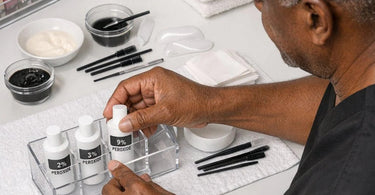
Make every service count, because nothing says "I went to beauty school for this" like a client walking out with lashes the color of a midnight sky when they asked for soft brown. We have all been there, standing over the Portable Massage Tables with a mixing brush frozen in mid-air, wondering if we accidentally grabbed the industrial strength stuff instead of the gentle formula. Let us be real for a second, bestie. Lash tinting seems simple enough—mix a little of this with a little of that, slap it on, and wait—but the moment you grab the wrong bottle of peroxide, your entire service goes from "spa day" to "science experiment gone wrong." The difference between a flawless tint that has your clients booking their next appointment before they even open their eyes and a patchy, irritated mess that requires an apology and a discount is often hiding in that unassuming little bottle of developer sitting on your back bar.
At Pure Spa Direct, we are distributors, not manufacturers, which means we get to play matchmaker between you and the best Professional Lash and Brow Tint products on the market. And honey, we have seen some things. We have seen brow artists grab 20 volume hair developer for a delicate lash tint. We have seen estheticians use crusty, expired bottles that smell like regret. We have even seen someone try to use Professional Hair Color developer on lashes, which is a hard no for so many reasons we might need a second blog post just to list them all. Today, we are going to fix all of that. Grab your Mixing Bowls and your favorite spatula, because we are diving deep into the bubbly, reactive, sometimes-confusing world of peroxide strengths for lash tinting.
Why Your Peroxide Strength Actually Matters (Spoiler: It Is Not Just Water)
Alright, let us channel our inner chemistry nerd for just a hot second. Peroxide, or developer if you want to sound fancy, is the magical potion that wakes up your tint and tells it to do its job. Without it, you are basically painting your clients' lashes with colored goop that will rinse right off. With it, you get that gorgeous, long-lasting color that makes your clients look like they were born with perfect, dark, fluttery lashes . The peroxide works by gently opening the cuticle of the lash hair, allowing the tint molecules to sneak inside and deposit that beautiful color .
But here is where it gets tricky, my friend. Lash hairs are not the same as the hair on your head. They are finer, more delicate, and located approximately two inches away from someone's eyeball. You cannot just grab any old developer and call it a day. Using a strength that is too high is like using a flamethrower to light a candle—technically effective, but you are probably going to burn the house down. Too low, and you might as well be using watercolors on a rainy day. The goal is to find that sweet spot where the color develops beautifully without irritating the client or damaging those precious lashes .
The Strength Spectrum: What Those Percentages Actually Mean
Let us break down the numbers so you can sound like the absolute expert you are when explaining this to your coworkers or your clients. Peroxide strengths for lash tinting typically range from super gentle to "absolutely not for lashes." Understanding where each one belongs will save you from a world of awkward explanations and free services.
1.8% to 2% Peroxide (6 to 7 Volume): The Gentle Baby
This is your go-to for most lash tinting services, especially if you are working with clients who have sensitive eyes or are new to tinting. Brands like ZOLA specifically recommend their 1.8% oxidant for lash tinting because it delivers effective results while being delicate enough for the sensitive eye area . The Nouveau Lashes Tint Developer also comes in a gentle 2% formula, which they market as having the lowest percentage on the market for minimal damage without compromising results . This strength is perfect for creating that natural enhancement rather than a dramatic, heavy look. It processes a bit slower, which actually gives you more control and reduces the risk of over-processing. Think of it as the cozy blanket of developers—safe, reliable, and unlikely to cause any drama.
3% Peroxide (10 Volume): The Workhorse
This is what you will find in most professional Lash and Brow Service Supplies kits, and for good reason. The Strictly Professional lash and brow tint cream developer features a 3% 10 Volume peroxide formulation that provides an easy-to-use consistency and long-lasting results . This strength is ideal for brows, which tend to have coarser hair than lashes, and for clients who want a more noticeable tint. It also works beautifully on stubborn grey brow hairs that laugh in the face of gentler formulas. However, and this is a big however, you need to be careful with this strength on lashes. It is doable, absolutely, but you need to watch your timing like a hawk and ensure you are not getting it in the client's eyes. The 3% developer opens the cuticle more aggressively, which means faster processing but also higher risk if you get distracted by your phone or that new Brow Lamination Supplies kit you have been meaning to play with .
6% Peroxide (20 Volume): The Danger Zone
Here is where we need to have a serious conversation. Six percent peroxide is for hair on the head, not for lashes. This strength is designed to lift natural pigment and deposit color in coarser hair textures . On lashes, 6% is like sending a bull into a china shop. It can cause severe irritation, chemical burns on the delicate eyelid skin, and damage to the lash hairs themselves, leading to breakage and thinning over time. I know some old-school estheticians who swear by it for stubborn lashes, but I am going to ask you to step away from the 6% bottle when it comes to lash tinting. Your clients' eyes will thank you. Save that strength for your Hair Bleaches and Lighteners services and keep it far, far away from the treatment room where you are working around eyeballs.
Cream vs. Liquid: The Texture Tango
Now that we have sorted out the strength situation, let us talk about texture because this matters almost as much as the percentage. You will find developers in both cream and liquid forms, and choosing the right one can make or break your application experience.
Cream Developers are the unsung heroes of the brow world. They are thicker, which means they stay exactly where you put them. When you are working on Lash and Brow Enhancement Services, the last thing you want is product dripping into your client's eyes or sliding down their forehead. Cream developers hold their shape, making them perfect for precise application on brows where you need to stay within the lines. They also tend to be more forgiving for beginners because they do not run. Brands like Strictly Professional offer cream developers specifically designed to blend seamlessly with tints, creating a smooth, even texture that provides excellent control .
Liquid Developers are thinner and mix more easily, but they require a much steadier hand. One unexpected sneeze or a client who decides to open their eyes at the wrong moment, and you have got a mess on your hands (and on their face). Liquid developers can be useful for full-body tinting or for very specific techniques, but for lashes and brows, most professionals prefer cream. It is simply safer, more controlled, and less likely to end in tears .
Mixing Ratios: Do Not Be a Rebel Without a Cause
Here is where so many beauty professionals go rogue, and I need you to listen to me like I am your favorite aunt giving you life advice. The mixing ratio matters. When a product says mix equal parts tint and developer, they mean it. Do not eyeball it. Do not add extra developer because you think it will make the color stronger (it will not, it will just make it runnier and less effective). Do not add less developer because you want to save product (you will end up with patchy, uneven color that fades in three days).
Most professional tints, including the beloved Refectocil Original and Intensive Tint lines, call for a 1:1 ratio. You mix a dollop of tint with an equal dollop of developer in your glass dappen dish or your Mixing Bowls, stir with a plastic spatula or wooden stick until it forms a smooth, creamy paste, and then you apply. Do not make it complicated. The chemists who formulated these products spent a lot of time and money figuring out the perfect balance. Trust them. They know what they are doing .
The Brand Compatibility Question: Can You Mix and Match?
I can already hear someone in the back asking, "But Kelly, can I use my Berrywell Cream Dye with a different brand's developer?" The short answer is: you probably should not. The longer answer is: you really, really should not.
Different brands formulate their tints and developers to work together. The pH levels, the viscosity, the activation time—all of it is designed as a system. When you mix brands, you are essentially throwing a party and inviting guests who hate each other. Sometimes it works out okay, but more often than not, you end up with inconsistent results, weird color shifts, or poor longevity. Plus, if something goes wrong and a client has a reaction, you have no idea which product caused it because you created a franken-mixture that no one tested. Stick with the system. If you are using Combinal Cream Dye, use Combinal developer. If you are using Intense Brow[n]s, use their recommended activator. Your reputation is worth more than saving a few dollars by using up that random bottle of developer you found in the back of the cabinet .
Signs Your Developer Has Gone Bad (And Why Fresh Is Best)
Let us play a game called "Is My Developer Dead?" Because using expired or compromised developer is a one-way ticket to Sad Tint City. Developer does not last forever, and using old product is one of the most common mistakes I see beauty professionals make.
Fresh developer should be clear or slightly opaque, depending on the formula, and it should have a very mild, almost clinical smell. If your developer has turned yellow, has chunks floating in it, smells strong or funky, or has been sitting on your shelf for longer than you can remember, throw it away. I do not care if the bottle is half full. I do not care if you "only use a little bit at a time." Expired developer loses its potency, which means your tint will not develop properly, leaving you with weak, patchy color that fades almost immediately. In some cases, expired developer can even cause irritation because the chemical composition has changed and become unstable .
Here is a pro tip: write the date you opened the bottle on the side with a marker. Most developers are good for about six to twelve months after opening if stored properly in a cool, dark place. Keep your Professional Cleaners and Disinfectants separate from your color products, and make it a habit to check expiration dates during your monthly inventory checks. Your future self, and your clients' lashes, will thank you.
Special Considerations: Sensitive Clients and Medical Conditions
Not every client is a candidate for lash tinting, and even those who are might need special considerations when it comes to peroxide strength. Clients with sensitive eyes, allergies, or conditions like dry eye syndrome may do better with a lower strength developer. The 1.8% to 2% range is your best friend in these situations. It is gentler, less likely to cause stinging if a tiny bit of fumes drift into the eyes, and generally better tolerated by reactive skin types .
Always, always, ALWAYS perform a patch test before any tinting service, especially with new clients or those who have had reactions in the past. Mix a small amount of tint and developer, apply it behind the client's ear or on the inner arm, and have them wait 24 to 48 hours to see if any redness, swelling, or itching develops. This is not just a best practice; it is a liability issue. Document everything. Your insurance company will love you for it .
For clients who are pregnant or nursing, many professionals choose to err on the side of caution and either skip tinting altogether or use the gentlest possible formula. Hormonal changes can make skin more reactive than usual, and the last thing you want is to be responsible for a pregnant client having an unexpected reaction. When in doubt, refer them to their healthcare provider and document that you had the conversation.
Common Tinting Fails (And How to Fix Them)
Even the best of us have bad days. Maybe you grabbed the wrong bottle, maybe you got distracted by the new Towel Steamers you just got delivered, or maybe your client flinched at exactly the wrong moment. Here is how to handle the most common peroxide-related disasters.
The Color Is Too Dark: If your client's lashes look like they belong on a Disney villain instead of a natural beauty, do not panic. You can sometimes lighten the look by applying a small amount of gentle, oil-free makeup remover or a dedicated tint remover. Be very careful not to get it in the eyes. In the future, consider using a lower strength developer or reducing your processing time.
The Color Is Patchy or Uneven: This usually happens when the developer and tint were not mixed thoroughly, or when the application was inconsistent. Unfortunately, there is not a great fix for this other than re-tinting, but you need to wait at least 24 to 48 hours before attempting another service to avoid over-processing the lashes. Use this as a learning experience and mix more thoroughly next time.
The Client's Skin Is Stained: This is more common with brow tinting than lash tinting, but it can happen. A little bit of Pre and Post Waxing Products or an oil-based cleanser can sometimes lift the excess stain. For stubborn stains, a gentle exfoliant designed for the face can help. Warn the client that the skin stain will fade naturally over a few days and recommend they avoid harsh scrubbing .
The Client Reports Stinging or Burning: Remove the product immediately. Flush the eyes with cool, clean water or saline solution if available. Do not rub. If the irritation persists, recommend they see a doctor. This is why patch tests and careful application are so important. It is also why using the correct peroxide strength matters—too strong a formula can cause chemical burns on the delicate eyelid skin.
Building Your Perfect Tinting Kit
Now that you are basically a peroxide expert, let us talk about what you need in your treatment room to offer flawless tinting services every single time. Start with a range of Professional Lash and Brow Tint shades so you can customize the color for each client. You will want a selection of developers in different strengths, though for most lash services, the 1.8% to 3% range will cover your needs.
Do not forget your tools! You will need Mixing Bowls (glass or stainless steel are easiest to clean), plastic spatulas or wooden sticks for mixing, and Applicators and Spatulas for precise application. Professional Cotton Products are essential for cleanup, and protective eye pads or Hygienic Table Paper cut into small strips can help protect the under-eye area during processing.
For the ultimate professional setup, consider adding a Magnifying Light to your treatment station. Being able to see exactly what you are doing when working with those tiny lash hairs makes a huge difference in application precision. And please, for the love of all that is holy, have Protective Gloves and Masks on hand. You are working with chemicals near someone's eyes. Protect yourself and protect your client.
Aftercare: Setting Your Clients Up for Success
Your job does not end when the timer goes off and you wipe away the tint. What your clients do in the 24 to 48 hours after their service has a huge impact on how long that beautiful color lasts. Send them home with clear instructions: no oil-based makeup removers near the eyes, no hot tubs or steam rooms, no rubbing or picking at the lashes. Oil is the enemy of tinted lashes because it can break down the color molecules and cause them to fade faster .
Recommend they use gentle, oil-free cleansers around the eye area and avoid waterproof mascara (which requires oil-based removers to take off). If they are serious about maintaining their tint, consider retailing a gentle, lash-safe cleanser or a tint-sealing top coat. Not only does this help your clients get better results, but it also puts a little extra cash in your pocket. Win-win.
Speaking of retail, do not be shy about upselling your tinting services. Lash tints typically last three to four weeks, which means loyal clients will be back every month for a refresh. Set up a reminder system to text them when it is time to rebook. Offer package deals—buy three tints, get the fourth free. Build those relationships and watch your repeat business grow.
Ready to Level Up Your Tinting Game?
You have made it to the end, which means you are officially ready to stop guessing and start mastering your lash tinting services. Remember, the right peroxide strength is not just about getting good color—it is about keeping your clients safe, comfortable, and excited to come back. Stick with gentle strengths for lashes, save the stronger stuff for brows and hair, and never, ever mix brands unless you enjoy playing chemical roulette.
At Pure Spa Direct, we have everything you need to build the perfect tinting setup. From Refectocil Original to Intensive Tint to Berrywell Cream Dye, we carry the brands you know and trust. Stock up on Mixing Bowls, Applicators, and all the Lash and Brow Service Supplies you need to run a flawless treatment room. And hey, while you are shopping, maybe grab that Towel Steamer you have been eyeing. You deserve it.
Now go forth and tint those lashes like the absolute professional you are. And remember: when in doubt, go gentle. Your clients' eyeballs will thank you.
)