
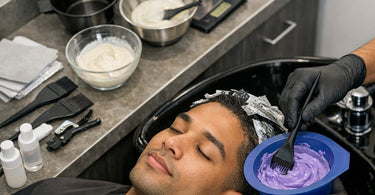
Because good results aren't good enough when you are aiming for hair color perfection that makes your clients want to run their fingers through their locks all day long. Let's be honest, we have all seen "The Hair Petter"—that client who leaves your chair and cannot stop touching their newly colored strands because it feels like pure silk ribbon [citation:2]. That tactile bliss is the goal, ladies! But here is the dirty little secret no one talks about: that masterpiece starts not with the expensive tube of color or your perfectly executed balayage technique, but with the humble bowl you mix it in. Grab your professional hair salon and barber shop supplies and let us dive into the sudsy, sometimes sticky, world of tint bowls.
Choosing the right vessel for your professional hair color is like choosing the right wine glass—technically, anything cylindrical works, but we both know the flavor (and in our case, the chemical reaction) is different. Whether you are a veteran colorist or just starting out in a bustling salon and barber furniture setup, the bowl matters. A lot. Today, we are going to settle the debate, laugh at our past mistakes (who hasn't used a random Tupperware in a pinch?), and make sure your color application is as flawless as your social media feed.
The Great Material Debate: Plastic, Glass, Metal, or Silicone?
Here is where we throw down the gauntlet. You walk into the backroom, and you have options. You see that shiny metal bowl from the kitchen? Walk away. Slowly. Do not make eye contact. The internet is full of mixed messages, but science is science. The general rule of thumb is that hair color should not be mixed in a metal bowl because metal can react with the chemicals in the dye, leading to oxidation or degradation that causes uneven color results [citation:7][citation:9]. Unless you are going for that "muddy puddle chic" look, avoid copper, aluminum, and reactive metals. Let's break down the pros and cons of the usual suspects found in your professional salon equipment inventory.
Plastic Bowls: These are the workhorses of the industry. Lightweight, cheap, and everywhere. High-density polyethylene (HDPE) or polypropylene (PP) plastics are non-porous, meaning they won't absorb the dye like a sponge, and they are generally resistant to corrosion [citation:8]. However, be warned: cheap, crappy plastic stains faster than a toddler with a grape popsicle. You need BPA-free, professional-grade plastic that can handle the chemical warfare of hair bleaches and lighteners. The downside? They get scratched, and scratches hide bacteria (ew).
Glass Bowls: Glass is classy. It is non-porous, easy to clean, and you can see the true color of your mixture perfectly. However, we are in a salon, not a chemistry lab at a university. Glass bowls are heavy, and they break. Dropping a glass bowl full of dark brown dye on a white tile floor is a rite of passage for some stylists, but it is one we would rather you skip. Save the glass for your morning coffee.
Metal (Stainless Steel): This is where it gets controversial. Many sources scream that metal is the devil because it oxidizes the color [citation:7]. However, some high-end Spa Masters grade stainless steel is non-reactive if it is surgical grade [citation:5]. The issue is that most standard metal bowls contain copper or nickel alloys. Unless the bowl is explicitly labeled as non-reactive surgical stainless steel, do not risk it. Why gamble a $200 color service on a $5 bowl from the dollar store?
Silicone Bowls: Welcome to the future, ladies. Silicone bowls are flexible, non-stick, and heat-resistant. You can mix your color, apply it, and then pop the bowl inside out to get every last drop of product out—no waste! They are also incredibly easy to clean and store because they collapse flat. If you are an eco-conscious salon looking to reduce waste, silicone is your new best friend [citation:1][citation:9].
Design Features: Handles, Spouts, and Non-Slip Bases (Oh My!)
Once you have picked your material, you need to look at the ergonomics. You are a professional, not a contortionist. If you are constantly spilling Wella color on your brand new salon and barber apparel, you need a better bowl design.
The Handle: A bowl with an ergonomic handle changes the game. Whether you are holding a foiling board or holding a section of hair, you need to be able to hold your mixing bowl securely. Look for a handle that fits comfortably in your palm [citation:8]. Farmagan and other Italian brands excel at this, offering bowls that feel like an extension of your hand.
The Pour Spout: Nobody likes a drippy mess. A well-designed pour spout allows you to transfer mixed color into bottles or touch up specific sections without dribbling color all over the client's gown or your professional cotton supplies. If you are using a bowl without a spout, you are essentially asking for chaos.
The Non-Slip Base: We have all had that moment where the bowl slides across the counter during a vigorous whisking session. A silicone ring on the base or a textured bottom keeps your bowl exactly where you left it. Stability is safety, and safety means fewer ruined capes.
Sizing It Up: Why One Size Does Not Fit All
You wouldn't use a sledgehammer to hang a picture frame, so do not use a jumbo bowl for a root touch-up. Sizing matters for efficiency and product preservation.
Small Bowls (2-4 oz): Perfect for lash and brow service supplies or toning. If you are doing a quick gloss or a lash tint, a massive bowl is just awkward. Small bowls are also great for brow lamination supplies and mixing tiny amounts of color for corrective work.
Medium Bowls (4-8 oz): The Goldilocks of the salon world. This is what you reach for for 90% of your standard root retouches and full-head color applications. It holds enough product to work quickly but is small enough to hold comfortably while you paint.
Large Bowls (8+ oz): Reserved for the mermaids and the Rapunzels. When you have a client with hair down to their waist who wants a global bleach and tone, you need a big bowl. You also need a strong wrist. Large bowls are also ideal for mixing bulk amounts of professional stripless hard wax if you are in a pinch, though we prefer you use the right tool for that job!
The TWWisk Revolution: Mixing Without the Mess
Let us talk about the elephant in the room: arm fatigue. Mixing bleach and color by hand with a tiny brush is a workout. Enter the TWWisk. This electric hair color mixer is a game-changer for busy salons [citation:5]. It attaches to silicone mixing bowls and whips your color to the perfect consistency in seconds.
Why does this matter for bowl selection? Because if you buy the TWWisk combo, it comes with specific tall-sided silicone bowls designed to prevent splashing. This saves you money on product (it expands the color!) and saves your wrist from carpal tunnel. If you are doing high-volume professional hair color services, an electric mixer is the best investment you will make this year.
Disposable vs. Reusable: The Great Eco Debate
We live in a world of convenience, but we also live in a world with landfills. Disposable plastic bowls are sanitary—you use them once and toss them. They are great for vivid colors that stain everything (looking at you, direct dyes), but the waste adds up [citation:1].
Reusable bowls (stainless steel or high-quality plastic) are better for the environment and your bottom line. Yes, you have to wash them, but that is why you have an apprentice or a great professional cleaner and disinfectant system. A good reusable bowl will last for years, saving you hundreds of dollars over time.
Pro Tip: If you use reusable plastic bowls, have a set for "dark colors" and a set for "blondes/lighteners." Once a bowl is stained dark, it can be hard to see if you have fully rinsed out bleach residue, which can cause hotspots in your next lightening service.
Maintenance: Keeping Your Bowls Fresh
A stained bowl looks unprofessional. If a client sees a crusty, rainbow-stained bowl at your station, they might question your hygiene standards. Clean your bowls immediately after use. Do not let the color dry. For plastic bowls that are stained, a quick spray of a little bit of hydrogen peroxide or a color remover spray can lift the stains right out.
Store them properly. Stacking them neatly on a shelf or hanging them on hooks saves space. Don't just toss them in a drawer with your professional shears, clippers, and trimmers where they can get damaged.
Conclusion: Bowl Over Your Clients
At the end of the day, mixing bowls are the unsung heroes of the salon. They don't get the glory of the hairdryer or the prestige of the scissors, but without them, you are just a person with a tube of color and a dream. Whether you go for the eco-friendly silicone, the durable plastic, or the high-end non-reactive metal, choose wisely.
Your talent deserves tools that work with you, not against you. So, audit your backbar right now. Throw away that scratched-up, stained bowl from beauty school. You have graduated. Treat yourself to a fresh set of bowls from Pure Spa Direct. Your wrists, your sanity, and your "Hair Petter" clients will thank you.
Now go forth and mix something beautiful!
)