
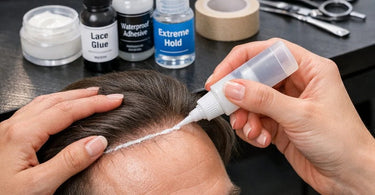
Deliver results that make a difference... especially when it comes to keeping hair firmly in place on a windy Tuesday morning. Let's be real, there is nothing quite as awkward as watching a client's meticulously styled hairpiece attempt to make a break for freedom mid-conversation. As a professional in the Salon, Barber Shop, or Spa environment, you are the last line of defense against a toupee tragedy. But with a shelf full of options staring back at you—from spirit gum to high-tech polymers—how do you choose the \“right\” sticky stuff? That is the million-dollar question every pro needs answered to keep clients looking flawless and feeling confident. We are about to dive deep into the world of hairpiece adhesives, breaking down the good, the bad, and the sticky so you can bond like a boss.
Whether you are dealing with a delicate lace front or a heavy-duty poly unit, the glue you choose makes or breaks the style (and potentially your client's social life). We have all been there: that split second of panic when the hairline lifts during a hug. That is why at Pure Spa Direct, we believe knowledge is power, and the right adhesive is your superpower. So, grab a coffee, put down that questionable bottle of craft glue, and lets get into the science of security.
The Great Debate: Tape vs. Liquid Glue
Before we get into the specifics of Professional Hair Pieces, we have to address the age-old rivalry: tape versus liquid. Some pros swear by the precision of a brush-on liquid, while others love the instant gratification of a pre-cut strip. The truth? Both have their place in your treatment room .
Hair system tape is like the reliable friend who always shows up on time. It is double-sided, usually comes in rolls or pre-cut contours, and offers a solid hold without the messy application. It is fantastic for clients who are always on the go and need a quick, sweat-proof solution for a few days. However, tape can sometimes be visible on ultra-fine lace bases, which is where liquid adhesive swoops in to save the day .
Liquid adhesives, or hair system glues, offer a seamless, \“invisible\” bond that is unmatched for creating a natural-looking hairline. Applied with a brush, these liquids seep into the lace or grip the poly edge like a dream. The downside? They require a bit more patience during application and curing time. If your client is impatient (and let's face it, many of them are), you might need to weigh convenience against aesthetics.
Water-Based vs. Solvent-Based: The Chemistry of Hold
When you start reading labels, you will notice most professional glues fall into two categories: water-based or solvent-based (sometimes called hard bond). Water-based adhesives, like the famous Ghost Bond formulas, are generally the VIPs of the Premium Hair Care world. They are safe for sensitive skin because they don't contain harsh chemicals that make your eyes water. They cure to a clear, flexible finish that moves with the scalp, and removal is a breeze with a little citrus-based solvent or alcohol .
Solvent-based glues, or hard bonds, are the heavy lifters. Think of them as the construction workers of the hair world. They are incredibly strong, waterproof, and designed to last for weeks. However, power comes with a price. These glues often contain cyanoacrylate (yes, the stuff in superglue), which can be harsh on the skin and should rarely be applied directly to the scalp without a protective base or barrier. They are fantastic for very active clients, but as a Professional Salon Equipment expert, you need to be the gatekeeper and ensure they are used safely .
