
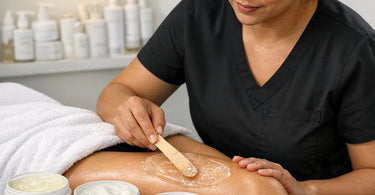
Do more, stress less... because honestly, nothing kills the zen vibe of a luxurious body contouring treatment quite like a gel that decides to dribble off a client's thigh and onto your brand new spa apparel. We've all been there, right? You mix the perfect cocktail of active ingredients, fire up your Endermologie machine, and suddenly you're in a slip-and-slide situation that OSHA definitely didn't cover in the handbook. As the resident product nerd at Pure Spa Direct (I'm Harper, and I overthink things so you don't have to), I get this question daily: "Why does my cellulite gel feel like toothpaste one day and water the next?" The secret sauce isn't just the actives—it's the viscosity. Getting the right thickness (or thinness) for the specific body contouring modality you are using is the difference between a miracle worker and a messy disaster. Let's thin—er, think—it through together.
Before we dive into the goopy details, let’s define what we are actually working with. Body contouring gels are not your average lotion. They are high-performance vehicles designed to deliver ingredients like caffeine, retinol, and various fancy plant extracts deep into the dermis to tackle stubborn fat, hydrate skin, and improve elasticity . However, these gels are almost always used in conjunction with specific equipment, whether it's good old-fashioned manual massage, high-tech Ultrasonic rollers, Radio Frequency (RF) Machines, or vacuum therapy. The tool dictates the lube... er, the gel.
Understanding the Viscosity Spectrum: From Maple Syrup to Water
In the beauty world, viscosity is basically how resistant a liquid is to flowing. High viscosity means thick and slow (think honey); low viscosity means thin and runny (think alcohol). For body contouring, we generally play in the middle ranges. A study on professional contouring gels shows formulations often hit around 16,100 cps (centipoise—that's the fancy science word for gooeyness) to maintain a pumpable but stable consistency . But why does this matter? If you use a thick gel with a high-speed motorized brush, the brush stalls. If you use a thin liquid with a massage stone, it dries out before the lymphatic drainage even begins. It's a texture tightrope.
The Low Viscosity Life: Spraying and Sonophoresis
Let's start with the thin stuff. Low-viscosity gels (imagine a thick serum or aloe vera juice) are your best friends when using ultrasonic skin scrubbers or spray-on applicators. These modalities rely on the gel being fluid enough to travel through a machine's tubing or to vibrate at high frequencies without creating friction burns. A product like a thermoactive gel needs to spread quickly to activate that warm/cool sensation without pooling . If you are doing a full-leg treatment using a Vacuum and Spray Machine, a low viscosity gel is non-negotiable; it must atomize properly. Look for formulations that are "pumpable" and absorb fast, allowing you to get the client dressed without feeling like they are wearing a sticky wetsuit .
Pro Tip: Low viscosity gels are also brilliant for Pressotherapy boots. The thinner texture ensures the air pressure moves the product evenly across the skin rather than bunching up behind the knee.
The Medium Viscosity Magic: Mechanical Massage and Rollers
This is the goldilocks zone. Medium viscosity gels (think pudding or thick hair conditioner) are the workhorses of the spa. They are designed for mechanical massage devices like Endermologie Machines, EMS (Electronic Muscle Stimulation) rollers, and manual contouring techniques. Why? Because these treatments require slip. The roller heads or massage gloves need to glide over the skin's surface without dragging (ouch) but must not be so slippery that the therapist loses mechanical grip on the adipose tissue.
When I look for a contouring gel for my massage table, I want a creamy-gel hybrid. The Clarins Body Fit gel, for example, is famous for its "Cryo-Effect" texture that stays put while you work . It provides that instant lifting sensation because the viscosity holds the active ingredients against the skin while you perform the kneading motions required to break up cellulite dimples . This texture is typically achieved using thickeners like Carbopol or acrylates, which give you that satisfying "bouncy" feel without being greasy .
The High Viscosity Champion: Heat, Wraps, and Vacuum Therapy
Now we enter the "construction zone" of gels. High viscosity is where things get serious. Think of a thick gel mask or a firm gel that holds its shape on a spoon. This texture is essential for two specific treatments: Body Wraps and Vacuum Therapy (like Wood Therapy).
If you are applying a gel and then wrapping a client in Body Wrap heating Blankets or plastic wrap, you need a high-viscosity product. If the gel is too thin, gravity wins. It will run down the love handles and pool in the lower back, leaving the upper abdomen dry and the client very annoyed. A high-viscosity contouring gel acts like a mask, sitting exactly where you slather it. Furthermore, when using vacuum cups or Cupping therapy, the gel must be thick enough to create an airtight seal. The vacuum needs something to suction against; runny oil just leaks air and breaks the suction. You need a gel with substantial body—something that feels like a hybrid between a wax and a jelly.
Ingredient Spotlight: Why Caffeine and Algae Change the Game
Of course, viscosity isn't just about feel; it's about delivery. Different viscosities carry different ingredients better. For high-tech treatments like Galvanic machines (which use a current to push ions into the skin), you need a water-based gel with specific conductive properties. Products like the ageLOC Body Shaping Gel are formulated specifically to work with Galvanic Machines, using ingredients like Theobromine (from cocoa) and Laminaria Digitata (an algae) to increase fat breakdown while the current does its job .
For manual massage targeting cellulite, I love gels featuring SEALULISS® or Capsaicin (chili extract). These thermoactive ingredients create a heating or cooling sensation that boosts microcirculation . However, note that these actives can sometimes sting if the viscosity is too thin and the gel spreads into sensitive areas it shouldn't visit.
Matching the Machine to the Magic
Let's make a cheat sheet for your back bar. When you stock up at Pure Spa Direct, keep this guide handy:
- For Ultrasonic Machines (High Frequency vibration): You need a Low Viscosity gel. It must be water-thin to conduct the sound waves efficiently. Thick gels block the waves, rendering the $3,000 machine useless.
- For Endermologie / Mechanical Rollers: Medium Viscosity is your ride-or-die. It provides the slip for the rollers to glide without tugging the skin.
- For Pressotherapy / Air Compression: Low to Medium Viscosity. Needs to absorb quickly so the client doesn't feel wet inside the giant sausage-casing boots.
- For Radio Frequency (RF) Machines (Heat-based): Medium to High Viscosity. The gel acts as a coupling agent and a heat sink. If it is too thin, the RF energy creates hot spots that can burn the client.
- For Cupping / Vacuum Therapy (Wood therapy): High Viscosity only! You need that seal, baby.
- For Manual Massage / Lymphatic Drainage: Medium Viscosity cream-gel. You want the grip to move the skin and the fluidity to not chafe.
Consistency is Key for Retail, Too
Don't forget about your retail shelf! Your clients fall in love with the feel of the treatment. If you use a beautiful, thick, luxurious cream-gel on your Portable Massage Tables during the service, they will want to buy it. But consumer behavior is different than professional use. At home, they aren't using a vacuum machine. They are using their hands. Therefore, retail products usually need to be a medium-to-low viscosity that spreads easily without a motor. The Clarins Body Fit gel is a perfect example of a professional-grade product that transitions seamlessly to home use because the viscosity feels like self-care, not hard labor .
So, next time you are filling your waxing cart or organizing your spa tools, give your gels a little shake. Watch how they move. Does it suit the tool you are using? If your vacuum cup is slipping, go thicker. If your spray gun is clogging, go thinner. Mastering this sticky science elevates you from a service provider to a true body contouring artist. Now, go forth and get sticky (strategically)!
Ready to overhaul your treatment menu? Pure Spa Direct is your one-stop shop for all the Massage Oils, Lotions, and Creams and high-tech gadgets you need to make your Spa Body Treatments truly world-class. Whether you need ItalWax for your hair removal services or the latest in Hydrodermabrasion for the face, we've got the gear—and the gels—to make it happen.
