
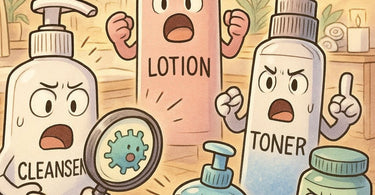
Quality drives loyalty with this tool... and in the beauty industry, nothing builds trust faster than demonstrating you're an expert on both safety and science. Let's talk about the skin microbiome, your clients' invisible protective shield that's been getting a lot of buzz—and a lot of misinformation. As a pro, you know sanitation is non-negotiable, but the game has evolved. It's no longer just about annihilating every germ in sight; it's about smart sanitation that protects both your clients' health and their skin's natural balance. The good news? Effective sanitation and a healthy microbiome aren't opposing goals. By separating the trendy myths from the solid evidence, you can elevate your service quality, boost client confidence, and make sure your hygiene practices are as sophisticated as your styling skills.
Think of the skin microbiome as a bustling, invisible metropolis, home to billions of beneficial bacteria, fungi, and viruses that work together to protect the skin. This ecosystem acts as a primary defense against infections, helps regulate immune responses, and is crucial for maintaining the skin's barrier integrity. When this community is balanced, it helps keep the skin healthy and resilient. However, aggressive or misguided sanitation practices can disrupt this delicate balance, a state known as dysbiosis, which can leave the skin more vulnerable to issues. Your role as a professional is to be the guardian of this invisible city, ensuring your sanitation protocols defend against harmful pathogens without unnecessarily evicting the beneficial residents.
Myth vs. Evidence: The Professional's Guide
Let's crack open the myths that are circulating in the break room and see what the science actually says.
Myth 1: All Bacteria Are Bad and Must Be Eliminated
The Evidence: This is perhaps the biggest misconception. The truth is, many bacteria are your skin's best friends. Commensal bacteria, like certain strains of Staphylococcus epidermidis, actually produce antimicrobial peptides that help fight off pathogenic bugs like Staphylococcus aureus. An aggressive cleanser that strips everything away is like using a bulldozer for weeding—it gets the job done but destroys the whole garden in the process. The goal of modern sanitation isn't a sterile surface, but a balanced one.
Myth 2: Probiotic "Live" Skincare is the Ultimate Solution for Microbiome Balance
The Evidence: While the idea of smearing live probiotics on the skin sounds great in theory, the reality is more complicated. Most topical products face a major hurdle: preservatives. These necessary ingredients keep products safe from contamination but also prevent most live bacteria from surviving in the bottle. Instead, the real innovation is in prebiotics and postbiotics. Prebiotics are essentially food for the good bacteria already on the skin, helping them thrive. Postbiotics are the beneficial compounds that these bacteria produce, which can be formulated into products to soothe and support the skin barrier directly.
Myth 3: Natural Ingredients Are Inherently Better for the Microbiome
The Evidence: Don't let "clean" marketing fool you. "Natural" doesn't automatically mean microbiome-friendly. Some essential oils, while natural, can be highly disruptive to the skin's microbial community. Conversely, many safe, synthetic ingredients are superstars for skin health. Humectants like hyaluronic acid provide essential moisture that good bacteria need, and other synthetic compounds can be excellent nutrient sources. Judge an ingredient by its function, not its origin.
Myth 4: The Microbiome is the Same Everywhere on the Body
The Evidence: Your client's forehead is a different world compared to their forearm. The skin microbiome varies dramatically across different body sites. Sebaceous (oily) areas like the forehead are dominated by species like Cutibacterium, while dry areas host a more diverse mix of bacteria. This is crucial for service-specific sanitation. The tools and techniques you use for a dermaplaning facial should be tailored for the face's unique environment, while the protocol for a foot callus treatment should address the different microbial landscape of the feet.
Building a Microbiome-Smart Sanitation Protocol
So, how do you translate this evidence into daily practice? Here’s your action plan.
1. Choose Your Weapons Wisely: Disinfectants and Sterilizers. Not all disinfectants are created equal. You need EPA-registered disinfectants like Barbicide® that are proven effective against pathogens. For tools that contact skin, nails, or hair, sterilization using an autoclave is the gold standard. For tools that can't withstand heat, a high-quality UV sterilizer is an excellent chemical-free option. The key is to use the right level of power for the job without overdoing it on surfaces where it's not needed.
2. Embrace the Gentle Giants. The market is responding with a new generation of effective yet gentle disinfectants. Hypochlorous acid (HOCL) is a prime example. It's a powerful disinfectant that is also non-irritating and safe for the skin's microbial balance, making it perfect for use as a facial mist or tool spray. Stocking up on these kinds of professional cleaners and disinfectants shows you're ahead of the curve.
3. Double Down on the Basics (They Work!). Never underestimate the power of foundational hygiene. Thorough handwashing for at least 30 seconds before and after each client is non-negotiable. Using single-use items like compressed sponges and disposable pedicure bowl liners eliminates cross-contamination entirely. And a strict "one client, one set of tools" policy, sterilized in between, is the bedrock of professional safety.
4. Educate Your Clients and Your Team. Turn your expertise into a marketing advantage. Display your sanitation protocols in the salon and talk about them during services. When a client sees you replacing the hygienic table paper on your portable massage table or breaking out a new set of applicators and spatulas, it builds immense trust. Furthermore, regular training for your team ensures everyone is not just compliant, but truly understands the "why" behind the protocol.
The Bottom Line for Your Bottom Line
Adopting a microbiome-smart approach to sanitation isn't just a trend; it's the future of professional beauty. It represents a deeper understanding of skin health that goes beyond the surface. By implementing evidence-based practices, you do more than just meet safety standards—you elevate your entire service. You protect your clients' long-term skin health, build unparalleled trust, and position your salon as a true leader in the industry. Now that's a beautiful result for everyone.
