
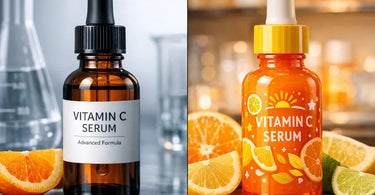
Simplify brilliance with this pro pick... because let's be honest, trying to explain to a client why the "miracle" serum they bought at the drugstore isn't fading their dark spots is a conversation we'd all love to avoid. The difference between professional and retail vitamin C serum potency isn't just about price—it's the gap between a product that performs in a controlled clinical study and one that might turn brown in your client's sunny bathroom before it ever gets a chance to work. You are the expert they trust, and stocking your treatment room and retail shelf with truly effective, professional-grade formulations is what transforms a simple service into a results-driven protocol that keeps them coming back.
Think of vitamin C as the superstar quarterback of skincare antioxidants: it tackles free radicals, defends against UV damage, boosts collagen, and brightens tone. But this MVP is notoriously unstable. In its pure form (L-ascorbic acid), it begins to break down the moment it's exposed to light, air, or heat. A degraded serum doesn't just become ineffective; it can actually generate free radicals, causing the very damage you're trying to prevent. This is the core battle that separates professional from retail—and it's fought on the fronts of science, packaging, and concentration.
The Great Stabilization Showdown: Science vs. Marketing
When a cosmetic chemist formulates a professional serum, their first mission is to stabilize the volatile vitamin C molecule. This often involves creating a synergistic "cocktail." The most famous example is the patented combination of 15% L-ascorbic acid with vitamin E and ferulic acid, which research shows can increase antioxidant protection eightfold and provides photoprotection when used under sunscreen. These aren't just thrown in for the ingredients list; they are precisely dosed to protect and enhance the vitamin C's efficacy during its shelf life and on the skin.
Retail serums, constrained by budget and mass-market appeal, often rely on more stable vitamin C *derivatives*, like sodium ascorbyl phosphate or tetrahexyldecyl ascorbate (THD). While gentler and good for sensitive skin, these derivatives are "inactive" forms that must be converted by the skin into active vitamin C, a process that can make a 10% derivative serum behave more like a 3-4% pure serum in terms of potency. Some high-end retail brands use these derivatives well, but the focus for professional lines is delivering the most direct, potent, and proven active form.
The pH level is another secret weapon. For L-ascorbic acid to penetrate the skin effectively, it needs a low pH (under 3.5). This acidity can be irritating if not formulated correctly. Professional brands engineer their formulas to maintain this effective yet potentially irritating pH with precision, often buffering it with other ingredients for tolerance. Cheaper retail products might avoid a low pH altogether to minimize irritation complaints, sacrificing significant potency in the process.
Packaging: The Invisible Guardian of Potency
Here's a fun (and slightly horrifying) experiment: look at a retail vitamin C serum. Is it in a clear bottle with a dropper? If so, it's essentially a decorative item after a few weeks. Professional packaging is designed as a stability system. You'll find dark, opaque amber glass or completely opaque bottles that block light. Even better are airtight, airless pump systems that prevent oxygen from ever touching the formula. Every time a client uses a dropper, air floods the bottle, accelerating oxidation. An airless pump dispenses the product without letting any air back in.
This isn't about aesthetics; it's about delivering what's on the label. A third-party study found that even some clinical skincare brands in amber jars lost nearly half their L-ascorbic acid potency within six weeks. Imagine the degradation in a clear bottle on a warm store shelf! When you sell a professional serum with superior packaging, you're selling a product that will remain potent and effective from the first pump to the last, ensuring your client sees the results you promised during their advanced facial treatment.
Concentration & Quality Control: The Numbers Game
More isn't always better, but *enough* is absolutely essential. Dermatologists recommend an effective concentration of L-ascorbic acid between 10% and 20%. Below 10%, the benefits drop off significantly. Above 20%, you get no added benefit, only a steep rise in potential irritation. Professional lines typically target this sweet spot, clearly stating the percentage of *active* vitamin C.
Retail products might boast "vitamin C" on the front but use a minuscule amount of a derivative, or bury the active form low on the ingredients list. Furthermore, professional "medical-grade" or "clinical" skincare is held to higher manufacturing standards, with rigorous quality control to ensure every batch has the exact concentration and purity intended. This consistency is non-negotiable when you're incorporating a product into professional services like dermaplaning or microdermabrasion, where you need predictable, reliable performance.
The Professional's Advantage: Integrating Potency into Profitable Services
This isn't just product knowledge—it's business strategy. Understanding this potency gap allows you to:
1. Build Authority & Trust: When a client asks about vitamin C, you can explain *why* the serum you use in their treatment or recommend for home care is different. This educates them and justifies the investment, moving the conversation away from price and towards value and results.
2. Create Effective Treatment Protocols: Pair a potent professional vitamin C serum with your facial steamer, galvanic machine, or LED light therapy. The prepped skin will absorb the active ingredients more deeply, amplifying the results of both the device and the serum. Check out our advanced spa equipment to build these powerful protocols.
3. Boost Retail Sales with Confidence: You can stand behind the professional brands you carry from our trusted brand collections, like Tuel Skincare or Murad. When you sell a client a take-home serum, you know it will work in tandem with their in-spa treatments, creating a seamless and successful homecare regimen that fosters loyalty.
4. Identify a Dud: Teach your clients the simple trick: if their serum turns a deep yellow or brown, it has oxidized and should be tossed. That "hot dog water" smell some people mention? That's often the ferulic acid stabilizer, but a profoundly bad or changed odor can also signal degradation. This proactive advice further positions you as their skincare guide.
Stock Your Arsenal with Pure Spa Direct
Your expertise deserves tools that match. At Pure Spa Direct, we supply the professional-grade products that differentiate your services. From the precise tools you use to apply serums to the equipment and furniture that creates your calming environment, we have everything you need to build a practice based on genuine results.
Explore our curated premium skincare collection for professional vitamin C serums and other treatment powerhouses. Equip your treatment room with hygienic implements and a comfortable massage table. Ensure every detail, down to the warm towel on their face, speaks to your professional standard.
Remember, in a world filled with retail skincare hype, your knowledge is the most valuable product you offer. By choosing and using professionally potent formulations, you transform that knowledge into visible, lasting results for your clients—and that's the most beautiful business model of all.
