
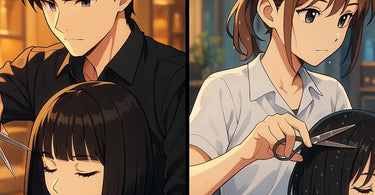
Every detail counts in our business, and the decision between a dry cut and a wet cut is a perfect example. It's more than a simple choice of damp or dry hair—it's a fundamental philosophy that can transform your client's look and elevate your reputation as a stylist. One path offers control and crisp, classic lines, while the other champions customization and honors natural texture. Deciding which route to take isn't about picking a favorite; it's about becoming a strategic expert who can match the perfect technique to every head of hair that graces your salon chair. Let's demystify the "dry" versus "wet" debate and ensure you're equipped to deliver flawless results for every client, every time.
Think of it this way: water is the ultimate illusionist in our world. It can stretch a curl, flatten a wave, and make fine hair look deceivingly full. The philosophy you choose determines whether you're cutting the illusion or the reality. By understanding the core principles of each method, you unlock the ability to create haircuts that not only look stunning in the salon but, more importantly, are a joy for your client to style and live with every single day. Mastering both is the mark of a true professional, and it starts with understanding the "why" behind the "when."
The Wet Cut: The Foundation of Precision
The wet cut is the classic, time-honored technique most stylists learn first. In this method, hair is shampooed, towel-dried, and cut while still damp. Water acts as a natural weighting agent, causing strands to clump together and lay smooth and straight. This creates a uniform, controlled canvas that is ideal for executing clean, geometric lines and structured shapes.
Wet cutting is your go-to powerhouse for creating sharp bobs, blunt one-length cuts, or any style where precision and even distribution are non-negotiable. It's exceptionally effective for managing thick, coarse, or unruly hair, as the moisture helps stretch and tame the strands, allowing for controlled shaping before the final dry. Furthermore, it is often the necessary foundation when performing chemical services like perms or relaxers, where uniform length is critical for an even result.
For clients with fine, straight hair, a wet cut can be magical. It allows you to create a cut that maximizes the hair's density and thickness, resulting in a polished, substantial look. However, a word of caution: wet hair is more fragile and prone to damage. Always handle damp strands with care, using sharp, professional-grade shears to ensure a clean cut without tugging or shredding the ends. And remember the golden rule of wet cutting: hair shrinks as it dries. Always account for that final transformation to avoid any "it was perfect until it dried!" surprises.
The Dry Cut: Sculpting the Authentic Texture
If wet cutting is about precision on a controlled canvas, dry cutting is about artistry and customization on a living one. Pioneered by stylists like the late John Sahag, this technique involves cutting hair in its completely dry, natural state. Forget the illusion—here, you work with the absolute truth of the hair's behavior, texture, and movement.
The primary superpower of a dry cut is its ability to honor and enhance natural texture. This makes it the unequivocal champion for curly, wavy, coily, and highly textured hair. When you cut a curl dry, you see its exact shape, spring, and how it interacts with its neighbors. This allows you to sculpt each curl individually, removing bulk strategically and creating layers that give the curl pattern definition and bounce, completely eliminating the "shrinkage surprise" of a wet cut. The result is a cut that looks phenomenal from the moment the client leaves and is incredibly easy for them to maintain.
But the benefits don't stop at curls. Dry cutting is also a secret weapon for fine or thinning hair. Wet hair can appear longer and more weighed down, making it easy to over-cut and lose precious volume. Cutting it dry lets you see the true density and natural lift, allowing you to create texturizing interior layers that build body and movement without sacrificing length. It's also the ultimate technique for detail work: perfecting bang shapes, refining face-framing layers, or adding lived-in texture to a bob. Since you see the immediate result of every snip, there's no guesswork, leading to a highly personalized and accurate finish.
The Ultimate Decision Tree: When to Use Which
Now that we understand the philosophies, let's get practical. How do you decide in the moment? Use this simple guide based on hair type and desired outcome:
Choose a Wet Cut When:
- The client has straight or fine hair and wants a classic, structured style like a blunt bob, lob, or one-length cut.
- The hair is thick, coarse, or unruly and needs to be stretched and tamed for even cutting.
- You are performing a chemical service (perm, relaxer) that requires uniform length.
- The goal is crisp, geometric lines and a polished, sleek finish.
Choose a Dry Cut When:
- The client has curly, wavy, coily, or highly textured hair.
- The client has fine or thinning hair where preserving volume and creating movement is key.
- The desired style is textured, layered, or "lived-in" (e.g., shags, modern shags, feathered layers).
- You need to perform detailed finishing work on bangs, face-framing, or to remove bulk without over-thinning.
- The client prefers to air-dry their hair and wants a cut that looks great with minimal styling effort.
The Hybrid Approach: The Best of Both Worlds
You don't always have to choose one camp. Many of the most masterful haircuts are created using a strategic hybrid approach. This blend allows you to leverage the strengths of both techniques within a single service.
A common and effective method is to start with a wet cut to establish the overall shape, length, and baseline structure. This is especially useful for removing significant length or creating the foundational outline of a layered cut. Once the hair is blown dry, you then switch to dry cutting techniques to personalize, customize, and add detail. This is when you would sculpt the curls, texturize the ends for movement, refine the layers around the face, or add those soft, diffused edges that make a haircut look modern and effortless.
This combination is particularly brilliant for long layered styles, curly cuts where you want to remove initial weight wet and then shape dry, or for any client who wants a precise shape that also has softness and movement. It's the hallmark of a stylist who is fluent in the full language of hair.
Equipping Your Salon for Cutting-Edge Philosophy
Your philosophy is only as good as your tools. To execute both wet and dry cutting with excellence, your salon needs the right equipment. For the wet cut station, ensure you have a comfortable shampoo bowl and plenty of high-quality towels. For the dry cut—and to protect your investment—this is non-negotiable: you must use shears specifically designed for dry cutting. Dry hair is more resistant and can dull blades not built for the task. Invest in a sharp, high-quality pair of professional shears and consider adding texturizing shears to your kit for creating seamless layers and removing bulk.
Beyond shears, your entire environment matters. Good, shadow-free lighting at every station is crucial for seeing true detail during a dry cut. And for those clients with delicate textures, having a professional-grade dryer with a diffuser attachment allows you to style their finished cut perfectly, sending them home with confidence.
Don't forget the supporting actors that make every service a star. A reliable facial steamer at your skincare station, a warm towel steamer for a luxurious finish, and hygienic cotton and wipes are all part of the professional experience that keeps clients coming back.
Communicating the Philosophy: Talking to Clients
Your expertise means nothing if your client doesn't understand your choices. When you recommend a dry cut to a curly-haired client used to wet cuts, explain it with confidence. You might say, "Today, I'd love to cut your hair dry so I can work with each curl exactly as it is. This way, we can shape them individually for more definition and bounce, and you'll know exactly how it will look the second you walk out the door." This educates and empowers them.
For the client with fine hair wanting more volume, explain: "Let's cut it dry today so I can see where your hair naturally has lift. I can then add some hidden layers to support that volume without taking off too much length, giving you a fuller look." Setting clear expectations builds trust and turns a service into an experience.
Mastering the dry cut vs. wet cut philosophy is what separates a good stylist from a great one. It's the knowledge that allows you to look at a client, listen to their desires, and choose the path that will lead them to their perfect haircut. It empowers you to work with hair, not just on it. So stock your station, sharpen your shears, and embrace both philosophies. Your clients' hair—and your booking calendar—will thank you for it.
Ready to equip your salon for every cutting philosophy? Explore our full range of professional hair salon supplies, from top-tier CND and OPI products to the finest tools for stylists who demand the best.
