
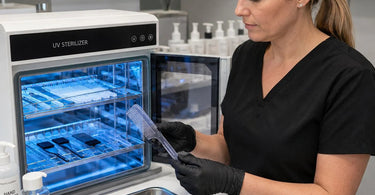
Put excellence into every detail... that is the mantra of every successful spa and salon professional. But lets be honest: have you ever opened your UV Sterilizer only to find your favorite pair of plastic tweezers looking a little... crispy? Or maybe they have taken on a weird, sun-kissed tan that you definitely did not pay for? Welcome to the wonderfully weird world of UV-C light and polymer science. If you are running a busy waxing center, a high-end nail salon, or a soothing massage studio, you know that sanitation is non-negotiable. But before you blame the manufacturer or have a minor meltdown in the back room, lets dive into the geeky (but oh-so-important) science of why UV sterilizers can sometimes turn your trusty plastic tools into brittle little monsters. Spoiler alert: it is not the end of the world, but knowing the impact is the first step to saving your inventory and keeping your services top-tier.
We love UV sterilizers. They are fast, they are chemical-free, and they look incredibly futuristic sitting on your counter next to your Facial Steamer. However, just like putting a cheap plastic cup in the microwave, not all materials react well to high-energy light waves. If you are stocking up on Waxing Supplies for Professionals or investing in new Nail Files & Buffers, you need to understand what happens when that little light turns on. Lets break down the glow, the growth, and the gritty reality of UV sterilization on your plastic gear.
The Science of the Shine: How UV Sterilizers Actually Wreak Havoc
First, a quick science lesson (dont worry, there wont be a quiz, unless you count happy clients as a passing grade). UV-C light is a germicidal superhero. It zaps bacteria, viruses, and fungi by breaking down their DNA. For your Spa Tools & Implements, this is great news for hygiene. The bad news? That same high-energy light is basically kryptonite for the molecular structure of many plastics. Unlike the sun (UV-A and UV-B), UV-C is usually filtered out by our atmosphere, so plastic manufacturers dont design standard tools to handle that level of intensity. Research indicates that prolonged exposure to UV-C radiation can lead to something called "photodegradation." In plain English, this means the light breaks the long polymer chains that keep your plastic cuticle pushers strong and flexible .
I know what you are thinking. "Jackson, is my expensive ItalWax - Wax spatula going to melt?" No, it isnt melting. But it is aging. Studies on 3D printed plastics (similar to the hard plastics used in many salon tools) show that UV-C treated parts can become five to six times more fragile than untreated ones when it comes to impact resistance . That means instead of bending slightly under pressure, your implement might just snap. And nothing kills the zen of a Pedicure Chair/Spas experience like a tweezer breaking mid-service.
The Yellowing Effect: Why Your Tools Look Like They Started Smoking
Lets talk aesthetics. You take pride in your Professional Nail Care Collections. You want everything to look pristine and crystal clear. But have you noticed that your clear plastic implement handles or your favorite set of Waxing Accessories & Removers have taken on a lovely shade of yellowed-gross? Thats the UV light again. One of the most immediate and visible signs of UV-C damage is surface discoloration .
It usually starts as a faint yellow tint. Within hours of exposure in a high-intensity unit, white or clear plastics can turn a buttery yellow, and eventually, a murky brown . For a professional Lash & Brow Enhancement technician, using a yellowed pair of tweezers just looks... unsanitary, even if they are technically sterile. It creates a lack of confidence. If you are using a UV Sterilizer for your Professional Lash and Brow Tint brushes, you might find the bristles stiffening and the handle looking old before its time.
Plastic vs. Metal: The Great Sterilization Showdown
This is where we have to have a heart-to-heart. While UV sterilizers are generally safe for hard plastics, rubber, and metals in professional settings , the "safe" window varies wildly. Stainless steel Manicure Essentials? Go for it. Glass Mixing Bowls? Absolutely. But that thin, flexible plastic waxing spatula? It might not survive 300 hours of cumulative exposure.
Heres a little secret the manufacturers of baby products discovered: UV sterilizers degrade silicone and soft plastics rapidly, leading to cracks and tears . The same applies to your salon. If you use a lot of soft-grip handles or ergonomic plastic Cuticle Oil bottles, the UV light will dry them out. They will become brittle. I have seen techs go to pick up a bottle of Premium Nail Polish only to have the cap crumble in their hands because it lived in the UV box. Embarrassing, messy, and expensive.
Don't Panic: How to Protect Your Plastic Babies
So, does this mean you need to throw away your UV Sterilizer and go back to soaking everything in harsh chemicals? Absolutely not! UV is still one of the best methods for rapid disinfection in a busy Salon & Barber environment. You just need to be strategic. First, check the manufacturer's guidelines. Some high-quality professional tools are treated with UV inhibitors. However, for those that aren't, consider using a physical barrier.
Research shows that applying a paint or protective coating to plastic parts can significantly reduce the aging effects of UV-C . While you are not going to spray paint your ItalWax - Pre/Post bottles, this tells us that thicker, opaque plastics last longer than clear ones. If you must sterilize plastic, rotate your tools. Do not leave them in the chamber for hours on end. Run the cycle, and remove them. Also, pay attention to water. The presence of moisture can actually accelerate the loss of tensile strength in plastics under UV light . So, make sure your Spa Essentials are bone-dry before hitting the start button.
The Material Matters: Know Your Spatulas from Your Stirrers
Let's get specific for a moment. When we talk about "plastic," we are often talking about Polyamide (PA12) or ABS, which are common in 3D printed tools and durable goods. These materials are tough, but UV light hits them hard . If you are deep-cleaning waxing supplies, consider using disposable wooden sticks for applications, and keep your expensive reusables for non-plastic parts.
For the Nail Art Supplies like dotting tools and brushes with plastic handles, try to limit their UV exposure. Use the sterilizer for the metal tips, but maybe wipe down the handles with a hospital-grade disinfectant wipe instead. This hybrid approach extends the life of your tools dramatically. And for the love of all that is holy, if you are using a UV Sterilizer for Pre & Post-Waxing Products applicators, buy in bulk. Bulk Wax Deals are your friend. Treat those plastic applicators as semi-disposable. They are there to serve the client, then retire gracefully, not to last a decade of UV abuse.
Alternatives and Best Practices for the Hygiene-Obsessed
If you are noticing that your Hygienic Table Paper is the only thing on your table that isn't falling apart, maybe its time to diversify your sterilization methods. While UV Sterilizers are fantastic for dry, quick cycles, they are not the only tool in the shed. Autoclaves are the gold standard, though they can be too harsh for many plastics due to heat. Hospital-grade liquid disinfectants (like Barbicide) are actually much gentler on plastics because they dont attack the molecular structure with light energy.
For your Professional Wax Warmers for Salons & Spas, the metal components are fine. The plastic lids? Maybe just wipe those down. Implementing a color-coded system for your Quality Wax Strips & Rolls and implements can help you track how many cycles an item has been through. If a plastic Professional Wax Spatula looks cloudy or feels rough to the touch, it is time to retire it. The slight texture is actually microscopic cracks where bacteria can hide, defeating the whole purpose of sterilization!
Conclusion: Keep the Glow, Lose the Groan
The impact of UV Sterilizers on plastic professional implements is real, but it is manageable. Think of it like this: UV light gives your tools a super-powered tan. A little bit looks healthy (clean); too much causes premature aging (brittle and yellow). For your Spa Body Treatments and Hot & Cold Massage Therapy Products accessories, stick to metal or glass where possible. When you need plastic, buy quality, rotate your stock, and dont overcook them.
At Pure Spa Direct, we know you work hard to keep your space immaculate. We stock thousands of items from ItalWax to CND, and we want them to last. Understanding Spa Masters equipment and how it interacts with your sanitation protocols saves you money and keeps your clients safe. So go ahead, flip that switch and enjoy the glow. Just remember to take your plastic buddies out for some fresh air when the timer dings. Your tweezers will thank you (if they still have their flexibility to do so). Now go disinfect something!
)