
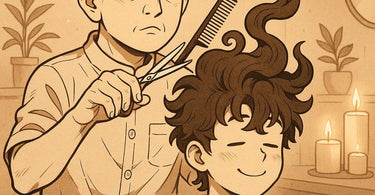
Smarter tools, easier work... and suddenly you're not just cutting hair, you're performing a ballet of blades where every snip is a mindful moment. Welcome to the scissor-over-comb technique, the barbering equivalent of a yoga flow. It looks like pure magic to clients—that effortless glide around the head, the whisper of steel against the comb, the transformation of a shaggy mop into a sharp, tailored masterpiece. But for us pros? It's our moving meditation. It's the zen state we achieve when our tools become an extension of our hands and our focus is so laser-sharp that the outside world just melts away. This isn't just a technical skill; it's the heart of precise clipper work and the soul of a truly great haircut. Ready to find your flow? Let's dive in.
Mastering this technique is what separates the rookies from the artists. It's the cornerstone of barbering, essential for crafting everything from sharp fades to soft, textured crops for both men and women. While clippers alone can give a uniform shave, combining them with the scissor-over-comb method allows for unparalleled softness, blending, and the ability to follow the head's natural contours for a truly personalized result. It’s the perfect partnership: the power and speed of the clipper meets the artistry and finesse of the shear.
The Tools of Tranquility: Your Meditation Gear
You wouldn't try to meditate on a wobbly cushion, so don't attempt this technique with subpar tools. The right gear is crucial for finding your zen.
Your shears are your primary instrument. For scissor-over-comb, longer blades are generally preferred as they allow for smoother, more continuous cuts without your hand getting in the way. The choice between a blending shear or a sharper, blunter shear also depends on the desired effect—texturizing or building strong, clean lines. Explore our range of Professional Shears, Clippers, & Trimmers to find your perfect match.
The comb is just as important! Fine-tooth combs provide maximum tension and control for short hair and tight areas like the nape and around the ears. Medium-tooth combs offer a versatile middle ground for most tapering work, while wide-tooth combs are ideal for curlier textures where you want less tension. Having a selection, like a trusty Detail Comb for those tricky spots, is a game-changer.
And let's not forget the foundation. A comfortable, confident stance is key. Ensure your client is seated properly on a stable Salon & Barber Chair, and that you have a supportive mat underfoot. Discomfort is the quickest way to break your concentration.
The Moving Meditation: Step-by-Step to Scissor Over Comb Bliss
This is where the magic happens. Let' break down the flow into mindful steps.
First, preparation is everything. Start with damp, towel-dried hair. This gives you control and allows for a more precise cut. Use your clippers to establish your initial guide lines and remove the bulk of the length. Now, you're ready to blend.
Stand to the side of your client. This gives you a better view of the entire head shape rather than standing directly in front. Hold the comb in your non-dominant hand and your shears in your dominant hand. The key is to use the comb to lift the hair away from the head, creating a guide for your scissors to follow. The blades should be held parallel to the teeth of the comb, cutting the hair that protrudes above it.
Work in small, manageable sections. After cutting the first section, use it as a guide for the next. As you move on, lift a small amount of the already-cut hair with the new section to ensure a consistent length and a seamless blend. The motion should be fluid—a continuous opening and closing of the shears as you move the comb upward. Avoid "chopping" with the tips of your scissors; use the center of the blade for a smoother result. Remember, you're not fighting the hair; you're guiding it into place.
Comb Angles: The Secret Language of Shape
This is the advanced yoga of the technique. The angle at which you hold the comb fundamentally changes the outcome of the cut. It's how you communicate with the hair.
Horizontal Angles: Holding the comb level and parallel to the floor is perfect for maintaining weight. It follows the head's shape and keeps the hair length consistent. This is your go-to for building a solid foundation.
Diagonal Angles: Tilting the comb on a diagonal is your secret weapon for blending and creating roundness. Diagonal lines help move weight and soften hard lines, essential for creating those seamless fades and tapering around the curves of the head behind the ears and in the nape.
Vertical Angles: Holding the comb perpendicular to the head is how you remove weight. It's not always the most comfortable position, but it's incredibly effective for cutting very close to the scalp and releasing bulk for a more graduated shape.
The real art is knowing when to transition between these angles mid-flow to sculpt the perfect shape. It’s this dance that makes the technique so meditative and effective.
Breathing Through the Challenges: Pro Tips for a Flawless Flow
Even the most zen masters encounter distractions. Here's how to handle common hiccups without breaking your stride.
Avoiding "Steps" in the Hair: Hesitation is your enemy. This technique requires confidence and a fairly quick, rhythmic pace. Stopping and starting can create visible horizontal lines or steps in the haircut. Trust your guide and keep the motion fluid.
Taming the Texture: Different hair types require slight adjustments. For thick, coarse hair, you may need to apply more pressure and use a steeper angle. For fine, thin hair, a lighter touch and a more delicate comb are necessary. For curly hair, consider using a Wide-Tooth Comb to avoid disrupting the natural curl pattern too much.
Steady Hands, Sharp Shears: A stable hand is non-negotiable. Some barbers find stability by resting their pinky finger on the client's head for the comb hand, and the pointer finger of their scissor hand on the comb itself. Also, keep those shears sharp! Dull blades will tug and pull, ruining the experience for both you and your client. Regularly disinfect and oil your tools—it’s part of the ritual. Keep your station clean with our Professional Cleaners & Disinfectants.
Beyond the Blend: The Why Behind the Zen
Why put in the effort to master this? Because the results speak for themselves.
While clippers are fantastic for speed and uniform length, scissor-over-comb offers a softer, more natural finish. It allows for incredible customization, letting you tailor the cut exactly to the client's head shape and hair type. It provides a seamless blend between clipper-work and longer scissor-work, making it indispensable for fades and tapers. It’s the technique that says, "An artist works here."
This mastery builds trust and loyalty. Clients return to the barber who can wield shears with such precise intention. It elevates your service from a simple haircut to a personalized grooming experience. And for you, the barber, there is no greater satisfaction than achieving that state of flow—where the tool, the hand, and the eye are in perfect harmony—and delivering a flawless cut. It’s why we do what we do.
Your Zen Den: Creating the Perfect Atmosphere
The meditation isn't just in your hands; it's in the entire environment. A calm, organized space enhances your focus and your client's experience.
Start with comfort. A supportive Massage Chair or barber chair is essential. Keep your tools within easy reach on a well-organized station. Good, adjustable lighting is a must—you can't cut what you can't see! Consider a Magnifying Light for intricate work.
Engage the senses subtly. A clean, fresh-smelling space is inviting. Consider a subtle Aromatherapy Diffuser with an invigorating or calming scent like peppermint or lavender. Offer a hot towel at the end of the service—a Towel Steamer makes this easy and incredibly luxurious. It' these little touches, combined with your technical skill, that transform a routine haircut into a moment of mindfulness and self-care for your client.
So, take a deep breath. Pick up your shears and comb. Find your rhythm, your angle, your flow. Embrace the scissor-over-comb meditation. It's more than a technique; it's your path to creating not just great haircuts, but great experiences.
