
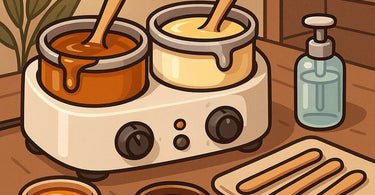
Put your best work forward... and nothing tests your professional mettle quite like the perfect wax application. That magical moment when the wax spreads like silk, grips every hair with determination, and removes with a satisfying ‘pop’ instead of a painful ‘yank’. The secret weapon in this smooth operation isn’t just your steady hand or your charming bedside manner—it’s a deceptively simple factor: temperature. Getting your wax warmer dialed into the perfect setting for each unique client is the difference between a one-time visitor and a loyal client for life. Welcome to The Temperature Test, your ultimate guide to mastering wax heat for every skin type under the sun.
Think of wax temperature like the thermostat for client satisfaction. Too cold, and it’s a gloopy, ineffective mess that clings to the skin for dear life. Too hot, and you’re not just removing hair—you’re giving your client an impromptu (and highly unpleasant) skin scalding experience. “But my warmer has numbers on the dial!” you might say. Ah, but those numbers are merely suggestions, my friend. The real test happens on the skin. This guide will walk you through performing your own Temperature Test, ensuring every service you provide is as comfortable and effective as possible.
The Golden Rule: Test, Don’t Guess!
The most professional habit you can develop is the wrist test. But let’s be honest, your wrist skin is about as similar to the delicate skin on a client’s bikini line as a leather glove is to a rose petal. The true pro move? The “Double-Test Method.” First, apply a small dab of wax to the inside of your own wrist. It should feel warm and spreadable, not hot or sticky. Second, and most importantly, always do a patch test on a small, discreet area of your client’s skin before you go in for the main event. This simple step builds immense trust and prevents potential disasters. A great wax spatula is your best friend for precise application during this test.
Decoding Skin Types: Your Wax Temperature Cheat Sheet
Not all skin is created equal, and your wax temperature shouldn’t be either. Here’s how to adjust your approach for the most common skin types you’ll encounter in your treatment room.
The Sensitive Soul: Delicate, Reactive, and Prone to Redness
This client probably tells you they have sensitive skin before they’ve even taken off their jacket. They’re not being dramatic—their skin barrier is simply more reactive. For these delicate flowers, you need a cooler, kinder wax. A lower temperature ensures you don’t trigger inflammation or cause unnecessary trauma. Consider using a specially formulated low-melting point hard wax, which is designed to be gentler on the skin. Brands like Lycon and Starpil offer excellent options. The wax should be just warm enough to become pliable. Aftercare is crucial here—always follow up with a soothing post-wax product to calm any reactivity.
The Oily & Resilient: Thick Skin, Stubborn Hair
This skin type is the workhorse of the dermal world. It has stronger sebum production and often coarser, more stubborn hair. A slightly warmer wax temperature can be your ally here. The extra heat helps to soften the tough hair shaft and allows the wax to penetrate more effectively for a cleaner removal. You might find soft strip wax works wonderfully on this skin type with a warmer application. Just remember, “warmer” does not mean “scalding.” It should still pass the wrist test comfortably. A thorough pre-wax cleanser is essential to remove any oils that might prevent adhesion.
The Dry & Mature: Thin, Dehydrated, and Delicate
Mature or chronically dry skin is often thinner and more fragile. It lacks the elasticity of younger skin, making it more prone to lifting, tearing, or bruising during waxing. For this skin type, a medium-to-low temperature is your sweet spot. The goal is to use a wax that removes the hair without stressing the skin. A pliable, stripless hard wax is often the best choice as it shrinks as it hardens, gripping only the hair and not the skin. A brand like Cirepil is famous for its gentle yet effective formulas. Hydration is key post-service, so recommend a rich, non-comedogenic moisturizer.
The Combination Conundrum: A Little Bit of Everything
Many clients have combination skin—perhaps an oily T-zone on the face but dry body skin. This is where your skills truly shine! You may need to adjust your wax temperature slightly for different areas on the same client. The back and legs can often handle a slightly warmer wax, while the face, underarms, and bikini area typically require a cooler touch. Don’t be afraid to let your wax cool for a minute between applications to different zones. This adaptable approach shows a high level of professional care.
Wax Type Matters: Hard Wax vs. Soft Wax
The type of wax you use fundamentally changes the temperature game. It’s like the difference between cooking a steak and baking a soufflé—they require different heats!
Hard Wax (Stripless): This wax is applied thickly and hardens as it cools. It’s typically used for more sensitive areas like the face, underarms, and bikini line. The ideal temperature for hard wax is lower. It should be melted completely but not so hot that it runs off the spatula. When applied, it should feel like warm honey, not hot syrup. A great Berodin hard wax applied at the right temp can make Brazilian waxes significantly more comfortable.
Soft Wax (Strip Wax): This is the traditional wax used with wax strips for larger areas like legs, arms, and backs. It can generally be used at a slightly higher temperature than hard wax because it’s applied very thinly. However, the same rules apply—it must be comfortable on the skin. A consistent, even heat from a reliable roller wax warmer is perfect for soft wax.
Your Equipment: The Unsung Hero of Consistent Heat
You can’t win the temperature battle with faulty equipment. An unreliable wax warmer that has hot spots or poor temperature control is a liability in your treatment room. Investing in a high-quality professional wax warmer is non-negotiable. Look for warmers with even heat distribution, precise digital thermostats, and a size appropriate for your service volume. For high-traffic salons, a roll-on wax system can provide rapid, consistent application.
Beyond the Wax: Pre & Post-Care is Part of the Temperature Game
Mastering temperature isn’t just about the wax in the pot. It’s about the entire client experience. A towel steamer can provide a warm, comforting towel to cleanse the area pre-service, relaxing the client and opening pores. Conversely, having a cool, soothing gel or ingrown hair treatment ready to apply post-wax helps bring the skin’ temperature down and reduces inflammation instantly. This “hot and cold” approach elevates your service from a simple hair removal to a luxurious, therapeutic experience.
The Bottom Line: Comfort is King (and Queen)
Passing The Temperature Test is what separates a good technician from a great one. It’s a skill built on mindfulness, practice, and an unwavering commitment to client comfort. By tailoring your wax temperature to each individual’s skin type and the area being treated, you demonstrate a level of expertise that clients will not only appreciate but will also pay a premium for. They might not know the science behind why their wax felt so much better at your spa, but they’ll feel the difference in their skin—and in their loyalty. So, test your wax, know your client, and watch your book fill up with clients who are cool as a cucumber (because your wax was the perfect temperature).
Ready to upgrade your waxing station? Explore our full range of complete waxing kits, premium waxes from brands like ItalWax and Waxness, and the most reliable wax warmers on the market at Pure Spa Direct.
